The local church, a cornerstone of many communities and a beacon of faith, is far more than just a gathering of believers. It’s a dynamic organism, a body with many parts working in concert to fulfill its spiritual mission. While the spiritual heart of a church beats with love and devotion, its effective operation often hinges on a well-defined church organizational chart. This isn’t about bureaucracy for bureaucracy’s sake; it’s about clarity, accountability, and ensuring that every member, from the newest attendee to the longest-serving elder, understands their role within the larger tapestry of faith.
Think of your church like a busy, thriving family. Everyone has a place, a responsibility, and a way to contribute to the well-being of the whole. A church organizational chart acts as the blueprint, illustrating who does what, who reports to whom, and how different ministries connect. This structure can range from very simple in smaller congregations to quite complex in larger, multi-campus churches, but its purpose remains the same: to foster efficient governance, effective ministry execution, and clear communication. Without this framework, even the most passionate individuals can find themselves working at cross-purposes, leading to frustration and hindering the church’s ability to reach its full potential.
The Foundation of Faith: Leadership and Governance
At the apex of most church organizational charts lies its leadership. This is the guiding force, the shepherds who bear the ultimate responsibility for the spiritual and practical well-being of the congregation. Understanding this foundational layer is crucial for any member seeking to engage more deeply or contribute meaningfully. The specific titles and roles can vary significantly across denominations and individual church traditions, but the core principle of spiritual oversight remains constant.
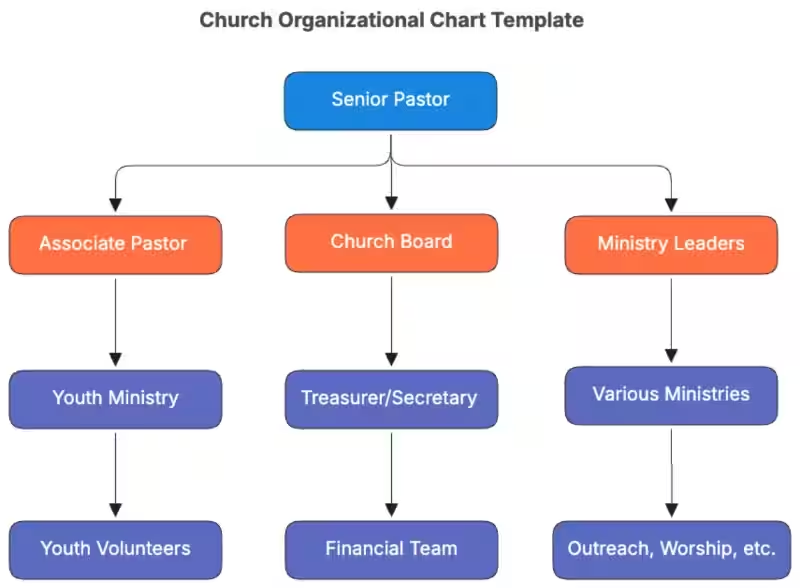
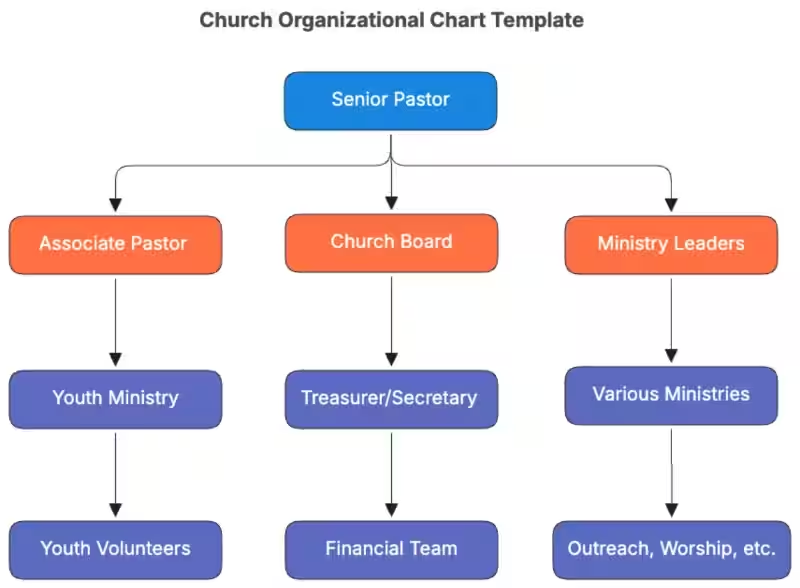
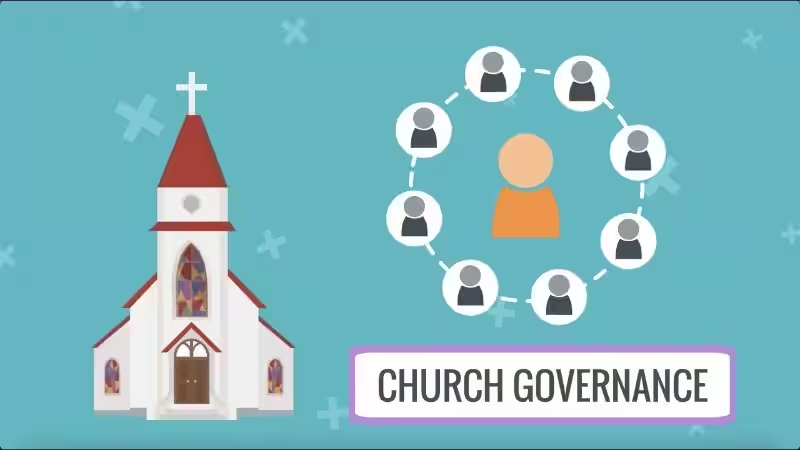
Within this leadership tier, you’ll commonly find roles such as Pastors, Elders, Deacons, and a Church Board or Council. Pastors are typically the primary spiritual leaders, responsible for preaching, teaching, pastoral care, and often overseeing the day-to-day operations. Elders, in many traditions, share in the spiritual governance, providing wisdom and discernment. Deacons often focus on service, care for the needy, and assisting the pastoral leadership. The church organizational chart visually depicts how these leaders interact, whether they operate independently within their spheres or form a cohesive governing body. For instance, a chart might show the Senior Pastor at the top, with Elders and Deacons reporting to them, or a more collegial model where a Board of Elders oversees the pastoral staff.
Deeper Dive: The Role of Elders and Deacons
Elders and Deacons, while often working in tandem with the pastoral team, occupy distinct but vital positions within the church organizational chart. Their roles are designed to both provide spiritual guidance and ensure practical needs are met, reflecting the multifaceted nature of Christian service. Understanding their specific responsibilities can empower members to seek appropriate support or offer their gifts in alignment with these ministries.
Elders, often chosen for their spiritual maturity and wisdom, are key players in church governance and doctrinal oversight. They might be involved in making major decisions regarding church direction, evaluating theological teachings, and providing counsel to both congregants and leadership. In contrast, Deacons are frequently recognized for their servant leadership, focusing on the practical aspects of ministry. This can include managing church finances, overseeing benevolence ministries, organizing outreach programs, or ensuring the physical maintenance of church facilities. The church organizational chart will clearly delineate the reporting lines and collaborative relationships between these groups, illustrating how their distinct functions contribute to the overall health and mission of the church.
Ministry Teams: The Engine of Outreach and Growth
Beyond the leadership structure, the vibrant heart of any church’s mission lies in its various ministry teams. These are the hands and feet of the church, actively engaged in serving God and community. A well-structured church organizational chart will clearly outline these teams, their leaders, and how they contribute to the church’s overall objectives. This clarity is essential for both attracting volunteers and ensuring that ministry efforts are coordinated and effective.
Consider a church that runs a vibrant children’s ministry. Within the broader church organizational chart, this ministry would likely have its own sub-structure: a Children’s Ministry Director, Sunday School teachers, nursery workers, and perhaps a team dedicated to special events like VBS. Similarly, a worship team would have a Worship Leader, musicians, sound technicians, and ushers. Each of these teams, while focused on a specific area, ultimately contributes to the church’s overarching mission of worship, discipleship, and evangelism. The chart helps illustrate how these diverse teams are overseen, perhaps by a Ministry Director who reports to the Pastor or a designated Elder.
Organizing for Impact: Examples of Ministry Teams
The sheer variety of needs and opportunities within a community means that churches often develop a diverse array of ministry teams. Each team, when clearly defined within the church organizational chart, can operate with greater purpose and efficiency. Having a visual representation of these teams encourages participation and ensures that no critical area of service is overlooked.
Let’s look at some common examples. A Community Outreach team might be responsible for organizing food drives, partnering with local charities, or initiating evangelistic events. Within the church organizational chart, this team would have a leader who coordinates volunteers and reports on their activities. A Finance Committee, another crucial element, would oversee budgeting, financial stewardship, and accountability, with a clear reporting structure to the church board. Even seemingly smaller teams, like a Greeters Ministry or a Welcome Team, play a vital role in making visitors feel valued and integrated, and their placement within the church organizational chart signifies their importance in the overall welcoming process.
Effective communication is the lifeblood of any organization, and a church is no exception. A well-designed church organizational chart is a powerful tool for fostering clear lines of communication, ensuring that information flows smoothly both vertically and horizontally. Without this structure, important messages can get lost, misunderstandings can arise, and volunteers might feel disconnected.
Imagine a situation where a new church-wide initiative is being launched. If the church organizational chart clearly shows who is responsible for communicating this to each ministry team leader, and how those leaders are then expected to disseminate the information to their volunteers, the process becomes far more efficient. This prevents situations where some teams are unaware of important updates, leading to confusion and missed opportunities. The chart helps to clarify reporting relationships, meaning individuals know whom to approach with questions, concerns, or suggestions, preventing a tangled web of misdirected inquiries.
Ensuring Accountability and Transparency
Accountability and transparency are not just corporate buzzwords; they are essential for building trust and fostering healthy spiritual growth within a church. The church organizational chart plays a significant role in establishing these principles by defining responsibilities and reporting structures. When everyone understands who is accountable for what, and how decisions are made, a culture of integrity is cultivated.
For instance, the church board or council, clearly positioned at a high level on the church organizational chart, is ultimately accountable for the church’s overall direction and financial stewardship. The chart would show how specific committees or ministry leaders report their progress and expenditures to this governing body. This transparency reassures congregants that their resources are being managed wisely and that the church is operating with integrity. Furthermore, it allows for performance evaluation and continuous improvement, ensuring that the church remains a faithful steward of its God-given resources and calling.
In conclusion, while faith is the driving force, a practical and understandable church organizational chart is an invaluable asset for any congregation. It provides clarity, fosters accountability, and empowers every member to find their place and contribute effectively to the sacred mission. By understanding and embracing this structure, churches can better navigate their journey, ensuring that their spiritual message is not only heard but also powerfully enacted within their communities.
Frequently Asked Questions: Church Organizational Chart & Religion
What is a church organizational chart?
A church organizational chart is a visual representation of the leadership structure and reporting relationships within a church. It outlines the different roles, committees, and ministries, showing how they are connected and who is responsible for what.
Why do churches have organizational charts?
Churches use organizational charts to clarify roles and responsibilities, improve communication, facilitate decision-making, ensure accountability, and help new members understand the church’s structure and leadership.
What are common leadership positions in a church organizational chart?
Common positions include Senior Pastor/Minister, Associate Pastors, Elders, Deacons, Ministry Leaders (e.g., Children’s Ministry, Youth Ministry, Worship Ministry), and administrative staff. The specific titles and roles can vary significantly between denominations and individual churches.
How is a church organizational chart different from a business organizational chart?
While both show hierarchy and reporting lines, church charts often emphasize servant leadership and spiritual oversight rather than purely hierarchical authority. Ministry functions may be more prominent than profit-driven departments, and spiritual gifting is often a key consideration in role assignment.
What is religion?
Religion is a system of faith and worship, typically involving a set of beliefs about the nature of God or gods, the creation of the universe, and the purpose of life. It often includes rituals, practices, moral codes, and a community of adherents.
What are the main components of most religions?
Most religions share common components such as a belief system (theology/doutrinces), a moral or ethical code, rituals and practices (worship, prayer, sacraments), sacred texts or traditions, and a community of followers.
How do religions differ from each other?
Religions differ in their specific beliefs about the divine (monotheism, polytheism, pantheism, atheism), their understanding of salvation or enlightenment, their sacred texts, their historical origins, their forms of worship, and their cultural expressions.
Can a person belong to more than one religion?
While some individuals may identify with aspects of multiple religious traditions or engage in interfaith dialogue, formally belonging to and actively practicing multiple distinct religions simultaneously is uncommon due to often conflicting core beliefs and practices. Some individuals may identify as “spiritual but not religious” or adhere to syncretic beliefs.
What is the role of faith in religion?
Faith is a central and foundational element of most religions. It is the belief in or commitment to something unseen or unproven, often involving trust in divine beings, sacred texts, or religious teachings, and it guides a believer’s actions and worldview.