The Roman Catholic Mass is far more than just a weekly obligation; it is the central act of worship for millions around the globe, a profound spiritual experience that nourishes the soul and connects believers to the divine. At its core, the Mass is a tapestry woven with ancient traditions and profound theological truths, brought to life through a rich collection of Roman Catholic Mass prayers. These prayers are not mere recitations; they are dialogues with God, expressions of love, thanksgiving, and petition, all unfolding within a sacred liturgy that has been refined over centuries. Understanding these prayers can transform attending Mass from a passive observance into an active and deeply meaningful participation.
For many, especially those new to the Catholic faith or returning after a period away, the structure and language of the Mass can feel unfamiliar. Yet, beneath the surface of seemingly complex rites lies a beautiful, accessible rhythm of prayer. Each part of the Mass, from the initial gathering to the final sending forth, is imbued with specific prayers that guide the faithful through a journey of faith. This article aims to demystify these sacred utterances, making them relatable, informative, and ultimately, profoundly useful for anyone seeking to deepen their understanding and appreciation of the Roman Catholic Mass prayers.
The Mass begins with a series of opening rites, designed to prepare the congregation for the divine encounter that is about to take place. This is our initial welcome, a moment to shed the distractions of the world and focus our hearts and minds on God. The Entrance Antiphon, sung or recited as the priest processes to the altar, sets the tone for the liturgy, often reflecting the theme of the day or season. It’s like a spiritual overture, drawing us into the sacred space.
Following this, we engage in the Sign of the Cross, a fundamental expression of our Trinitarian faith. The priest declares, “In the name of the Father, and of the Son, and of the Holy Spirit,” and we respond, “Amen.” This simple yet powerful gesture encapsulates our belief in the Holy Trinity and marks our entrance into this holy celebration. Immediately after, we often hear the Greeting, where the priest offers a spoken welcome, such as “The Lord be with you,” to which the people reply, “And with your spirit.” This exchange is a beautiful reminder of the communal nature of our faith and the presence of Christ among us.
The Penitential Act: A Call to Purity and Reconciliation
Before we ascend to the altar of God, it is vital to examine our consciences and seek forgiveness. This is the purpose of the Penitential Act, a crucial part of the opening rites. Here, we acknowledge our sins and ask for God’s mercy. The most common form is the Confiteor, or “I Confess,” where we, along with the priest, confess our sins to Almighty God, to you, my brothers and sisters, that I have greatly sinned through my thoughts and in my words, in what I have done and in what I have failed to do, through my fault, through my fault, through my most grievous fault. We then ask Mary, all the angels and saints, and you, my brothers and sisters, to pray for us to the Lord our God. This prayer is a humbling admission of our imperfection and a sincere plea for divine cleansing, preparing us to receive the graces offered in the Eucharist.
Another form of the Penitential Act involves the priest inviting us to pray for a moment in silence, followed by a brief petition like, “Have mercy on us, Lord, for we have sinned,” and then a response of “For we have sinned.” This quiet reflection allows for personal introspection before communal prayer. The priest then pronounces the Absolution, a prayer of forgiveness, though it is important to remember this is not a substitute for the Sacrament of Reconciliation. The Penitential Act is about aligning our hearts with God’s love, ensuring we approach the sacred mysteries with purity and humility.
Summary of Key Opening Prayers:
Entrance Antiphon: Sets the liturgical tone.
Sign of the Cross: Confession of faith in the Trinity.
Greeting: Communal acknowledgment of God’s presence.
Penitential Act (Confiteor): Humble confession of sins and plea for mercy.
Absolution: A prayer of forgiveness by the priest.
The Liturgy of the Word: Hearing God’s Voice Speak
The Liturgy of the Word is where God speaks to us directly through Sacred Scripture. This section of the Mass is a profound encounter with His revelation, guiding our understanding and shaping our lives. It typically includes a reading from the Old Testament, a Psalm, a reading from the New Testament Letters, and finally, the Gospel. These readings are not random selections; they are carefully chosen to form a cohesive narrative, often relating to the liturgical season or a particular feast day, offering divine wisdom for our modern lives.
The Responsorial Psalm is a particularly beautiful element, a song of praise, lament, or thanksgiving that echoes the sentiments of the Scripture readings. It’s a moment for the congregation to respond to God’s word with song, often with a recurring refrain that unifies our voices. For example, after a reading about God’s faithfulness, the Psalm might be “The Lord is my shepherd; I shall not want,” inviting us to internalize that truth.
The Homily: Illuminating God’s Word
Following the readings and the Psalm, the priest delivers the Homily, or sermon. This is not simply a lecture; it is an explanation and application of the Scripture readings to our daily lives. The homily bridges the ancient words of scripture with contemporary challenges and opportunities, making God’s message personally relevant and actionable. It’s the priest’s role to illuminate the meaning of the Word, helping us to see how it calls us to love, to serve, and to grow in faith.
The homily is a critical part of the Liturgy of the Word, offering practical guidance and encouragement. It’s where we hear how to live out the Gospel message, how to be better disciples, and how to respond to God’s love in our actions. Think of it as a spiritual compass, helping us navigate the complexities of life with God’s truth as our guide.
The Creed: A Unified Declaration of Faith
After the homily, the congregation stands to recite the Nicene Creed (or sometimes the Apostles’ Creed). This is a powerful, communal declaration of the core beliefs of the Roman Catholic Church. It’s a moment where we collectively affirm our faith in God, Jesus Christ, the Holy Spirit, the Church, and the resurrection. The Creed is a bedrock of our faith, a summary of what we believe and why we gather.
Saying the Creed together is a profound act of unity. It’s a way of saying, “This is what we believe, as one body in Christ.” It reminds us that we are not alone in our faith but part of a vast, historical community of believers. The phrases, such as “I believe in one God, the Father Almighty, maker of heaven and earth, of all things visible and invisible,” are not just theological statements; they are declarations of trust and commitment to the one true God.
The Liturgy of the Eucharist: The Heart of Catholic Worship
The Liturgy of the Eucharist is the absolute pinnacle of the Roman Catholic Mass. It is here that we commemorate the Last Supper and participate in the sacrifice of Jesus Christ, made present through the power of the Holy Spirit. This is where the bread and wine are transformed into the Body and Blood of Christ, a central mystery of our faith. The prayers in this section are deeply sacred, focused on thanksgiving and sacrifice.
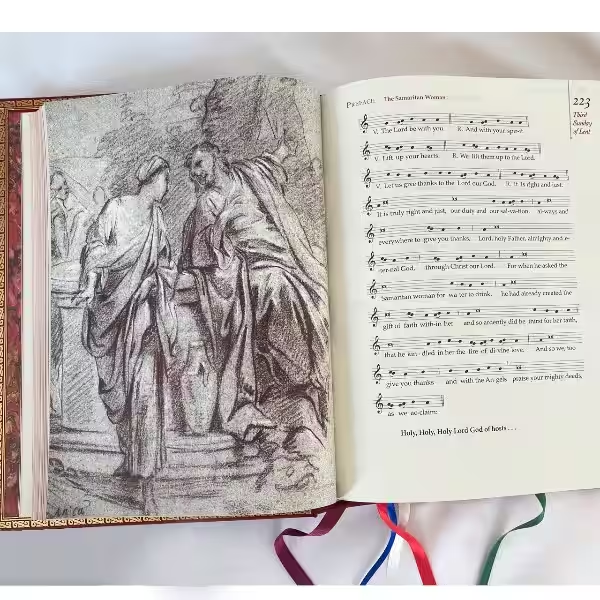
The Eucharistic Prayer is the longest and most profound prayer of the Mass. There are several Eucharistic Prayers to choose from, each with its own unique nuances, but all share a common structure. They begin with the Preface, where the priest invites the people to lift up their hearts and give thanks to the Lord our God, and we respond, “It is right and just.” This is our assent to the outpouring of gratitude that will follow. The Preface often speaks of God’s love and mercy, culminating in the Sanctus, where we join with the heavenly hosts in singing, “Holy, Holy, Holy Lord God of hosts. Heaven and earth are full of your glory. Hosanna in the highest. Blessed is he who comes in the name of the Lord. Hosanna in the highest.”
The Anamnesis and Epiclesis: Remembering and Invoking
Following the Sanctus, the priest leads us through the Anamnesis, a prayer of remembrance. He calls to mind the saving passion, resurrection, and ascension of Jesus Christ. We then respond with a prayer that echoes this remembrance, such as, “When we eat this Bread and drink this Cup, we proclaim your Death, Lord, until you come again.” This is not just a historical recollection; it is an act of faith in the present reality of Christ’s sacrifice.
The Epiclesis is perhaps the most mystical part of the Eucharistic Prayer. Here, the priest invokes the Holy Spirit to descend upon the gifts of bread and wine, asking that they be transformed into the Body and Blood of Christ. The prayer might say, “Let your Spirit come upon these gifts to sanctify them, so that they may become for us the Body and Blood of your Son.” This is a prayer of transformation, where the Holy Spirit’s power makes the bread and wine the real presence of Jesus Christ.
The Great Amen: Our Affirmation of Faith
As the Eucharistic Prayer concludes, the priest raises the chalice and paten and proclaims, “Through him, and with him, and in him, O God, Almighty Father, in the unity of the Holy Spirit, all glory and honor is yours, for ever and ever.” This is the Doxology, and our response is the Great Amen. This “Amen” is more than just an ending; it is our powerful, resounding affirmation of faith in the mystery we have just witnessed. It signifies our consent to the entire Eucharistic Prayer and our acceptance of Christ’s presence among us. It is the moment where we fully embrace the sacrifice and the gift we are about to receive.
The Communion Rite: Receiving the Divine Gift
The Communion Rite is the culmination of our Eucharistic journey, the moment we unite ourselves with Christ by receiving Him in Holy Communion. This is a time of intimate spiritual union, a profound encounter with the Risen Christ. The prayers and actions in this rite are designed to prepare us for this sacred act and to express our joy and gratitude.
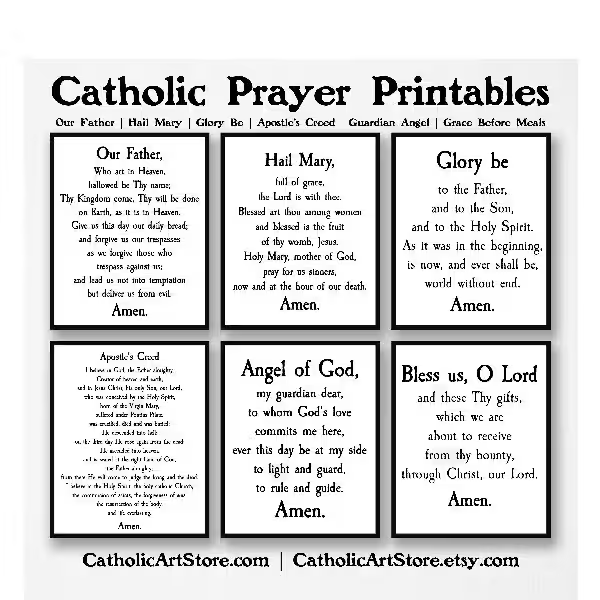
The Our Father (or the Lord’s Prayer) is central to this rite. The priest invites us to pray, “At the Savior’s command and formed by divine teaching, we dare to say: Our Father who art in heaven, hallowed be thy name, thy kingdom come, thy will be done, on earth as it is in heaven. Give us this day our daily bread, and forgive us our trespasses, as we forgive those who trespass against us, and lead us not into temptation, but deliver us from evil.” This prayer, taught to us by Jesus Himself, is a universal plea for God’s provision, forgiveness, and protection, and it unites us as brothers and sisters in Christ.
The Sign of Peace: A Call to Reconciliation
Before receiving Communion, we share the Sign of Peace. The priest may say, “Let us offer each other the sign of peace,” and we exchange a gesture of reconciliation, often a handshake or a nod, with those around us. This practice is rooted in Jesus’ command to be reconciled with our brothers and sisters before offering our gifts to God. It’s a powerful reminder that our relationship with God is intertwined with our relationships with others. This act of peace is an important preparation for receiving the Body of Christ, who is Himself our peace.
Receiving Holy Communion: The Sacred Moment
As we approach the altar to receive Communion, the minister will say, “The Body of Christ” (or “The Blood of Christ”), and we respond “Amen.” This is our personal affirmation of faith in the presence of Jesus within the consecrated bread and wine. Receiving Communion is a sacred and intimate act. We are receiving Jesus Himself, His very life, into our own. Following Communion, there is a period of sacred silence or a song of thanksgiving, allowing us to reflect on the immense gift we have received and to offer our personal prayers of gratitude and petition. This is a time for deep personal prayer and contemplation.
The Concluding Rites: Sent Forth to Serve
The Mass does not simply end; it concludes with a mission. The Concluding Rites send us forth from the sacred space of the church back into the world, empowered by the graces we have received. The prayers in this section are about our renewed commitment to living out our faith and serving others.
The Prayer after Communion is a final offering of thanks for the Eucharist and a plea for its fruits to remain with us throughout our lives. It’s a prayer that the graces received will strengthen us in our Christian walk. Following this, the priest offers the Final Blessing, often in a more solemn form depending on the liturgical season, invoking God’s blessing upon the congregation. He concludes with the familiar “May Almighty God bless you, the Father, and the Son, and the Holy Spirit.”
The final words of the Mass are the Dismissal, where the deacon or priest proclaims, “Go forth, the Mass is ended.” (or similar phrases like “Go and announce the Gospel of the Lord” or “Go in peace, to love and serve the Lord.”) This is our call to action. We are not meant to remain cloistered in the sanctuary but to take the love, truth, and grace of Christ out into the world. The Mass prayers, from beginning to end, are designed to form us, transform us, and send us forth as missionaries of God’s love. They are the very heartbeat of our faith, a constant source of strength and guidance.
Frequently Asked Questions about Roman Catholic Mass Prayers
What is the most important prayer in the Mass?
The most important prayer in the Mass is the Eucharist Prayer, also known as the Anaphora or the Canon. This prayer is considered the high point of the Mass, where the bread and wine are consecrated into the Body and Blood of Christ.
What are the main parts of the Mass?
The Mass is divided into two main parts: the Liturgy of the Word and the Liturgy of the Eucharist. The Liturgy of the Word includes readings from Scripture, a homily, and prayers. The Liturgy of the Eucharist includes the presentation of the gifts, the Eucharistic Prayer, and Communion.
What is the purpose of the prayers in the Mass?
The prayers in the Mass serve several purposes: to glorify God, to give thanks, to ask for forgiveness, to intercede for others, and to receive spiritual nourishment through the sacraments.
How should I pray during Mass?
During Mass, you can pray by actively listening to the readings and the homily, joining in the spoken prayers and responses, contemplating the Eucharist, and making your own personal prayers and intentions.
What is the Sign of the Cross?
The Sign of the Cross is a sacramental and a prayer. It is made by touching the forehead, chest, and then the left and right shoulders while reciting “In the name of the Father, and of the Son, and of the Holy Spirit. Amen.” It is used at the beginning and end of the Mass, and at various other times.
What is the Creed?
The Creed, most commonly the Nicene Creed, is a formal statement of the core beliefs of the Catholic Church. It is recited during the Mass to affirm faith in God, Jesus Christ, the Holy Spirit, and the Church.
What is the Our Father?
The Our Father, also known as the Lord’s Prayer, is a prayer taught by Jesus to his disciples. It is recited in the Mass as a communal prayer of petition and praise, acknowledging God as our Father.
What is the Agnus Dei?
The Agnus Dei, meaning “Lamb of God,” is a short prayer sung or recited during the Communion Rite. It is a prayer of petition asking Jesus, the Lamb of God who takes away the sins of the world, to have mercy on us and grant us peace.
What is the role of the priest in the prayers of the Mass?
The priest acts in persona Christi (in the person of Christ) during the Mass. He presides over the liturgy and offers the prayers on behalf of the congregation, most notably during the Eucharistic Prayer.
Are there specific prayers for different liturgical seasons?
Yes, while the core prayers of the Mass remain constant, the readings, prayers of the faithful, and sometimes the offertory and communion antiphons are adapted to the specific liturgical season (e.g., Advent, Christmas, Lent, Easter, Ordinary Time).