In the tapestry of faith, the lives of Catholic saints offer a vibrant and enduring thread. These individuals, chosen by God and recognized for their extraordinary virtue and love, have left behind a legacy not just of deeds, but of profound words. These Catholic saint quotes are more than just historical soundbites; they are luminous whispers of wisdom, guiding us through the complexities of faith, love, and the pursuit of a meaningful life. They serve as spiritual compasses, pointing us towards truth, compassion, and an unwavering devotion to God, even amidst the challenges of our modern world.
Exploring these timeless pronouncements can feel like opening a treasure chest, each quote a gem offering a unique perspective on the spiritual journey. Whether you are a lifelong Catholic seeking deeper understanding or someone curious about the enduring appeal of sainthood, these words offer practical wisdom and inspirational fuel. They connect us to a rich tradition, reminding us that the struggles and triumphs of these holy men and women are not so different from our own. They are practical guides for living, offering solace, encouragement, and a clear path towards sanctity.
At the heart of the Christian life lies faith, the unwavering trust in God’s plan, even when it remains hidden from our view. Catholic saints, more than anyone, understood this profound reliance. They navigated trials, persecution, and personal suffering with a steadfast belief in divine providence. As Saint Augustine, a towering figure of Christian thought, famously stated, “Faith is to believe what you do not see, and the reward of that faith is to see what you believe.” This quote encapsulates the essence of spiritual commitment: a leap of trust that ultimately leads to a deeper understanding and a more profound connection with the divine.
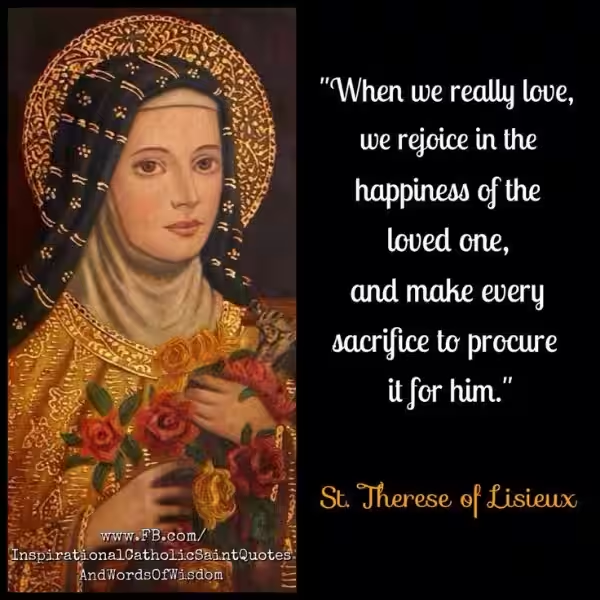
Consider the story of a young woman facing an unexpected illness. Doubt and fear can easily creep in, whispering questions of “why me?” and “where is God?” In such moments, remembering the unwavering faith of saints like Saint Thérèse of Lisieux can be a beacon. She, despite her own physical suffering and the hardships of her life, embraced her “little way” of love and trust, finding God in the smallest of actions. Her approach, marked by profound simplicity and an unshakeable optimism, reminds us that faith isn’t about having all the answers, but about holding onto the One who does. It’s about choosing to believe in God’s goodness even when circumstances seem to contradict it. This power of faith is a cornerstone of the saints’ teachings.
Cultivating Inner Peace Through Prayer and Surrender
Many Catholic saints found their greatest strength and solace in the quietude of prayer. It was in these moments of intimate conversation with God that they received the grace to endure, the wisdom to discern, and the peace to overcome. Saint Teresa of Avila, a mystic and reformer, spoke eloquently about the transformative power of prayer, describing it as “nothing else than a close friendship with Him.” This simple yet profound analogy highlights prayer not as a duty or a ritual, but as a loving relationship, a space for genuine connection and mutual understanding.
Imagine a bustling life, filled with deadlines, demands, and constant distractions. Finding inner peace can feel like an elusive dream. The saints, however, teach us that this peace is attainable, not by escaping the world, but by anchoring ourselves in God. They advocated for regular prayer, not just as a way to ask for things, but as a means of surrendering our anxieties and fears to a loving Father. This act of surrender, as exemplified by Saint Francis of Assisi’s life of radical poverty and trust, is key. He famously prayed, “Lord, make me an instrument of your peace.” This prayer isn’t about passively wishing for peace, but about actively becoming its conduit through trust and detachment from worldly concerns.
The Practice of Charity: Love in Action
Catholic saint quotes often resonate with the imperative of charity, the selfless love for God and neighbor. This isn’t merely an emotion; it’s an active commitment, a tangible expression of faith that transforms lives. Saint Paul, a foundational figure in early Christianity, eloquently defined the supremacy of charity: “Love never fails.” This powerful declaration underscores its eternal nature and its transformative impact on individuals and communities. It’s a love that endures through all circumstances, a love that seeks the good of the other above all else.
Think about the everyday opportunities to practice charity: a kind word to a stranger, a helping hand to a neighbor, or a patient ear for someone in distress. These seemingly small acts, when infused with genuine love, become powerful expressions of faith. Saints like Mother Teresa of Calcutta demonstrated this principle on a global scale, dedicating her life to serving the poorest of the poor. Her unwavering commitment to the dignity of every human person serves as a powerful testament to the transformative power of active charity. Her famous words, “If you want to change the world, go home and love your family,” remind us that the most profound acts of charity often begin in our immediate surroundings, radiating outwards.
Living a Virtuous Life: The Path to Holiness
The journey of a Catholic saint is intrinsically linked to the pursuit of virtue. These are not abstract ideals but ingrained habits of goodness that shape our character and guide our actions. The cardinal virtues – prudence, justice, fortitude, and temperance – along with the theological virtues of faith, hope, and charity, form the bedrock of a virtuous life. Saint Thomas Aquinas, a brilliant theologian, understood this deeply, stating, “Virtue is a habit of acting rightly.” This definition emphasizes that virtue is not a passive state but an active, cultivated disposition.
Consider the challenge of resisting temptation or acting with integrity when it’s difficult. This is where the saints’ teachings on virtue become incredibly relevant. They understood that cultivating virtues requires consistent effort and conscious choice. Saint Bernard of Clairvaux, for instance, emphasized the importance of humility as a foundational virtue, noting, “Humility is the foundation of all the other virtues.” By striving to live virtuously, we align ourselves with God’s will and begin to reflect His image more clearly in our lives. This path to holiness is not a sprint, but a lifelong journey of growth and transformation, marked by countless small acts of goodness.
Finding Hope in Suffering: The Cross and Resurrection
Suffering is an undeniable part of the human experience. For Catholics, however, suffering is not an end in itself but a path that can lead to deeper hope when united with the suffering of Christ. The Catholic saint quotes often reflect this profound understanding, drawing strength from the resurrection and the promise of eternal life. Saint Paul, having endured immense hardship, famously declared, “I can do all things through Christ who strengthens me.” This is a testament to the resilience of the spirit when anchored in divine power.
When faced with personal loss, illness, or injustice, the temptation to despair can be overwhelming. The saints, however, offer us a different perspective. They teach us that even in our darkest moments, there is reason for hope. They understood that the cross, while painful, is not the final word. It is followed by the resurrection and the promise of redemption. Saint Catherine of Siena, a powerful mystic, embraced suffering as a means of drawing closer to God, saying, “Be who God meant you to be and you will set the world on fire.” This powerful image suggests that by embracing our trials and allowing God to work through them, we can become instruments of His love and grace, transforming not only ourselves but also the world around us.
The Catholic saint quotes we’ve explored are not mere historical relics; they are living wisdom, offering a roadmap for a life lived with intention, faith, and love. They remind us that sainthood is not an unattainable ideal reserved for a select few, but a universal call to live fully in God’s grace. By internalizing their teachings and striving to emulate their virtues, we too can embark on our own unique journey towards holiness, finding meaning and purpose in every step.
Frequently Asked Questions about Catholic Saint Quotes
What are Catholic saint quotes?
Catholic saint quotes are profound sayings, reflections, and pearls of wisdom attributed to individuals recognized by the Catholic Church as saints. These quotes often offer guidance, inspiration, and insights into faith, virtue, and the Christian life.
Where can I find Catholic saint quotes?
You can find Catholic saint quotes in various places, including:
Biographies and writings of saints.
Religious books and devotional materials.
Websites dedicated to Catholic teachings and saints.
Prayer books and missals.
Social media platforms that share devotional content.
What kind of themes are common in Catholic saint quotes?
Common themes in Catholic saint quotes include:
Love of God and neighbor.
The importance of prayer and sacraments.
Virtues such as humility, patience, charity, and courage.
Trust in God’s providence.
The pursuit of holiness and eternal life.
Overcoming temptation and suffering.
The role of Mary, the mother of Jesus, in the spiritual life.
How can Catholic saint quotes be used in my faith journey?
Catholic saint quotes can be used in numerous ways to enrich your faith:
As a source of inspiration and encouragement, especially during challenging times.
To deepen your understanding of Catholic teachings and virtues.
To guide your prayer life and meditations.
To reflect on the lives and examples of those who have achieved holiness.
To share with others to spread faith and encouragement.
Are Catholic saint quotes considered infallible or dogma?
No, Catholic saint quotes are not considered infallible or dogma. While they are highly respected as the wisdom and experiences of holy individuals, they are personal reflections and spiritual insights. The official teachings and doctrines of the Catholic Church, which are considered infallible under specific circumstances, are found in Scripture, Tradition, and the pronouncements of the Magisterium.
Can I interpret a saint’s quote in my own way?
While personal reflection and understanding are encouraged, it’s important to interpret saintly quotes within the broader context of Catholic teaching and tradition. If a quote seems to contradict established doctrine, it’s best to seek clarification from a trusted religious authority or scholarly resource. The intent and meaning of the quote should generally align with the overall spirit of Catholic faith and morality.