In a world that often feels fractured, where headlines shout about disparity and suffering, it can be easy to feel overwhelmed. We yearn for a deeper purpose, a way to connect our personal faith with the pressing needs of our communities and the wider world. For Catholics, this yearning is met by a rich tradition of Catholic social justice teachings. These aren’t abstract theological concepts; they are vibrant principles designed to guide our actions, shape our consciences, and ultimately, help us build a more just and compassionate society. They offer a roadmap, a divine blueprint for living out our faith in tangible ways, touching the lives of the vulnerable and transforming the systems that perpetuate inequality. Let’s explore these profound teachings and discover how they can illuminate our own journeys of faith and service.
These teachings, developed over more than a century by the Church’s leaders, are rooted in the Gospel’s call to love God and neighbor. They are not merely suggestions but essential calls to action, urging us to see the face of Christ in every person, especially those on the margins. They provide a framework for evaluating social issues, from economic policies to environmental concerns, and inspire us to be agents of positive change. Understanding and embracing these principles can profoundly impact how we live, work, and interact with the world, fostering a sense of shared responsibility and a commitment to the common good.
The Dignity of Every Human Person: The Cornerstone of Justice
At the very heart of Catholic social justice lies the dignity of every human person. This isn’t earned; it’s inherent, bestowed by God at the moment of creation. Every individual, regardless of their background, beliefs, abilities, or social standing, possesses an inviolable worth. This teaching challenges us to reject any ideology or practice that devalues human life, whether it be through discrimination, exploitation, or indifference. It compels us to recognize the sacredness of each life, from the unborn to the elderly, the wealthy to the destitute.
Think about it this way: imagine you find a beautiful, intricate watch. You don’t have to do anything to make it valuable; its value is in its inherent design and craftsmanship. Similarly, every human being possesses an intrinsic value simply because they are human. This fundamental belief calls us to advocate for policies that protect the vulnerable, to speak out against injustice, and to treat everyone with respect and kindness. It means ensuring that everyone has access to basic necessities like food, shelter, healthcare, and education, not as favors, but as their fundamental right. This teaching is the foundation upon which all other social justice principles are built, a constant reminder of our shared humanity and interconnectedness.
The Common Good: Our Shared Responsibility
Flowing directly from the dignity of the person is the concept of the common good. This refers to the sum total of social conditions which allow people, either as groups or as individuals, to reach their fulfillment more fully and more easily. It’s not about the greatest good for the greatest number, but rather about creating a society where everyone has the opportunity to flourish. This means building systems and institutions that promote peace, security, and justice for all members of society. It’s about recognizing that our own well-being is inextricably linked to the well-being of others.
Consider a thriving community garden. A single person might grow beautiful tomatoes, but when everyone contributes their best – some planting, some weeding, some watering, some sharing their harvest – the entire community benefits from a bountiful and diverse yield. The common good functions similarly. It requires us to look beyond our individual interests and consider the needs of the entire community. This includes advocating for policies that support families, provide essential public services, and ensure fair labor practices. It’s about fostering a sense of solidarity, where we actively work to create a society that benefits everyone, not just a select few.
Rights and Responsibilities: A Delicate Balance
Integral to the common good is the understanding of rights and responsibilities. Every human person has fundamental rights that are essential for living a dignified life, such as the right to life, religious freedom, and economic opportunity. However, these rights are not absolute and come with corresponding responsibilities. We have a responsibility to exercise our rights in ways that do not harm others and to contribute to the well-being of society. This reciprocal relationship is crucial for a just and functioning social order.
Imagine a child’s right to play. This right is important for their development, but it comes with the responsibility to share toys and not hurt other children. In the broader societal context, our right to freedom of speech, for instance, carries the responsibility to use that speech in a way that doesn’t incite hatred or violence. Catholic social teaching emphasizes that true freedom is found in fulfilling our responsibilities to God and neighbor. This means actively participating in civic life, respecting the rights of others, and contributing our talents to the betterment of our communities. It’s about being engaged citizens who strive for justice with charity.
The Preferential Option for the Poor and Vulnerable: A Divine Imperative
Perhaps one of the most distinctive and challenging tenets of Catholic social justice is the preferential option for the poor and vulnerable. This doesn’t mean that we disregard the needs of others, but rather that the Church has a special concern for those who are marginalized, oppressed, and lacking basic necessities. This option stems from Jesus’ own ministry, where he consistently sided with the poor, the sick, and the outcast. It calls us to actively identify and address the systemic causes of poverty and injustice.
Think of a parent who instinctively rushes to comfort a child who has fallen and scraped their knee. While they love all their children, their immediate attention and care go to the one in immediate pain. The preferential option for the poor is a similar call to prioritize those who are most in need. This translates into supporting organizations that serve the poor, advocating for policies that lift people out of poverty, and challenging economic systems that create widening gaps between the rich and the poor. It’s about recognizing that when we lift up the least among us, we are, in effect, lifting up Christ Himself.
Work and the Dignity of Labor: More Than Just a Paycheck
The Church also teaches the importance of work and the dignity of labor. Work is more than just a means to an economic end; it is a participation in God’s creative activity and a way for individuals to contribute to the common good. This teaching emphasizes fair wages, safe working conditions, and the right of workers to organize. It recognizes that everyone deserves to earn a living wage that allows them and their families to live with dignity and security.
Consider the skill and dedication of a baker who rises before dawn to prepare bread for the community. Their work is not only a source of income but also a vital service that sustains others. Catholic social teaching affirms this inherent value of labor. This means supporting policies that protect workers’ rights, promoting ethical business practices, and ensuring that everyone has the opportunity for meaningful employment. It’s about valuing the contribution of every worker, from the CEO to the janitor, and ensuring that work is a source of fulfillment, not exploitation.
Solidarity: We Are All in This Together
The principle of solidarity is a profound recognition of our interconnectedness and interdependence as human beings. It calls us to see ourselves as part of a global human family, united by our shared humanity and our common destiny. This teaching challenges us to move beyond individualism and to embrace a spirit of unity, mutual support, and shared responsibility for the well-being of all people, especially those in distant lands or facing different struggles.
Imagine a complex tapestry. Each thread, though individual, contributes to the beauty and strength of the whole. If one thread is weakened or broken, it impacts the entire fabric. Solidarity calls us to be that supportive thread for others. This means supporting international aid efforts, advocating for fair trade practices, and engaging in dialogue and understanding across cultural and national divides. It’s about recognizing that injustices anywhere are a threat to justice everywhere, and that we are called to work together to build a more peaceful and just world for all.
Care for God’s Creation: A Sacred Trust
Finally, Catholic social justice extends to our relationship with the environment through the teaching on care for God’s creation. As stewards of this planet, we have a responsibility to protect and preserve it for future generations. This means recognizing that the earth is a gift from God and that we are called to live in harmony with the natural world, not to exploit it. Environmental degradation often disproportionately affects the poor and vulnerable, making this a crucial social justice issue.
Think of a beautiful garden entrusted to your care. You wouldn’t want to trample the flowers, pollute the water, or neglect its upkeep. Our planet is a similar sacred trust. This teaching calls us to adopt sustainable practices in our daily lives, to support policies that protect the environment, and to advocate for responsible stewardship of natural resources. It’s about recognizing that our actions have consequences for the entire planet and that we are called to be responsible caretakers of God’s magnificent creation.
Living the Teachings: From Abstract to Action
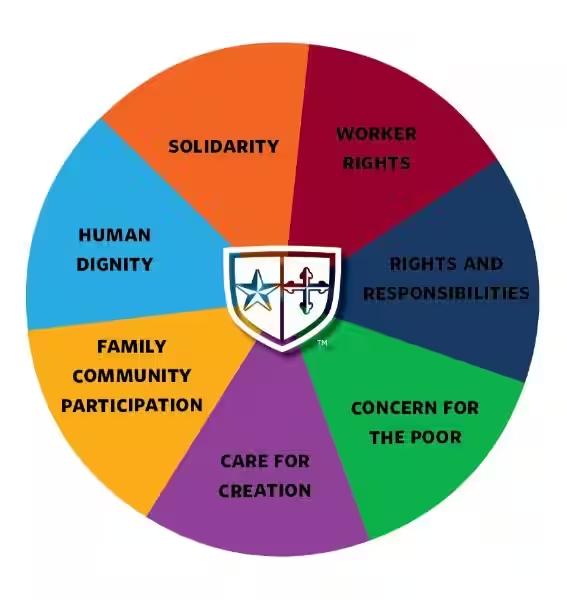
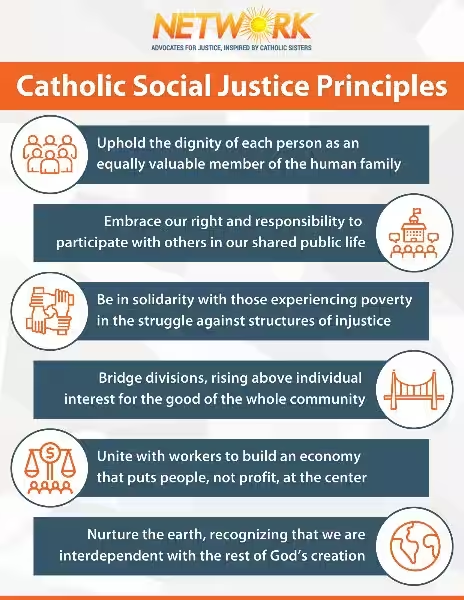
These seven Catholic social justice teachings – the dignity of the human person, the common good, rights and responsibilities, the preferential option for the poor and vulnerable, the dignity of work, solidarity, and care for creation – are not meant to remain solely in theological discourse. They are calls to live differently, to engage with the world with eyes of faith and hearts of compassion. They invite us to reflect on our own lives and ask: Am I truly seeing the dignity in every person I encounter? Am I actively contributing to the common good of my community? Am I standing in solidarity with those who are suffering? Am I being a responsible steward of creation?
Embracing these teachings means making conscious choices in our daily lives. It might mean volunteering at a local shelter, advocating for policies that support families, choosing to purchase ethically produced goods, or reducing our environmental footprint. It’s about engaging in dialogue, seeking understanding, and working collaboratively to address the challenges in our world. The journey of living out Catholic social justice is a lifelong one, a continuous unfolding of our faith in action, weaving a tapestry of hope, justice, and love for all.
Frequently Asked Questions: The 7 Catholic Social Justice Teachings
What are Catholic Social Justice Teachings?
Catholic Social Justice Teachings are principles and guidelines developed by the Catholic Church to address social issues and promote a just and compassionate society. They are rooted in Scripture, tradition, and reason, calling Christians to live out their faith through action in the world.
What is the first Catholic Social Justice Teaching?
The first teaching is the Life and Dignity of the Human Person. This teaching affirms that every human being is created in the image of God and possesses inherent dignity, which must be respected and protected from conception to natural death.
What is the second Catholic Social Justice Teaching?
The second teaching is Call to Family, Community, and Participation. This principle emphasizes the importance of family as the basic unit of society and the need for individuals to participate in social institutions, working for the common good.
What is the third Catholic Social Justice Teaching?
The third teaching is Rights and Responsibilities. It states that every person has fundamental rights (e.g., to life, food, shelter, education) and corresponding responsibilities to respect the rights of others and contribute to the well-being of society.
What is the fourth Catholic Social Justice Teaching?
The fourth teaching is Option for the Poor and Vulnerable. This doctrine calls for a preferential love and concern for those who are marginalized, oppressed, and in need, recognizing that their well-being is a measure of the justice of society.
What is the fifth Catholic Social Justice Teaching?
The fifth teaching is The Dignity of Work and the Rights of Workers. This principle highlights the value of human labor and advocates for fair wages, safe working conditions, and the right of workers to organize and participate in decisions affecting their lives.
What is the sixth Catholic Social Justice Teaching?
The sixth teaching is Solidarity. Solidarity calls for recognizing our interconnectedness and unity as a human family, working together to achieve justice and peace, and sharing resources and burdens.
What is the seventh Catholic Social Justice Teaching?
The seventh teaching is Care for God’s Creation. This principle teaches that humans are stewards of the Earth and have a responsibility to protect and preserve the environment for present and future generations, recognizing that creation is a gift from God.