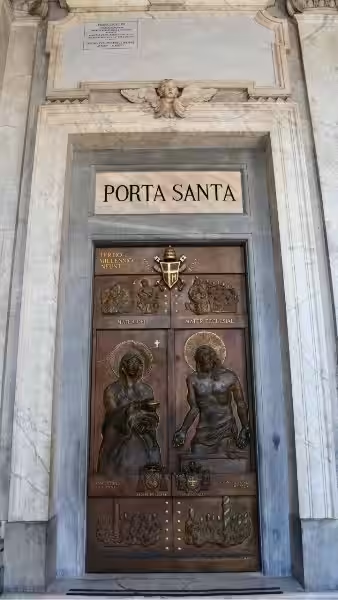
In the tapestry of religious tradition, certain symbols stand out with profound significance, acting as beacons of hope and invitations to introspection. Among these, the Porta Santa, or Holy Door, holds a special place in the hearts of many, particularly within the Catholic faith. It’s more than just a physical portal; it’s a potent symbol of divine grace, spiritual passage, and the promise of forgiveness and salvation. Imagine a doorway that, when opened at specific, sacred times, doesn’t just lead into a building, but into a deeper communion with the sacred itself. This is the essence of the Porta Santa—a tangible representation of an intangible spiritual journey.
The concept of a Holy Door resonates across various religious and spiritual traditions, even if not explicitly named as such. It speaks to the universal human desire for access to the divine, for moments of profound connection that transcend the ordinary. Whether it’s stepping across a threshold in a sacred temple, passing through a ceremonial gate, or simply engaging in an act of sincere prayer and reflection, the underlying principle is the same: seeking a pathway to a higher state of being. The Porta Santa, in its most recognized form, embodies this quest with a unique blend of historical depth and ongoing spiritual relevance for millions.
Understanding the Porta Santa: More Than Just a Door
The Porta Santa is primarily associated with the four major papal basilicas in Rome: St. Peter’s Basilica, St. John Lateran, St. Paul Outside the Walls, and St. Mary Major. These doors are not always open; their ceremonial opening marks significant liturgical periods, most notably the Jubilee Year, a time of special observance and pilgrimage. During a Jubilee, the Pope himself typically initiates the opening of the Porta Santa at St. Peter’s, often with a symbolic striking of the door with a special hammer, signifying the breaking down of barriers between humanity and God. This act is a powerful visual metaphor for opening ourselves to God’s mercy and love.
When a Porta Santa is opened, it signifies that a special pathway of grace is available to pilgrims and believers. Passing through this opened door is not a magical ritual, but an act of faith that, when accompanied by the fulfillment of certain conditions, can lead to the indulgence of temporal punishment due to sin. This means that by making a pilgrimage to a basilica with an open Porta Santa, praying for the Pope’s intentions, receiving the sacraments of Reconciliation and the Eucharist, and professing the Creed, one can receive a plenary indulgence. It’s a profound opportunity for spiritual renewal and reconciliation, offering a tangible way to approach God’s boundless mercy.
The Spiritual Significance of Crossing the Threshold
The act of walking through the Porta Santa is a deeply symbolic gesture. It represents a journey of conversion and renewal. As one steps across the threshold, it’s an outward manifestation of an inward commitment to leave behind the old self and embrace a new life in Christ. Think of it like the Israelites crossing the Red Sea; it was a physical passage that marked their liberation and their journey towards a promised land. Similarly, passing through the Porta Santa is an invitation to leave behind the burdens of sin and step into the light of God’s forgiveness.
This physical act encourages deep personal reflection. Before approaching the Holy Door, individuals are often called to examine their conscience, to confess any sins, and to pray for the intentions of the Church. This preparation is crucial, transforming the crossing from a mere physical act into a spiritual one. It’s about recognizing our need for God’s grace and actively seeking it through the prescribed means. The Porta Santa serves as a tangible reminder that God’s mercy is always accessible to those who sincerely seek it, offering a pathway to spiritual healing and peace.
The Porta Santa in the Context of Religion and Faith
The concept of a “holy place” or a “sacred entrance” is not unique to Catholicism or the Porta Santa. Across countless religions, specific locations are considered to be imbued with divine presence or to serve as portals to the sacred. For instance, in Judaism, the Western Wall in Jerusalem is a place of deep prayer and pilgrimage, where many feel a profound connection to God. In Islam, the Kaaba in Mecca is the holiest site, and circumambulating it is a central ritual of the Hajj pilgrimage. These examples, like the Porta Santa, highlight the human need to concretize our faith through physical spaces and sacred actions.
The Porta Santa, therefore, can be understood as a specific expression of this universal religious impulse. It provides a structured and accessible way for believers to engage with their faith on a deeper level, especially during significant religious periods. It’s a reminder that religion is both personal and communal, and that shared rituals and sacred spaces can strengthen our individual journeys and bind us together as a community of faith. The Porta Santa offers a focal point for collective prayer, penance, and thanksgiving, fostering a sense of unity and shared spiritual purpose.
Beyond Rome: The Universal Appeal of Sacred Thresholds
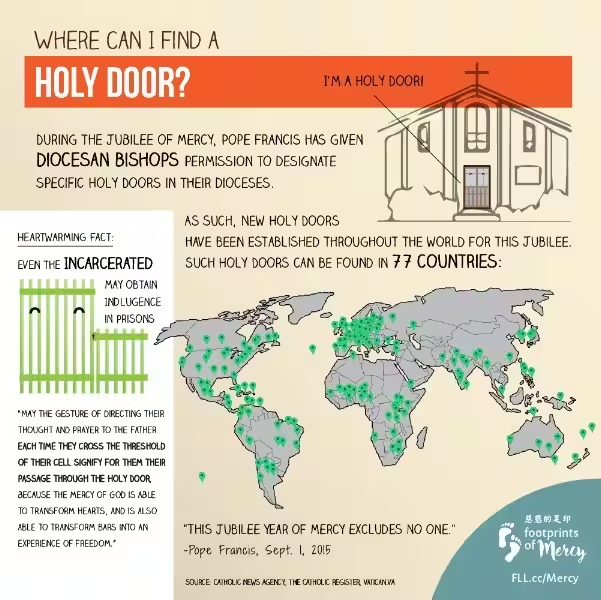
While the most famous Porta Santa are in Rome, the spirit of the Holy Door can be found in various ways within the broader landscape of religion. Many churches, even outside of Jubilee years, designate certain doors as particularly significant or offer opportunities for spiritual reflection and prayer that mirror the intent of the Porta Santa. The idea of a spiritual gateway is deeply ingrained in human consciousness, and different religious traditions offer their own unique interpretations and expressions of this concept. For example, the act of entering a mosque for prayer, or a temple for meditation, can be seen as crossing a sacred threshold, entering a space set apart for communion with the divine.
Ultimately, the Porta Santa serves as a powerful reminder that spiritual growth is a journey, and that there are moments and places where we can intentionally seek a deeper encounter with God. It encourages us to actively participate in our faith, to prepare our hearts, and to step through the opportunities for grace that are offered to us. It’s an invitation to open ourselves to God’s transformative power, recognizing that true renewal often begins with a willingness to cross a threshold, both literally and figuratively.
The Porta Santa as a Symbol of Hope and Reconciliation
The opening of the Porta Santa is always an event of great anticipation and spiritual significance. It symbolizes hope for a new beginning and the promise of reconciliation, not only between individuals and God but also among people. In a world often marked by division and conflict, the message emanating from the opened Holy Door is one of unity, forgiveness, and the possibility of healing. It’s a divine invitation to set aside grievances and to embrace the path of mercy and understanding.
The pilgrimage to a Porta Santa is often undertaken by individuals and groups seeking solace, healing, or a renewed sense of purpose. It’s a testament to the enduring human need for divine intervention and spiritual guidance. The simple act of walking through the door, coupled with sincere prayer and repentance, offers a tangible pathway to experiencing God’s profound love and mercy. The Porta Santa stands as a beacon of this hope, a reminder that even in our darkest moments, divine grace is always within reach.
Frequently Asked Questions about Porta Santa
What is a Porta Santa?
A Porta Santa, or Holy Door, is a special ceremonial door within a Catholic basilica or cathedral that is opened only during a Jubilee Year. It symbolizes a gateway to God’s grace and forgiveness.
What is the religious significance of passing through a Porta Santa?
Passing through a Porta Santa during a Jubilee Year is a significant spiritual act. It is believed to grant the pilgrim a plenary indulgence, which is the remission of temporal punishment due to sins already forgiven in confession. It represents a journey of faith, repentance, and renewed commitment.
When are Porta Santas opened?
Porta Santas are typically opened for Holy Years, which are special years of celebration declared by the Pope. The most recent Holy Year was the Jubilee of Mercy in 2015-2016, and the next ordinary Jubilee is scheduled for 2025. Extraordinary Jubilees can also be declared.
Where can I find a Porta Santa?
The most famous Porta Santa is located in St. Peter’s Basilica in Vatican City. Other major basilicas and cathedrals around the world, particularly in Rome and other significant Catholic pilgrimage sites, also have their own Holy Doors for Jubilee celebrations.
What does it mean to receive a plenary indulgence?
A plenary indulgence is a complete remission of the temporal punishment due to sins that have already been forgiven through the sacrament of reconciliation. It applies to both the living and the dead. To receive a plenary indulgence, one must typically pass through a Holy Door, receive Holy Communion, confess sins, pray for the intentions of the Pope, and be completely detached from all sin.
Is it mandatory to pass through a Porta Santa to receive benefits during a Jubilee Year?
While passing through a Porta Santa is a significant and encouraged act during a Jubilee Year, it is not the sole means of experiencing God’s grace. Other acts of charity, prayer, and devotion can also be pathways to spiritual renewal and forgiveness during these special times.
Can anyone pass through a Porta Santa?
Yes, the Porta Santa is open to all faithful Catholics who wish to participate in the Jubilee Year and seek spiritual benefits.
What is a Jubilee Year in Catholicism?
A Jubilee Year, also known as a Holy Year, is a special year declared by the Pope that is marked by prayer, pilgrimage, and the granting of special spiritual favors, particularly the plenary indulgence associated with passing through a Holy Door. It is a time for the Church to emphasize mercy, forgiveness, and reconciliation.