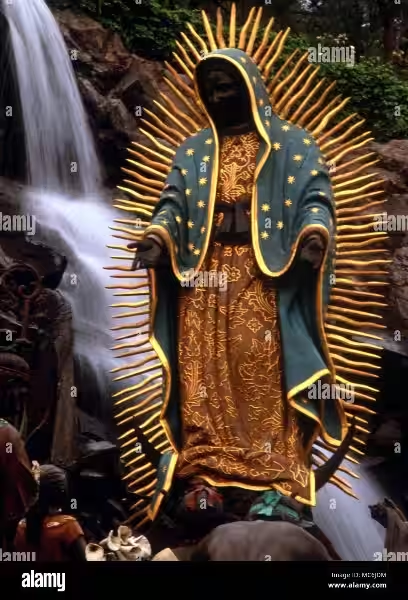
The International Day for World Indigenous Peoples, observed annually on August 9th, serves as a powerful reminder of the vibrant cultures, rich histories, and enduring wisdom of indigenous communities worldwide. Beyond the political and social dimensions often highlighted, this day also shines a crucial spotlight on the profound and intricate relationship between indigenous peoples and their spiritual beliefs. Religion, in its broadest sense, is not merely a set of doctrines for indigenous communities; it is interwoven with their very identity, their connection to the land, and their understanding of the cosmos. This article delves into the multifaceted ways indigenous religions inform the celebration and significance of the International Day for World Indigenous Peoples, offering insights into their resilience, their challenges, and their invaluable contributions to global spiritual diversity.
For many indigenous peoples, the concept of “religion” is not a separate compartment of life but rather an all-encompassing worldview. It dictates their relationship with nature, their social structures, their governance, and their healing practices. Understanding this holistic approach is key to appreciating the depth of meaning behind the International Day for World Indigenous Peoples and the spiritual essence that underpins indigenous survival and resurgence. We will explore how these sacred traditions are being preserved, how they confront modern pressures, and how their wisdom offers profound lessons for all humanity, especially as we collectively observe this important international observance.
Sacred Landscapes: The Foundation of Indigenous Spirituality
The bedrock of indigenous religions is an unbreakable bond with the land. Mountains are not just geological formations; they are sacred beings. Rivers are not just water sources; they are life-giving spirits. Forests are not just collections of trees; they are living ancestors. This deep reverence for the environment is not simply an aesthetic appreciation; it is a spiritual imperative. Indigenous cosmologies often describe creation stories that originate from the earth, the sky, and the waters, establishing a sacred lineage that connects people to their ancestral territories. This connection is so profound that environmental degradation is often experienced as a spiritual wound, impacting not only the physical well-being of communities but also their very souls.
During the International Day for World Indigenous Peoples, these sacred landscapes often become central to commemorative events. Communities gather at significant natural sites to perform rituals, offer prayers, and share stories that reinforce their ancestral connections. For instance, a community might hold a ceremony at a sacred spring to honor the water spirits and ensure its continued purity, a practice that directly links their spiritual beliefs to environmental stewardship. These acts are not just symbolic; they are acts of spiritual maintenance and affirmation, demonstrating the enduring vitality of their traditions in the face of external pressures. The preservation of these sacred sites is therefore intrinsically linked to the preservation of indigenous cultures and spiritual practices, a critical conversation on the International Day for World Indigenous Peoples.
Rituals and Ceremonies: Maintaining Balance and Connection
Indigenous religions are characterized by a rich tapestry of rituals and ceremonies that punctuate the rhythm of life and maintain a delicate balance between the human, natural, and spiritual worlds. These practices are not static relics of the past; they are dynamic expressions of faith that have evolved over millennia, adapting to changing circumstances while retaining their core spiritual integrity. From seasonal festivals that celebrate the harvests to rites of passage that mark the transition from childhood to adulthood, ceremonies serve as vital mechanisms for transmitting cultural knowledge, reinforcing social cohesion, and fostering a sense of collective identity. Participation in these rituals is a form of prayer, a way of communicating with the divine and with ancestral spirits.
On the International Day for World Indigenous Peoples, many communities will engage in solemn or joyous ceremonies that reflect their unique spiritual heritage. These might include song and dance, drumming circles, offerings of food and sacred herbs, and storytelling sessions. For many, these events are not just about remembering the past but about actively revitalizing their spiritual practices for the future. For example, an elder might lead a ceremony to bless the seeds before planting, a ritual that not only ensures a good harvest but also reaffirms the community’s reliance on and gratitude towards the spiritual forces that govern life. These vibrant celebrations underscore the resilience of indigenous spiritual traditions and their ongoing relevance in a rapidly changing world, a powerful message amplified on the International Day for World Indigenous Peoples.
Ancestral Wisdom: Guiding Principles for Life
The spiritual teachings of indigenous peoples are often rooted in profound ancestral wisdom, passed down through generations via oral traditions, myths, legends, and proverbs. This wisdom provides a comprehensive framework for understanding the world and one’s place within it, emphasizing values such as respect, reciprocity, responsibility, and interconnectedness. It teaches that all beings, from the smallest insect to the largest mountain, possess a spirit and deserve to be treated with dignity. This ethical compass guides not only individual behavior but also the collective decision-making processes within indigenous communities, fostering a sense of stewardship and accountability towards both the present and future generations.
The International Day for World Indigenous Peoples provides a platform for sharing this invaluable ancestral wisdom with the wider world. Indigenous leaders and storytellers often use this occasion to articulate their worldview, highlighting principles that are increasingly relevant in our globalized and often disconnected society. For instance, the concept of “mitakuye oyasin” (all my relations) from the Lakota tradition encapsulates the understanding that all beings are interconnected and interdependent. This philosophy, when shared, can offer a powerful antidote to the individualism and consumerism that often characterize modern life. By celebrating indigenous religions, we are not just acknowledging cultural diversity; we are recognizing the timeless solutions embedded within these ancient spiritual systems.
Challenges and Resilience: Preserving Faith in a Modern World
Despite the enduring strength of their spiritual traditions, indigenous religions face significant challenges in the modern era. The legacy of colonialism, forced assimilation, and land dispossession has had a devastating impact, often leading to the suppression of indigenous languages, ceremonies, and spiritual leaders. Furthermore, the encroachment of industrial development, resource extraction, and climate change directly threatens the sacred lands and natural resources upon which many indigenous spiritual practices depend. This creates a constant struggle for survival and a deep concern for the future of their faith systems. The erosion of spiritual practices often leads to a loss of cultural identity and social well-being.
However, the resilience of indigenous peoples in the face of these adversities is truly remarkable. The International Day for World Indigenous Peoples is a testament to this enduring spirit. Communities are actively engaged in efforts to revitalize languages, reclaim ancestral lands, and reassert their spiritual sovereignty. There is a growing movement of indigenous youth who are embracing their heritage, seeking out traditional knowledge, and finding strength and purpose in their ancestral religions. For example, young indigenous people are increasingly using digital platforms to share their spiritual teachings, connect with elders, and organize advocacy efforts, demonstrating a powerful blend of tradition and innovation. This resurgence and dedication to preserving their sacred ways are central to the spirit of the International Day for World Indigenous Peoples.
Global Impact: Indigenous Religions and the Future of Spirituality
The spiritual insights offered by indigenous religions hold immense value for all of humanity, especially as we navigate the complexities of the 21st century. Their emphasis on harmony with nature, communal well-being, and respect for all life provides a crucial counterpoint to many of the dominant paradigms that have contributed to environmental crises and social inequalities. As we mark the International Day for World Indigenous Peoples, it is imperative to recognize that indigenous spiritual traditions are not merely historical artifacts but living, breathing sources of wisdom that can guide us towards a more sustainable and equitable future.
By listening to and learning from indigenous spiritual leaders and communities, we can gain a deeper understanding of interconnectedness and responsibility. The principles of reciprocity, for instance, can inform our approach to resource management and international relations, encouraging a more balanced and respectful exchange. The International Day for World Indigenous Peoples is an opportunity to move beyond superficial recognition and to engage in genuine dialogue, fostering mutual respect and understanding between indigenous and non-indigenous peoples. Embracing the lessons from indigenous religions can enrich our own spiritual lives and contribute to a global tapestry of diverse and vibrant faiths, ultimately strengthening the very essence of what it means to be human.
Frequently Asked Questions: International Day of World Indigenous Peoples and Religion
What is the International Day of World Indigenous Peoples?
The International Day of World Indigenous Peoples is observed annually on August 9th to celebrate and recognize the rich cultural heritage and contributions of Indigenous peoples worldwide. It also serves as an occasion to raise awareness about the challenges and rights faced by Indigenous communities.
How does religion relate to Indigenous cultures?
Religion, in its broadest sense encompassing spirituality, belief systems, and practices, is often deeply intertwined with Indigenous cultures. These spiritual traditions are integral to Indigenous peoples’ identities, social structures, governance, and their relationship with the natural world. They frequently involve reverence for ancestors, spirits, and the land, and guide moral and ethical frameworks.
Are there universal Indigenous religions?
No, there are no universal Indigenous religions. Indigenous spiritual traditions are incredibly diverse, varying significantly from one cultural group to another. Each Indigenous nation or community has its own unique cosmology, rituals, sacred stories, and practices that reflect their specific history, environment, and worldview.
Do Indigenous peoples practice mainstream religions?
Yes, many Indigenous peoples around the world also practice or have adopted mainstream religions such as Christianity, Islam, Buddhism, or Hinduism, often alongside or in conjunction with their traditional spiritual beliefs and practices. This can lead to syncretic forms of worship and belief.
How do Indigenous spiritual practices differ from Western religious concepts?
Indigenous spiritual practices often emphasize a holistic worldview where the spiritual and material realms are inseparable. There is frequently a strong emphasis on the interconnectedness of all living things, the sacredness of nature, and the cyclical nature of life. This can differ from some Western religious traditions that may have a more dualistic understanding of spirit and matter, or a linear view of time.
Is there a religious aspect to the International Day of World Indigenous Peoples?
While the International Day of World Indigenous Peoples is a secular observance, the spiritual and religious dimensions of Indigenous cultures are a fundamental and inseparable part of their identity and are often highlighted during discussions and events related to the day. Many Indigenous leaders and communities use the day to share and affirm their traditional beliefs and spiritual practices.