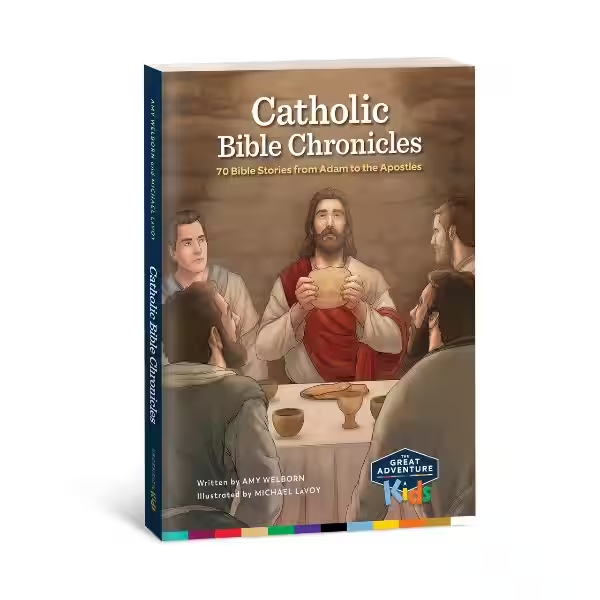
The Catholic Bible, a sacred tapestry woven with divine inspiration and human history, offers a profound and comprehensive account of God’s relationship with humanity. Within its hallowed pages lie the Catholic Bible chronicles, a sweeping narrative that begins with creation and culminates in the eternal reign of God. Far beyond a mere collection of ancient texts, these chronicles serve as a guidebook for life, a source of solace, and a testament to enduring faith. For Catholics, understanding these chronicles is not just an academic pursuit; it’s an essential journey into the heart of their religion.
This extensive collection of books, encompassing both the Old and New Testaments, presents a unified story of salvation history. From the foundational accounts of Genesis to the prophetic pronouncements of the Old Covenant, and onward to the transformative teachings and redemptive work of Jesus Christ in the New Testament, the Catholic Bible chronicles are designed to reveal God’s plan unfolding across millennia. They offer wisdom gleaned from ages past, ethical frameworks for daily living, and a hope that transcends earthly struggles. Exploring these chronicles allows individuals to connect with a legacy of faith that has shaped civilizations and continues to inspire millions worldwide.
The Genesis of God’s Story: From Creation to Covenant
The Catholic Bible chronicles begin with the awe-inspiring account of creation. In the book of Genesis, we encounter the divine artistry that brought forth the universe from nothingness. This foundational narrative isn’t just a scientific explanation; it’s a theological declaration about the inherent goodness of creation and the special place of humanity within it. We learn about Adam and Eve, our first parents, and the tragic fall that introduced sin and brokenness into the world, setting the stage for God’s ongoing redemptive efforts.
Following the initial chapters of creation and the subsequent struggles of early humanity, the Catholic Bible chronicles pivot to the establishment of a special covenant between God and Abraham. This covenant marks a pivotal moment, signifying God’s deliberate choice to work through a specific lineage to bring about his salvific plan. The stories of Abraham, Isaac, and Jacob, their triumphs and their failings, illustrate the complexities of human obedience and God’s unwavering faithfulness. These patriarchs, along with the events of the Exodus and the giving of the Law at Mount Sinai, lay the groundwork for the nation of Israel and their unique relationship with the Almighty.
The Heart of the Old Testament: Law, Prophets, and Promises
The Old Testament portion of the Catholic Bible chronicles is a rich repository of Israel’s history, their spiritual journey, and their anticipation of a Messiah. The books of the Law, or Torah, provide the divine statutes and commandments by which the Israelites were to live, reflecting God’s desire for justice, righteousness, and a holy people. These laws, while seemingly strict, were intended to guide them towards a life of flourishing and to set them apart as God’s chosen nation.
Interwoven with the historical accounts and the Law are the powerful voices of the prophets. Figures like Isaiah, Jeremiah, and Ezekiel, among others, served as divine messengers, calling the people back to faithfulness, denouncing injustice, and foretelling future events, including the coming of the Anointed One. The prophetic Catholic Bible chronicles are filled with both stern warnings and comforting promises, offering a glimpse into God’s justice and his boundless mercy. They speak of a future restoration and a new covenant that would bring about spiritual transformation.
The Climax of Redemption: Jesus Christ and the New Covenant
The Catholic Bible chronicles reach their breathtaking climax in the New Testament with the incarnation, life, ministry, death, and resurrection of Jesus Christ. The Gospels of Matthew, Mark, Luke, and John present a vivid portrait of Jesus as the promised Messiah, the Son of God, who came to earth to reconcile humanity to God. His teachings, miracles, and parables reveal the nature of God’s kingdom and the path to eternal life.
Jesus’ sacrifice on the cross is the ultimate act of love and redemption, fulfilling the prophecies of the Old Testament and establishing the New Covenant in his blood. This covenant is not based on ritualistic observance but on faith in Jesus and the transformative power of his grace. The Catholic Bible chronicles then extend through the Acts of the Apostles, detailing the early spread of Christianity, and the epistles, offering essential theological insights and practical guidance for believers living in the nascent Church.
The Enduring Legacy: The Church and the Promise of Eternity
The Catholic Bible chronicles do not end with the closure of the New Testament canon. They continue to unfold through the life and mission of the Catholic Church, the community established by Jesus to carry on his work in the world. The Church, guided by the Holy Spirit, interprets and applies the teachings found in the Catholic Bible chronicles to each new generation, providing a living tradition that bridges the gap between ancient revelation and contemporary life.
The final book of the Catholic Bible chronicles, Revelation, offers a vision of ultimate triumph and the eternal reign of God. It speaks of the consummation of God’s plan, the defeat of evil, and the establishment of a new heaven and a new earth. This eschatological hope provides a powerful incentive for believers to live faithfully, to persevere through trials, and to anticipate the fullness of God’s kingdom, where justice and peace will reign supreme. Understanding these chronicles is an invitation to participate in this grand, unfolding narrative of salvation and to embrace the hope that defines the Catholic faith.
Frequently Asked Questions about the Catholic Bible Chronicles
What are the “Chronicles” in the Catholic Bible?
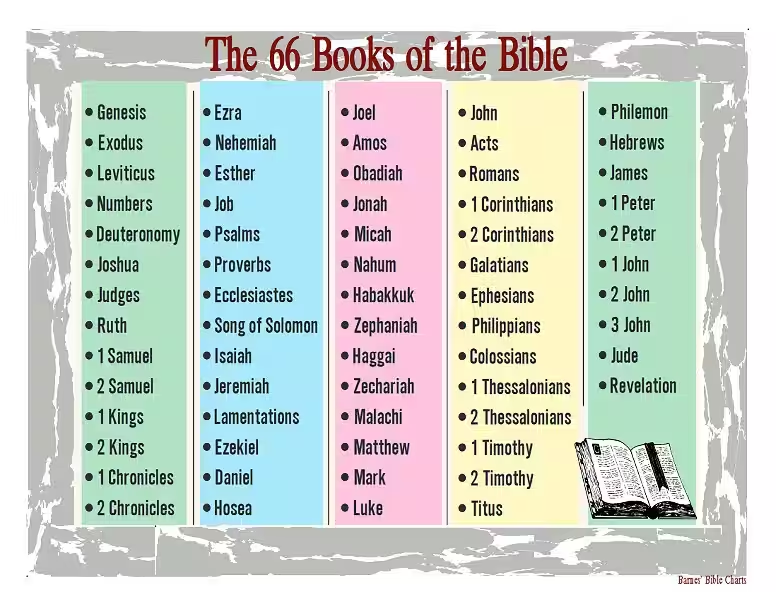
The “Chronicles” in the Catholic Bible refer to two distinct books, 1 Chronicles and 2 Chronicles. These books are part of the Old Testament and are considered historical books. They primarily focus on the history of the Kingdom of Judah, from the time of King David to the Babylonian Exile.
What is the main purpose of the Books of Chronicles?
The Books of Chronicles were written to provide a theological interpretation of Israel’s history, emphasizing the importance of temple worship, the Davidic covenant, and the role of priests and Levites. They offer a perspective on the past that encourages faithfulness to God and the traditions of Israel, particularly for the community returning from exile.
How do the Books of Chronicles relate to the Books of Samuel and Kings?
The Books of Chronicles cover much of the same historical period as the Books of Samuel and Kings. However, Chronicles retells these events with a different focus. While Samuel and Kings often highlight the failures of kings and the consequences of disobedience, Chronicles tends to emphasize the positive aspects of David’s and Solomon’s reigns and the faithful kings, often omitting or downplaying the more critical accounts found in Samuel and Kings.
Who is traditionally credited with writing the Books of Chronicles?
Traditionally, the Jewish historian Josephus attributed the authorship of the Books of Chronicles to Ezra. This view has been widely accepted by many, though modern scholarship suggests that Chronicles may have been compiled by a priestly or Levitical author or group of authors over a period of time.
What is the religious significance of the Books of Chronicles for Catholics?
For Catholics, the Books of Chronicles are an integral part of Sacred Scripture and are read as divinely inspired by God. They offer valuable insights into salvation history, the lineage of David (which is significant for understanding Jesus as the Messiah), the importance of worship and the Temple, and the nature of God’s covenant with His people. They help to understand the continuity of God’s plan from the Old Testament to the New Testament.
Are the Books of Chronicles found in all Christian Bibles?
Yes, the Books of Chronicles are part of the Old Testament canon and are found in all Bibles that adhere to the Protestant, Catholic, or Orthodox canons. They are universally recognized as inspired Scripture by these traditions.