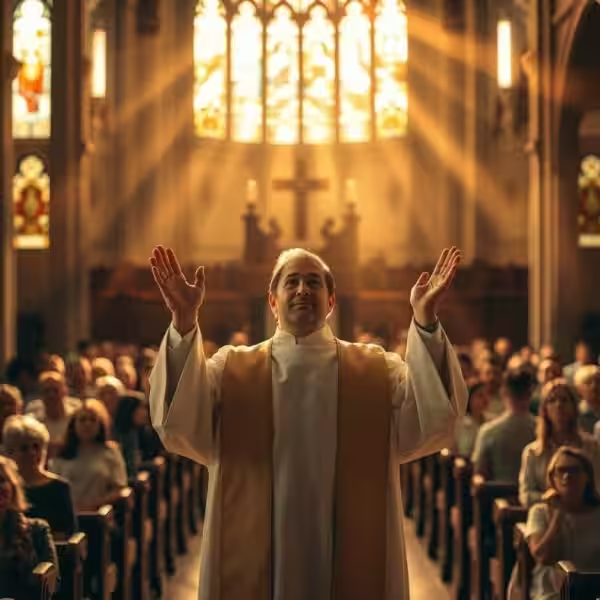
In the vibrant tapestry of Catholic worship, the Catholic homily stands out as a crucial and deeply spiritual element. It’s far more than a mere speech delivered from the pulpit; it is a living bridge connecting ancient scripture to our modern lives, a moment where the divine word is breathed into tangible meaning. Think of it as a spiritual compass, carefully calibrated to guide us through the complexities of our faith and the challenges of our daily existence. The homily isn’t designed to impress with rhetorical flourish, but rather to illuminate, to edify, and ultimately, to inspire us to live more fully in accordance with Christ’s teachings. It’s an invitation to engage, to reflect, and to respond to God’s persistent call to love and service.
The essence of a compelling Catholic homily lies in its ability to make the biblical readings resonate personally. A skilled homilist doesn’t just read the Gospel; they unpack it, revealing its timeless truths and showing how they apply to the joys, sorrows, struggles, and triumphs we experience every week. This personal connection is vital. For instance, when a homily discusses the parable of the Good Samaritan, it might not just recount the story. Instead, it could challenge us to identify the “Samaritans” in our own lives – those overlooked, marginalized, or in need of our compassion – and then provide practical, actionable steps for how we can embody that same spirit of selfless giving. This is the power of a well-crafted homily: it transforms passive listening into active participation in the faith.
The Purpose and Power of the Catholic Homily
The primary purpose of a Catholic homily is to expound upon the readings proclaimed during the Mass, drawing out their meaning and offering practical applications for the faithful. It’s an integral part of the Liturgy of the Word, serving as that essential moment where the abstract pronouncements of scripture are made concrete and relatable. Imagine the early Christian communities, gathered to hear the apostles share the teachings of Jesus – the homily carries this same legacy forward. It’s a direct communication from God’s word, mediated through the voice and understanding of a priest or deacon, who acts as a shepherd guiding their flock. This pastoral dimension is key; the homily aims to nourish our spiritual hunger and strengthen our resolve to live out our baptismal promises.
The power of a Catholic homily stems from its inherent connection to the divine. It is not simply the opinion of a learned individual, but an interpretation guided by the Holy Spirit, rooted in the tradition of the Church. When we listen attentively, we are not just hearing words; we are encountering the living Christ, who speaks to us through the scriptures and their explanation. Consider a homily on forgiveness. A powerful one might not only explain Jesus’ command to forgive seventy times seven times but also explore the emotional and spiritual liberation that comes with releasing resentment. It might offer examples of individuals who have experienced this profound healing through the grace of God, thereby demonstrating the tangible benefits of embracing this challenging but essential Christian virtue. This is how the homily empowers us to overcome obstacles and grow in holiness.
What makes a Catholic homily truly effective? It begins with a deep understanding of the scriptural texts for the day, coupled with a keen awareness of the contemporary world and the lived experiences of the congregation. A great homily is theological, grounding its message in the rich doctrines of the Catholic Church. It is also pastoral, addressing the real-life concerns and spiritual needs of the people. Furthermore, it’s practical, offering concrete suggestions for living out the Gospel message. Think of it like a skilled chef preparing a meal: the ingredients are the scriptures, the recipe is the Church’s tradition, and the masterful preparation is the homilist’s delivery, transforming these elements into a nourishing spiritual feast. Key components often include:
Clear Exegesis: Properly explaining the meaning of the biblical passages.
Relevant Application: Connecting the scripture to modern life situations.
Inspiring Call to Action: Encouraging a change in behavior or attitude.
Deeply Prayerful Tone: Reflecting a genuine reliance on God’s grace.
A truly memorable Catholic homily often employs relatable illustrations and simple analogies to make complex theological concepts accessible. For example, when discussing the concept of God’s providence, a homilist might use the analogy of a parent lovingly providing for their child, emphasizing that God’s care is even more perfect and constant. This kind of storytelling makes the abstract tangible and the divine relatable. The best homilies also possess a certain authenticity; they come from a place of genuine faith and personal reflection, allowing the preacher’s own journey to inform their message. This blend of intellectual depth, pastoral sensitivity, and personal witness creates a powerful spiritual experience for everyone present.
Navigating the Homily: What to Listen For
As you sit in the pew, listening to a Catholic homily, there are specific elements that can enhance your spiritual engagement. Begin by approaching the homily with an attitude of openness and prayer. Recognize that God is speaking to you through the words being shared. Try to identify the central theme or message the homilist is trying to convey. Often, this theme will directly relate to one of the readings. For instance, if the Gospel is about Jesus healing a blind man, the homily might focus on spiritual blindness and the need for divine intervention in our lives. Ask yourself: “How does this message speak to me personally? What is God inviting me to do or to change?”
It’s also beneficial to be aware of the practical takeaways offered. A good Catholic homily doesn’t just offer theological insights; it provides practical guidance for living out the faith. Did the homilist suggest specific ways to practice patience? Did they offer a new perspective on how to approach a difficult relationship? Jotting down these action points, either mentally or physically, can be incredibly helpful. Consider the example of a homily on stewardship. It might not only explain the concept of using our God-given talents but also suggest concrete ways to volunteer at church, support charitable causes, or simply be more mindful of our use of resources. By actively listening for these elements, we transform the homily from a passive experience into a dynamic tool for spiritual growth.
The Role of the Homily in Catholic Life
The Catholic homily is not an isolated event; it is a cornerstone of Catholic life, weaving its way through our personal spiritual journeys and our communal identity. It serves as a regular reminder of our core beliefs and our commitment to living as disciples of Christ. In a world that often bombards us with conflicting messages and values, the homily provides a consistent, authoritative voice of truth and love. It helps us to discern the will of God in our lives and to make choices that align with the teachings of Jesus. Think of it as a recurring spiritual tune-up, ensuring we are running on all cylinders of faith, hope, and charity.
Beyond individual spiritual growth, the Catholic homily plays a vital role in fostering a sense of community within the Church. When a priest or deacon speaks to the congregation, they are addressing a shared body of believers, united by their faith and their participation in the sacraments. The homily can address common challenges, celebrate shared joys, and inspire collective action. For example, a homily during a particularly trying time for society might remind the community of their call to be “salt of the earth and light of the world,” offering practical ways they can bring hope and healing to their neighborhoods. This shared understanding and communal encouragement are essential for the vitality and mission of the Catholic Church.
Challenges and Opportunities in Delivering the Catholic Homily
Delivering an impactful Catholic homily is a challenging endeavor. Homilists must grapple with the profound mystery of God’s word and translate it into language that resonates with a diverse congregation. They need to be well-versed in scripture, theology, and the human condition, all while relying on the promptings of the Holy Spirit. The pressure to be relevant and engaging without compromising the integrity of the faith is a constant consideration. Imagine a homilist preparing for a Sunday where the readings speak of divine judgment and mercy; they must find a way to convey God’s justice without instilling fear, and His mercy without encouraging complacency. This requires prayerful discernment and considerable skill.
However, these challenges also present significant opportunities. The very act of preparing and delivering a Catholic homily is a spiritual discipline for the preacher, fostering their own growth in faith and proximity to God. For the listener, each homily is a fresh opportunity to encounter Christ. A well-delivered homily can ignite a spark of faith, inspire a renewed commitment to prayer, or provide the courage needed to face a difficult situation. The potential for transformation is immense. Consider the countless stories of individuals who have found their vocation, overcome personal crises, or experienced profound spiritual awakenings directly because of a particular homily that spoke to their heart at just the right moment. This underscores the enduring power and importance of this sacred practice.
The Future of the Catholic Homily
As the Church navigates an ever-evolving world, the Catholic homily will undoubtedly continue to adapt while remaining rooted in its essential purpose. The digital age offers new avenues for sharing the Word of God, with many churches now making their homilies available online. This increased accessibility allows the message of faith to reach those who may not be able to attend Mass physically or who simply wish to revisit a particularly impactful message. The challenge and opportunity here lie in maintaining the sacredness and spiritual depth of the homily in these new mediums, ensuring it remains a genuine encounter with Christ rather than mere content consumption. It’s about finding ways to preserve the communal experience and the intimate connection to the liturgy, even when delivered remotely.
Ultimately, the enduring power of the Catholic homily lies in its unchanging core: to proclaim the Gospel and to invite us into a deeper relationship with God. Whether delivered in a grand cathedral or a small parish church, whether spoken by a seasoned bishop or a newly ordained deacon, the homily remains a vital heartbeat of Catholic life. It is God’s persistent invitation to us, whispered through the scriptures and amplified by the voice of His Church, to live lives of love, truth, and discipleship. As we continue to listen, reflect, and respond, the Catholic homily will continue to shape us, guide us, and empower us to be the hands and feet of Christ in the world today.
Frequently Asked Questions about Catholic Homilies
What is a Catholic homily?
A Catholic homily is a sermon given by a priest or deacon during a Catholic Mass. It is an integral part of the Liturgy of the Word and serves to explain and apply the Scripture readings proclaimed during the Mass to the lives of the faithful.
What is the purpose of a homily?
The primary purpose of a homily is to help the congregation understand the Word of God as presented in the readings and to encourage them to live out their faith in their daily lives. It aims to connect the ancient texts to contemporary challenges and to inspire spiritual growth.
Who delivers a homily?
In the Catholic Church, homilies are typically delivered by ordained ministers: priests and deacons. Bishops may also deliver homilies, especially during more significant liturgical celebrations.
When is a homily given during Mass?
A homily is delivered after the Gospel reading during the Liturgy of the Word, before the Profession of Faith and the Prayer of the Faithful.
Are homilies mandatory?
Yes, according to the General Instruction of the Roman Missal, a homily is mandatory on all Sundays and solemnities. It is also recommended on weekdays during Advent and Lent, and on other days of special significance.
What are the main components of a homily?
A good homily usually involves explaining one or more of the Scripture readings, relating them to the Catholic faith and tradition, and offering practical application for the lives of the listeners. It should be rooted in prayer and guided by the Holy Spirit.
How long should a homily be?
While there is no strict time limit, homilies are generally encouraged to be concise and to the point, typically lasting between 5 to 10 minutes. The goal is to be informative and engaging without becoming lengthy or losing the congregation’s attention.
Can anyone else give a homily?
Generally, only ordained ministers (deacons, priests, bishops) are permitted to preach the homily. In exceptional circumstances, an authorized layperson might be permitted to offer a reflection, but this is rare and distinct from a formal homily.
What is the difference between a homily and a sermon?
In Catholic tradition, the term “homily” is specifically used for the explanation of Scripture during the Mass. While “sermon” is a broader term for a religious discourse, the homily is a specific liturgical act with a direct connection to the readings and the Eucharist.