The concept of blessing, in its most profound and spiritual sense, is deeply interwoven with the narrative of Israel throughout religious texts. Far from being a mere passive recipient of good fortune, Israel’s story is one of a divine covenant, a promise of protection, prosperity, and spiritual illumination extended by a higher power. This isn’t just an ancient historical account; it’s a narrative that continues to resonate, offering insights into faith, destiny, and the enduring power of God’s promises. Understanding the scriptures about blessing Israel provides a unique lens through which to explore themes of chosenness, divine favor, and the spiritual significance of a people set apart.
In the vast tapestry of religious literature, the idea of God actively blessing a specific nation or people is a recurring and powerful motif. For Israel, this blessing is not arbitrary but stems from a foundational relationship, a sacred agreement forged in the earliest days of their existence. This covenant serves as the bedrock for numerous scriptural pronouncements of blessing, shaping their identity, their destiny, and their role in the broader spiritual landscape. The implications of these blessings extend beyond material well-being, encompassing spiritual vitality, moral guidance, and a unique purpose within God’s grand design.
The Genesis of Blessing: Abraham and the Covenant Promise
The very inception of the blessing upon Israel is found in its progenitor, Abraham. The scriptures declare, “I will make you into a great nation, and I will bless you; I will make your name great, and you will be a blessing.” (Genesis 12:2). This foundational promise isn’t just about Abraham’s personal prosperity; it’s about his lineage becoming a conduit of blessing for the entire world. Imagine a single drop of water falling into a vast ocean; its impact, though small initially, ripples outward, affecting the whole. Similarly, Abraham’s blessing was destined to expand, carrying divine favor far beyond his immediate family.
This initial declaration laid the groundwork for a perpetual covenant, a solemn pledge from God. The blessing was intrinsically linked to Abraham’s obedience and faith, establishing a pattern that would echo throughout Israel’s history. The promise was not a static one, but a dynamic relationship, contingent on faithfulness. It encompassed protection from enemies, fruitfulness in the land, and a unique spiritual connection with the divine. This initial promise serves as a powerful testament to the belief that divine favor can be bestowed upon entire generations, shaping their collective destiny.
Blessings of Protection and Prosperity
Throughout their journey, from the exodus from Egypt to their settlement in the promised land, scripture consistently highlights God’s commitment to protecting and providing for Israel. The Psalmist declared, “He will command his angels concerning you to guard you in all your ways.” (Psalm 91:11). This is more than just a poetic sentiment; it reflects a deep-seated belief in divine intervention, a shield against adversity. The Israelites were reminded that their security was not solely dependent on their own strength but on the watchful eye and powerful hand of their God.
Furthermore, the blessings extended to agricultural abundance and material well-being. “The Lord your God will bring you into a good land… a land of wheat and barley, of vines and fig trees, of pomegranates, of olive oil and honey.” (Deuteronomy 8:7-8). This wasn’t just about satisfying physical hunger; it was about demonstrating God’s provision and the rewards of obedience. A fertile land meant sustenance, economic stability, and the capacity to thrive, allowing them to fulfill their unique calling. These blessings were a tangible manifestation of their covenant relationship, a divine endorsement of their existence.
The Prophetic Voice: Warnings and Renewed Promises of Blessing
While scriptures are replete with promises of blessing, they also contain stern warnings about consequences when Israel strayed from their covenant. Prophets like Jeremiah and Isaiah often spoke of impending judgment, not as an abandonment of God, but as a correctional discipline designed to bring them back to the path of righteousness. “But if you turn away and abandon the statutes and commandments that I have set before you, and you serve other gods and worship them, then I will pluck you off the land that I have given you.” (Deuteronomy 28:64-65, paraphrased). This highlights the conditional nature of some blessings, emphasizing the importance of adherence to divine principles.
However, even amidst pronouncements of judgment, the prophetic voice consistently carried a message of hope and eventual restoration. The promise of a future redemption and a renewed covenant was ever-present. “For I know the plans I have for you,” declares the Lord, “plans to prosper you and not to harm you, plans to give you hope and a future.” (Jeremiah 29:11). This enduring promise speaks to a God who, despite human failings, remains committed to His people and their ultimate redemption. It’s a powerful reminder that divine love and faithfulness often transcend human error, offering continuous opportunities for reconciliation and renewed blessing.
Restoration and the Future of Blessing
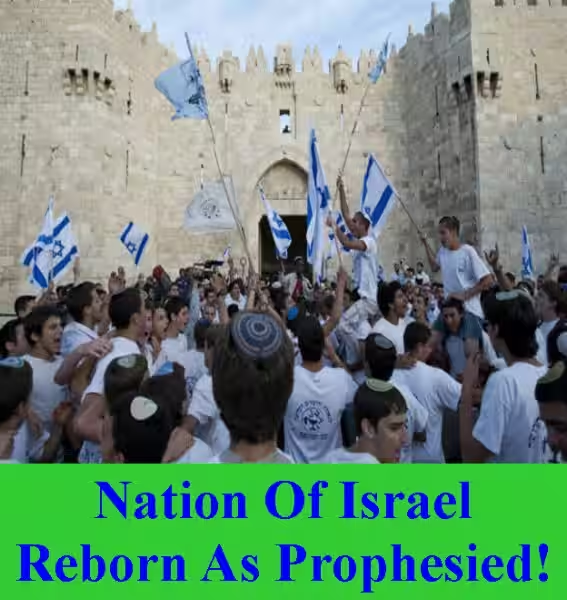
The concept of restoration is a cornerstone of the scriptural understanding of blessing for Israel. After periods of exile and hardship, the prophets foretold a time of ingathering and rebuilding, where God’s favor would be poured out anew. “I will bring them back from the lands to the north and gather them from the ends of the earth.” (Jeremiah 3:18, paraphrased). This vision of return signifies not just a physical relocation but a spiritual renewal, a rekindling of their covenant relationship and a fresh outpouring of divine grace.
This future-oriented blessing often carries an eschatological dimension, hinting at an ultimate culmination of God’s plans for Israel and, through them, for all nations. The idea of a redeemed Israel becoming a light to the world is a recurring theme. “And nations will come to your light, and kings to the brightness of your dawn.” (Isaiah 60:3). This portrays a final state of blessing where Israel, having experienced profound redemption, becomes a testament to God’s faithfulness and an instrument of His salvation for all humanity, illustrating the transformative power of divine blessing.
Theological Significance: Blessing Israel and its Implications
The scriptural focus on blessing Israel carries profound theological implications that extend beyond the specific history of this people. It speaks to the nature of God’s sovereignty and His active involvement in human affairs. The consistent theme of divine favor and intervention demonstrates a God who is not distant or indifferent but intimately involved in the destinies of His chosen. This offers comfort and assurance to believers, highlighting the reliability of divine promises.
Furthermore, the concept of Israel being a vessel of blessing for the world raises fascinating questions about divine purpose and universal redemption. The idea that a specific group’s blessing is intended to have outward repercussions challenges narrow interpretations of faith, suggesting a broader, inclusive divine agenda. This perspective invites reflection on how individual and collective blessings can contribute to a more just and harmonious world, underscoring the interconnectedness of all humanity under a benevolent Creator.
A Universal Echo: Blessing the Nations
The Abrahamic covenant, which initiated the blessing upon Israel, explicitly states its global reach: “and in you all the families of the earth shall be blessed.” (Genesis 12:3). This is a crucial element, demonstrating that the blessing bestowed upon Israel was never intended to be exclusive but rather a means to facilitate blessing for all of humanity. The specific promises to Israel are a testament to God’s faithfulness, and their ultimate fulfillment is seen as a catalyst for universal good.
This understanding encourages a holistic view of religious narratives, where the story of one people becomes a microcosm of broader divine principles. The blessings received by Israel serve as a divine blueprint for how nations and individuals can experience favor and fulfillment, by aligning themselves with divine will. It suggests that by embracing the principles of faith, justice, and love that are central to the scriptural accounts of blessing, all people can partake in the spiritual and material abundance that God offers. The story of Israel’s blessing is, therefore, an invitation to a universal experience of divine favor.
The Bible contains numerous passages that speak about blessing Israel, both as a nation and its individual people. Many of these scriptures are found in the Old Testament. For example, in Genesis 12:3, God tells Abraham, “I will bless those who bless you, and whoever curses you I will curse; and all peoples on earth will be blessed through you.” This is often cited as a foundational promise regarding God’s relationship with Abraham’s descendants, the people of Israel. Other verses, such as Psalm 122:6, encourage prayer for the peace of Jerusalem: “Pray for the peace of Jerusalem: ‘May those who love you be secure.’”
Are there specific prayers or blessings for Israel in scripture?
Yes, there are several instances of prayers and blessings for Israel. The Aaronic Blessing, found in Numbers 6:24-26, is a well-known example: “The Lord bless you and keep you; the Lord make his face shine upon you and be gracious to you; the Lord lift up his countenance upon you and give you peace.” This blessing was specifically intended for the people of Israel. Additionally, many of the Psalms are prayers and songs of praise that often refer to God’s covenant with Israel and his protection over them.
What is the significance of the Abrahamic Covenant in relation to blessing Israel?
The Abrahamic Covenant, established in Genesis 12, 15, and 17, is central to the concept of blessing Israel. God promised Abraham that he would make him into a great nation, that his descendants would be numerous, and that through him and his lineage, all the nations of the earth would be blessed. This covenant signifies God’s enduring commitment to the descendants of Abraham, the Jewish people, and implies a divine favor and protection upon them. The promise of blessing extends not only to Israel but also to those who show kindness and favor to them, as stated in Genesis 12:3.
Does scripture mention blessings for individuals or the entire nation of Israel?
Scripture mentions blessings for both individuals within Israel and for the nation as a whole. Individual blessings are often depicted as prosperity, protection, and God’s favor on their lives. For the nation, blessings include fertility, abundance, victory over enemies, and a special covenant relationship with God. Passages like Deuteronomy 28 outline the blessings that would come upon Israel if they obeyed God’s commandments, as well as the curses if they disobeyed.