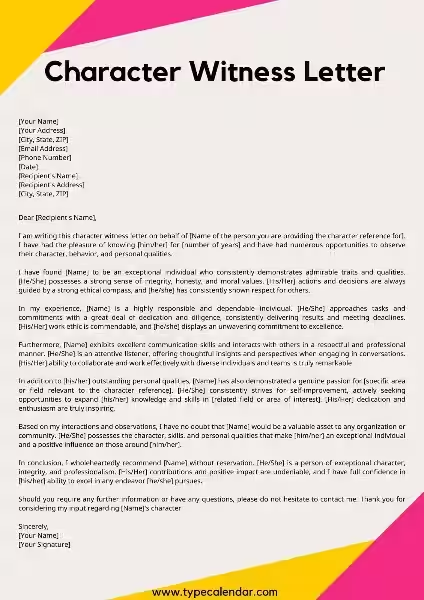
In a world often navigating shades of gray, the strength of one’s moral character stands as a beacon, illuminating their path and influencing their interactions. When tasked with articulating this inner compass, especially through letters of recommendation, the role of religious faith can provide a profound and compelling framework. Whether for academic admissions, professional opportunities, or even personal endorsements, a well-written moral character letter, infused with a religious perspective, can offer unique insights into an individual’s integrity, compassion, and commitment to ethical living.
This article will explore the art of crafting impactful moral character letter examples, specifically highlighting how a foundation in religious principles can elevate these descriptions. We’ll delve into the core elements that make such letters resonate, providing practical advice and illustrative examples that you can adapt to your own needs. Understanding how to weave faith-based values into a compelling narrative is not about proselytizing, but about authentically showcasing the lived experience of an individual guided by deeply held beliefs.
Why Religious Faith Matters in Describing Moral Character
Religion, at its heart, often provides a structured ethical code and a worldview that emphasizes virtues like humility, service, forgiveness, and justice. For many, these tenets are not abstract concepts but lived principles that actively shape their decisions and actions. When writing a moral character letter, drawing upon these religious underpinnings allows for a richer, more nuanced portrayal of the individual’s inner strength and motivations.
Consider the profound influence of religious teachings on concepts like empathy and service. A person deeply committed to their faith might be inspired by parables of compassion or commandments to love their neighbor. This can translate into tangible actions, such as volunteering at a homeless shelter, mentoring younger members of their congregation, or consistently offering support to those in need. A moral character letter can effectively capture these actions by referencing the underlying religious motivation, demonstrating that the individual’s good deeds stem from a sincere and deeply ingrained sense of purpose.
Illustrative Example: The Power of Service Rooted in Faith
Let’s imagine we’re writing a letter for Sarah, a student applying for a prestigious scholarship that values community involvement. We know Sarah spends her weekends volunteering at a local soup kitchen. Instead of just stating this fact, we can add depth by connecting it to her faith.
Here’s a snippet that exemplifies this: “Sarah’s dedication to serving those less fortunate at the downtown soup kitchen is a testament to her profound commitment to the principle of ‘love thy neighbor,’ a core tenet of her Christian faith. I have witnessed firsthand how she approaches each individual with unwavering respect and genuine compassion, offering not just a meal but also a listening ear and a comforting presence. This selfless service, which she undertakes without any expectation of reward, is a clear demonstration of her deeply held moral convictions and her desire to embody the values she cherishes.” This approach moves beyond mere description to paint a picture of her character in action, driven by a meaningful inner compass.
Key Elements of a Compelling Moral Character Letter
Regardless of the specific religious context, a strong moral character letter hinges on specific anecdotes, observable behaviors, and a clear articulation of the individual’s positive impact. Simply listing virtues is insufficient; the letter must show, not just tell, how these virtues manifest in real-world situations. When religion is a guiding force, these examples often become even more potent.
A truly effective letter will focus on authenticity and specificity. Instead of generic praise like “she is a good person,” aim for descriptions that paint a vivid picture. Think about instances where the individual demonstrated integrity under pressure, showed remarkable resilience in the face of adversity, or acted with exceptional kindness when it was difficult. These are the moments that truly reveal character, and when these moments are informed by religious principles, they gain an added layer of significance and credibility.
Showcasing Integrity Through Faith-Based Examples
Integrity is a cornerstone of moral character, and religious teachings often place a high premium on truthfulness, honesty, and ethical conduct. When an individual’s faith guides their commitment to these principles, it can lead to admirable actions, particularly in challenging circumstances.
For instance, consider a situation where an employee, let’s call him David, discovers a minor error that could potentially benefit his team but would involve a degree of obfuscation. A religiously-minded individual might feel compelled to report the error, even if it means a temporary setback. A letter describing this could read: “David’s unwavering commitment to honesty and transparency, even when it presented a challenge to his team’s immediate goals, is truly commendable. During the recent project audit, he proactively identified a minor data discrepancy that, while not intentionally misleading, required correction. His adherence to the principle of ‘doing what is right, even when no one is watching,’ a value he often attributes to his spiritual upbringing, ensured the integrity of our reporting. This demonstrates a level of ethical fortitude that is rare and highly valued.” This example highlights how his faith influences his actions, making the description more impactful.
Crafting Letters for Different Contexts: Academic, Professional, and Personal
The purpose of a moral character letter can vary significantly, and tailoring the content to the specific context is crucial. For academic applications, the focus might be on curiosity, intellectual honesty, and a willingness to learn from diverse perspectives, often influenced by religious values of seeking knowledge and understanding. For professional settings, reliability, teamwork, and ethical decision-making are paramount, again, often rooted in faith traditions that emphasize diligence and fairness.
Personal endorsements, such as for volunteer leadership roles or community initiatives, may highlight compassion, dedication to service, and the ability to inspire others, all qualities frequently nurtured within religious communities. In each instance, the underlying religious motivation can provide a powerful narrative thread, connecting the individual’s actions to a deeper purpose.
Academic Admissions: Faith and Intellectual Curiosity
When writing for academic admissions, we can link religious principles to an individual’s pursuit of knowledge and their openness to different viewpoints. Many faiths encourage discernment, critical thinking, and a respect for truth-seeking. These qualities are highly desirable in academic environments.
Consider a student named Emily, who is applying to a graduate program. We can highlight her intellectual journey through the lens of her faith: “Emily possesses a remarkable intellectual curiosity, deeply intertwined with her spiritual journey. Her engagement with theological texts has not only deepened her understanding of her own faith but has also fostered a profound appreciation for diverse philosophical and ethical perspectives. I have consistently observed her thoughtful approach to complex issues, her willingness to engage in respectful dialogue with those holding differing views, and her dedication to seeking truth wherever it may lead. Her academic pursuits are clearly not just a matter of intellectual pursuit, but a holistic endeavor to understand the world and her place within it, a characteristic that will undoubtedly enrich your academic community.” This emphasizes how her faith fuels her academic drive and her open-mindedness.
Professional Opportunities: Faith, Ethics, and Teamwork
In the professional arena, reliability, ethical conduct, and a spirit of collaboration are essential. Religious teachings often emphasize fairness in dealings, diligence in work, and the importance of community. These values translate directly into desirable professional attributes.
For a colleague seeking a promotion, a letter might include: “Throughout his tenure, Mark has consistently demonstrated an exceptional work ethic and an unwavering commitment to ethical practices, principles he often attributes to his upbringing in a faith community that values honesty and integrity. He is a highly reliable team member, always willing to go the extra mile to ensure project success, and he approaches challenges with a spirit of collaboration and respect for his colleagues. His ability to navigate complex situations with integrity and grace, even under pressure, makes him an invaluable asset to any team. His dedication to fairness and his commitment to doing the right thing are qualities that have earned him the trust and respect of everyone he works with.” This highlights how his faith translates into concrete professional strengths.
Personal Endorsements: Faith, Compassion, and Leadership
When endorsing someone for personal roles, such as a leadership position in a community organization or a volunteer project, compassion, empathy, and the ability to inspire others are key. Religious traditions are often rich in examples of selfless service and the power of loving one’s neighbor, which can be powerful drivers for such endorsements.
For a community organizer, a letter could state: “Maria’s deep-seated compassion and her commitment to serving her community are profoundly shaped by her spiritual beliefs. I have witnessed her tireless efforts in organizing local outreach programs, her ability to connect with individuals from all walks of life, and her unwavering dedication to making a positive difference. Her leadership style is characterized by empathy, an inspiring gentle firmness, and a genuine desire to uplift those around her. She embodies the principle of leading through service, consistently demonstrating a selfless spirit that motivates others to contribute their best. Her capacity for understanding and addressing the needs of others is a direct reflection of her deeply held values and her commitment to Christian love and service.” This focuses on her relational skills and inspirational qualities, directly linked to her faith.
Tips for Writing an Effective Moral Character Letter with a Religious Angle
When incorporating religious themes into a moral character letter, authenticity and sincerity are paramount. The letter should feel natural and genuine, reflecting the individual’s true character rather than a forced attempt to inject religious language. Avoid jargon or overly theological language that might alienate readers unfamiliar with specific religious doctrines. The focus should always remain on the demonstrated virtues and positive impact of the individual.
Furthermore, seek specific examples. Instead of saying “he is charitable,” describe a time he donated his time or resources to a specific cause, perhaps inspired by a religious teaching about stewardship or benevolence. The more concrete the examples, the more persuasive and believable the letter will be. Remember, the goal is to provide a holistic and compelling portrait of the individual’s moral strength, where their faith is a guiding influence, not the sole focus.
The Importance of “Show, Don’t Tell” with Faith-Based Anecdotes
“Show, don’t tell” is a timeless writing principle, and it’s particularly crucial when weaving religious motivations into character descriptions. Instead of stating that someone is “godly,” illustrate what that means through their actions. This is where specific, faith-informed anecdotes become invaluable.
For example, if you’re describing someone’s commitment to forgiveness, instead of simply saying they are forgiving, you could write: “I recall a situation where [individual’s name] was deeply wronged by a colleague. While understandably hurt, they chose to extend grace and understanding, echoing the teachings of [specific religious figure or scripture] on the importance of forgiveness. This decision, while difficult, not only diffused a tense situation but also demonstrated a profound inner strength and a commitment to reconciliation that is truly inspiring.” This approach makes the virtue tangible and directly links it to a faith-inspired action.
Conclusion: A Powerful Synergy of Faith and Character
In conclusion, crafting moral character letters with a religious foundation offers a unique and powerful way to articulate an individual’s integrity, compassion, and ethical framework. By drawing upon the rich tapestry of religious teachings, writers can provide compelling, authentic, and deeply resonant descriptions of a person’s inner compass. The key lies in focusing on observable actions, specific anecdotes, and the authentic manifestation of faith-inspired virtues.
When done thoughtfully and sincerely, these letters can serve as powerful endorsements, illuminating the best of human character and the profound influence of deeply held beliefs. They offer a glimpse into the soul of an individual, showcasing not just what they do, but why they do it, and how their faith guides them to be a force for good in the world. The synergy between moral character and religious conviction can create a truly impactful narrative, leaving a lasting impression on any reader.
Frequently Asked Questions about Moral Character Letters & Religion
Can I include information about my religion in a moral character letter?
Yes, you can absolutely include information about your religion in a moral character letter. Your religious beliefs and practices can be a significant aspect of your moral character and can demonstrate positive traits like compassion, integrity, community involvement, and a strong ethical framework.
How should I present my religion in a moral character letter?
When discussing your religion, focus on how your faith has shaped your values and led you to act in specific ways that reflect positively on your moral character. Instead of simply stating your religious affiliation, provide concrete examples of how your beliefs translate into actions. For instance, you could mention volunteer work through your religious organization, how your faith guides your decision-making in challenging situations, or how it fosters a sense of responsibility and empathy.
Should I only focus on my religion if it’s highly relevant to the application?
While it’s important to be relevant, don’t shy away from mentioning your religion if it genuinely plays a role in your moral development. The letter writer can weave it in naturally. If your religious community is a significant source of your ethical guidance or community service, it’s worth highlighting. The key is to demonstrate how your faith has contributed to your positive character traits, not just to state your religious identity.
What if I’m concerned my religion might be misunderstood or viewed negatively?
If you have concerns about how your religion might be perceived, discuss this with the person writing your letter. They can help frame the information in a way that emphasizes universally positive values like kindness, service, and integrity, which are often shared across various faiths. The focus should always be on the positive impact of your faith on your character and actions.
Can my religious leader or fellow congregant write a moral character letter?
Yes, religious leaders (such as pastors, imams, rabbis, priests) or fellow congregants who know you well can be excellent references for a moral character letter. They can speak to your character, your commitment to your faith community, and how your religious beliefs influence your actions and interactions with others. Ensure they can speak to specific examples of your good character.