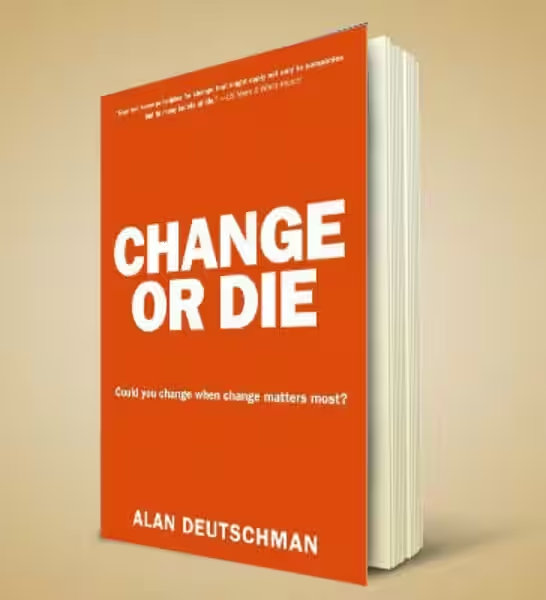
In the quiet hum of our personal lives, amidst the daily routines and ingrained habits, lies a profound truth that resonates even within the most sacred of spaces: change is not just an option; it’s often a necessity. This principle, famously articulated in the groundbreaking book “Change or Die” by Alan Deutschman, Brock Dickinson, and David E. Z. Murphey, offers a powerful framework for understanding and navigating transformation. While the book primarily focuses on personal health and well-being, its core tenets are remarkably applicable to our spiritual journeys. For many, faith isn’t a static destination but a dynamic, evolving landscape, and understanding how to embrace this evolution can be the difference between stagnation and profound spiritual growth.
Think about the journey of faith as a river. Sometimes it flows smoothly, a gentle current carrying us along. Other times, it encounters rapids, unexpected obstacles, or even dries up in drought. The ability to adapt, to reroute, or to find a deeper wellspring within ourselves becomes paramount. This is where the wisdom of “Change or Die” can shed light on our spiritual lives, offering tools and perspectives to help us navigate these inevitable shifts and emerge stronger, more connected, and more aligned with our deepest beliefs.
The Unveiling of the “Change or Die” Premise: More Than Just a Health Mandate
“Change or Die” posits that for significant, lasting personal change to occur, particularly in areas like health, individuals must move beyond mere intellectual understanding and tap into a deeper, more emotional commitment. It highlights that simply knowing what to do isn’t enough; we need to feel the urgency and the potential rewards of transformation. This often involves a profound shift in perspective, recognizing that maintaining the status quo carries a greater risk than embracing the discomfort of change. The book emphasizes that true change requires a journey, not a single event, and that supportive environments and compelling visions are crucial catalysts.
This concept of internalizing the need for change is incredibly relevant to our spiritual lives. Many of us may intellectually understand the principles of compassion, forgiveness, or mindfulness, but applying them consistently in the face of life’s challenges can feel like an insurmountable task. The “Change or Die” framework suggests that we need to move beyond a theoretical grasp of our faith and embrace it with a visceral understanding of its power to transform us. This might involve recognizing how clinging to old resentments hinders our spiritual peace, or how a lack of consistent spiritual practice leaves us feeling disconnected and adrift. The “or die” aspect, while stark, underscores the potential cost of spiritual inertia – a life lived with diminished purpose, joy, and connection.
The Three Pillars of Transformative Change: A Spiritual Application
The authors of “Change or Die” identify three critical pillars that underpin successful, lasting change: a compelling vision, a supportive environment, and a clear, actionable path. These aren’t just business strategies; they are profound insights into the human psyche that can be directly applied to our spiritual development. A compelling vision provides the ‘why,’ the driving force that makes the effort worthwhile. A supportive environment offers encouragement and accountability, mitigating the isolation that often accompanies personal growth. And a clear, actionable path breaks down daunting transformations into manageable steps, preventing overwhelm and fostering a sense of progress.
When we translate these pillars to our spiritual journeys, they offer a practical roadmap. For instance, our compelling vision might be a deeper sense of inner peace, a more profound connection to the divine, or the embodiment of unconditional love. This vision, when deeply felt, can fuel our commitment through difficult periods. A supportive environment could be a faith community, a spiritual mentor, or even a close-knit group of like-minded friends who share our aspirations and offer encouragement. Finally, a clear, actionable path might involve dedicating time for daily prayer or meditation, committing to acts of service, or actively practicing forgiveness in specific situations. These concrete steps, inspired by our vision and supported by our community, make the journey of spiritual transformation achievable.
From Stagnation to Spirituality: Embracing the “Change or Die” Urgency in Faith
The idea of “change or die” in a spiritual context doesn’t imply a literal end, but rather the potential for a spiritual life that withers and loses its vitality. When we resist spiritual growth, when we cling to outdated beliefs or harmful patterns of behavior, we risk becoming spiritually stagnant. This stagnation can manifest as a feeling of emptiness, a lack of purpose, or a pervasive sense of disconnect from ourselves, others, and the divine. The urgency inherent in the “Change or Die” premise can be a powerful wake-up call, prompting us to acknowledge that continuing on a path of spiritual inertia carries its own significant, albeit often subtle, cost.
Consider the analogy of a gardener. If a gardener never prunes, never fertilizes, or never addresses pests, the plant will eventually become weak, unproductive, and may even die. Similarly, our spiritual lives require tending. Regularly examining our beliefs, cultivating positive spiritual practices, and being open to new insights are akin to the gardener’s work. The “Change or Die” perspective encourages us to actively engage in this spiritual cultivation, recognizing that the alternative is a spiritual landscape that becomes barren and lifeless. This isn’t about judgment; it’s about recognizing the inherent potential for growth and the consequences of neglecting it.
The Role of “Change or Die” in Personal Spiritual Evolution
The core message of “Change or Die” – that profound change requires more than just knowledge – is particularly potent when applied to personal spiritual evolution. We can read countless scriptures, attend numerous sermons, and intellectually assent to theological doctrines, but without an internal shift, a willingness to embody these teachings in our daily lives, our spiritual journey can remain superficial. The book’s emphasis on emotional engagement and the recognition of risk resonates deeply here; we need to feel the impact of our spiritual choices and understand the potential gains of deeper connection and the losses of avoidance.
For instance, a person might believe in the importance of forgiveness, but until they experience the profound liberation that comes from truly forgiving someone who has wronged them, the belief remains an abstract concept. This is where the “Change or Die” urgency can be a catalyst. It pushes us to move beyond passive acceptance and actively seek experiences that deepen our understanding and practice of our faith. This might involve deliberately engaging in acts of kindness towards those we find difficult, or consciously choosing to release anger and resentment, even when it feels challenging. This active, often uncomfortable, engagement is where true spiritual evolution occurs, transforming us from the inside out.
Navigating the Rapids: Practical Applications for Spiritual Transformation
The journey of faith is rarely a straight, unblemished path. It’s often filled with moments of doubt, periods of spiritual dryness, and the inevitable challenges that life throws our way. The principles outlined in “Change or Die” offer a valuable toolkit for navigating these spiritual rapids. Instead of being tossed about by the currents of uncertainty, we can learn to steer our spiritual vessel with intention and resilience, drawing on the book’s insights to foster lasting transformation.
One of the key takeaways from “Change or Die” is the importance of identifying and embracing a compelling vision. In our spiritual lives, this vision might be a profound sense of inner peace, a deeper connection to the divine, or the ability to live with greater compassion and authenticity. When we have a clear, motivating vision, it becomes easier to weather the storms of doubt and overcome the inertia that can hold us back. This vision acts as our spiritual north star, guiding us through the inevitable twists and turns of our faith journey.
Building a Supportive Spiritual Ecosystem
The book also highlights the critical role of a supportive environment in fostering change. In the context of faith, this translates to cultivating a spiritual ecosystem that nourishes and sustains us. This could involve actively seeking out and engaging with a faith community that shares our values and aspirations. It might also mean finding a spiritual mentor or guide who can offer wisdom, encouragement, and accountability. Surrounding ourselves with individuals who are also committed to their spiritual growth can create a powerful network of support, making the journey feel less isolating and more empowering.
Furthermore, a supportive spiritual environment isn’t just about external relationships; it’s also about fostering an internal sanctuary. This involves creating dedicated time and space for spiritual practice, whether it’s through prayer, meditation, journaling, or engaging with sacred texts. This personal sanctuary becomes a place where we can recharge, reflect, and reconnect with our spiritual core, fortifying us against the challenges that lie ahead. The “Change or Die” philosophy reminds us that we don’t have to navigate these transformative waters alone; we can build a robust network of support, both internal and external, to guide us.
Charting a Clear and Actionable Spiritual Path
Finally, “Change or Die” emphasizes the necessity of a clear, actionable path. For spiritual transformation, this means translating our vision and our supportive relationships into concrete practices. It’s about breaking down the often-abstract goals of spiritual growth into manageable steps. For example, if our vision is to live with greater compassion, an actionable path might involve consciously practicing active listening in conversations, making a commitment to offer sincere apologies when we fall short, or volunteering for service opportunities that expose us to different perspectives.
The key is to move beyond intention and into consistent action. This might involve setting small, achievable goals, such as dedicating five minutes each day to mindful breathing or committing to reading a spiritual text for ten minutes before bed. The “Change or Die” approach encourages us to view these practices not as chores, but as vital steps on our path to a more fulfilling and spiritually vibrant life. By consistently taking these small, deliberate actions, we build momentum, foster new habits, and ultimately, experience the profound and lasting transformation that is the hallmark of a truly lived faith.
Frequently Asked Questions: “Change or Die” and Religion
What is the core message of “Change or Die” regarding personal transformation?
The book argues that significant, lasting personal change is possible and often necessary for a fulfilling life. It challenges the idea that people are inherently stuck in their ways and presents evidence that individuals can indeed transform their behaviors, habits, and outlooks.
How does “Change or Die” relate to religious beliefs and practices?
While “Change or Die” is not explicitly a religious book, its principles of personal transformation can be deeply relevant to religious individuals. Many religions emphasize the importance of spiritual growth, repentance, and adherence to a changed lifestyle. The book’s framework for achieving change can be applied to religious goals, such as becoming a more devout follower, overcoming sinful habits, or deepening one’s faith.
Can the strategies in “Change or Die” be used to foster religious conversion or deepen existing faith?
Yes. The book’s emphasis on understanding the “why” behind change, building supportive communities, and celebrating small victories can be powerful tools for individuals seeking to convert to a new faith or to strengthen their existing religious commitment. For instance, understanding the core tenets of a religion (the “why”) can be a powerful motivator for change.
Does “Change or Die” suggest that religious faith is a prerequisite for profound personal change?
No, “Change or Die” does not require religious faith as a prerequisite for change. The book focuses on psychological and neurological principles that can drive transformation, regardless of an individual’s spiritual beliefs. However, for those who have faith, religious beliefs can serve as a significant source of motivation and support in their change efforts.
How can religious communities leverage the principles of “Change or Die” to support their members?
Religious communities can use the book’s insights to create more effective programs for discipleship, recovery, and spiritual growth. By fostering environments that encourage open dialogue, provide accountability, and celebrate milestones, faith-based organizations can help members achieve lasting positive changes aligned with their religious values. The concept of community as a supportive structure for change is particularly resonant within many religious traditions.