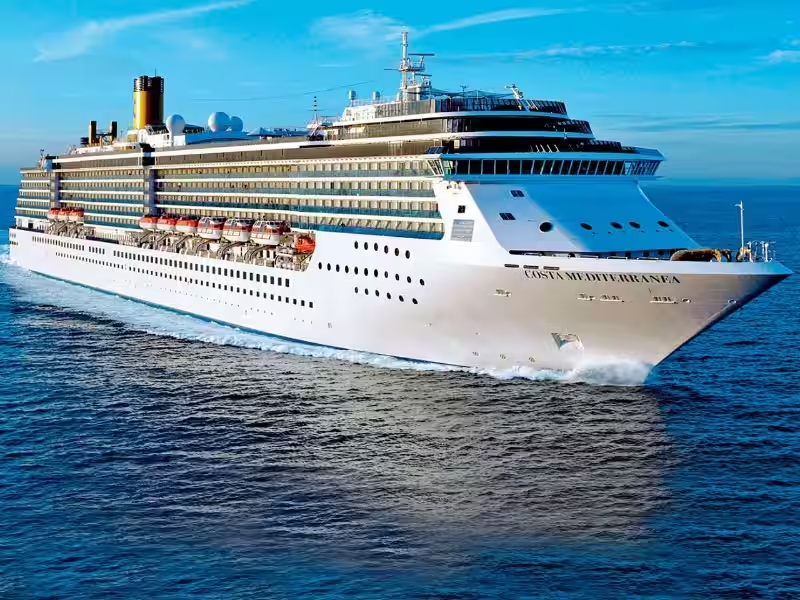
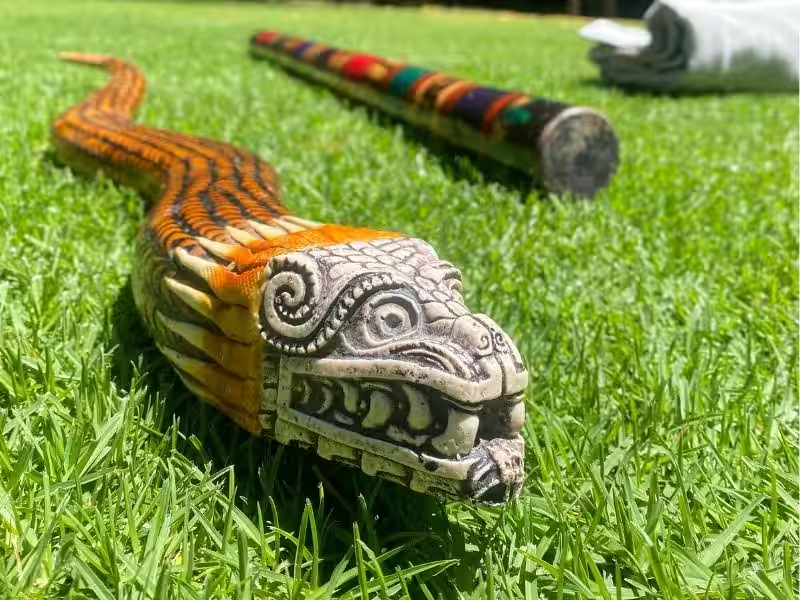
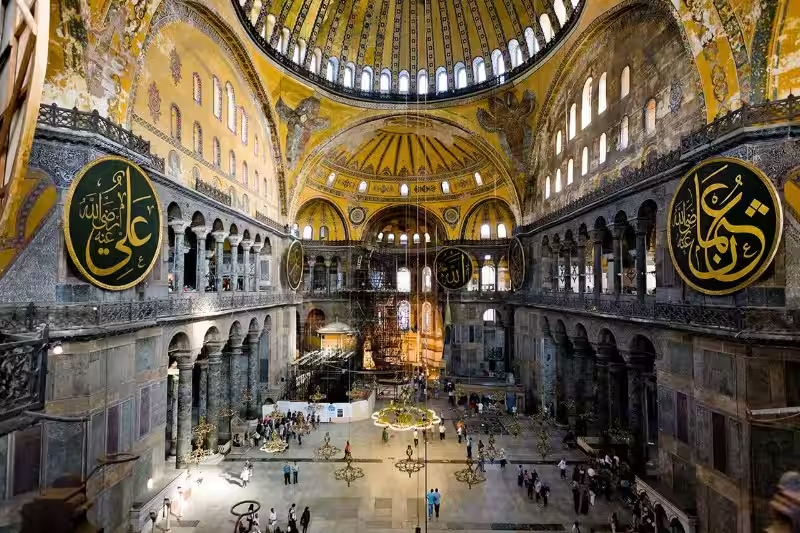
The Costa Mediterranea, a name that evokes sun-drenched coastlines, azure waters, and a rich history, is more than just a geographical descriptor. It represents a vibrant cultural crossroads, a place where civilizations have met, mingled, and left indelible marks. Among these enduring legacies, the influence of religion on the communities that fringe this magnificent sea is profound and multifaceted. From ancient rituals to modern spiritual practices, the sacred has shaped the very essence of life along the Mediterranean coast, weaving a complex and beautiful tapestry of faith.
Understanding the religious landscape of the Costa Mediterranea is key to appreciating its soul. It’s a journey that takes us through millennia of shared beliefs, regional variations, and the constant interplay between the divine and the everyday. This article aims to illuminate this spiritual heritage, offering insights that are both informative and deeply relatable to anyone drawn to the allure of this legendary coastline.
Echoes of Antiquity: Dawn of Faith along the Costa Mediterranea
Long before the rise of monotheistic religions, the peoples of the Costa Mediterranea were deeply spiritual. Their world was alive with the power of nature, and their deities reflected this awe. From the fertility goddesses worshipped in the Levant to the sea gods appeased by mariners in the Aegean, early Mediterranean religions were characterized by a profound connection to the natural world and the cycles of life and death.
Consider the ancient Greeks who populated the southern shores of the Costa Mediterranea. Their pantheon, with figures like Poseidon, god of the sea, and Demeter, goddess of agriculture, illustrates a worldview where the divine was intrinsically linked to the environment that sustained them. Temples dedicated to these deities were not merely places of worship but also centers of community life, often featuring elaborate rituals, festivals, and sacrifices that reinforced social bonds and ensured prosperity. These practices, though ancient, laid the groundwork for the sacred spaces that would later dot the coastline.
The Age of Empires and the Spread of New Beliefs
The Roman Empire, a colossus that stretched across much of the Costa Mediterranea, played a pivotal role in shaping religious narratives. Initially, Roman religion was polytheistic and deeply intertwined with state affairs, but the empire’s vast reach facilitated the exchange of ideas and beliefs. It was within this dynamic environment that Christianity began its remarkable ascent.
From its humble beginnings in the Eastern Mediterranean, Christianity spread rapidly along the trade routes and through the bustling port cities of the Costa Mediterranea. Early Christian communities, often meeting in secret catacombs, gradually gained influence, eventually becoming the dominant faith of the empire. The construction of magnificent basilicas and churches, many of which still stand as testaments to this era, marked the solidification of Christian presence. The foundations of many significant religious sites on the Costa Mediterranea were laid during this transformative period. For example, the early churches in cities like Rome and Ravenna, though not directly on the coastline, were centers that influenced religious architecture and practice across the entire Mediterranean basin.
The Crescent and the Cross: Centuries of Religious Coexistence and Conflict
The religious landscape of the Costa Mediterranea became even more intricate with the rise of Islam. Following the Arab conquests in the 7th century CE, Islam’s influence spread rapidly, establishing a powerful presence on the southern and eastern shores. This era ushered in a period of complex interactions between Christianity and Islam, marked by both periods of peaceful coexistence and intense conflict.
Cities like Cordoba in Andalusia, often considered part of the broader Mediterranean cultural sphere, became glittering centers of Islamic learning and culture. The magnificent Mezquita-Cathedral of Cordoba stands as a powerful symbol of this historical confluence, showcasing architectural styles that blend Islamic and Christian influences. Similarly, across the Costa Mediterranea, in places like Sicily, the Norman conquest led to a fascinating fusion of cultures, where mosques were converted into churches and Islamic scholarship continued to flourish. This religious syncretism and exchange created unique expressions of faith throughout the region. The daily lives of people in these regions were often shaped by the rhythms of different religious calendars, festivals, and social customs, creating a vibrant, if sometimes tense, multicultural mosaic.
The Enduring Legacy of Diverse Faiths
Even with the eventual dominance of Christianity in many parts of the Costa Mediterranea, the historical presence of other faiths has left an indelible mark. The Jewish diaspora, for instance, has had a long and significant history in many Mediterranean cities. Their communities, though often facing periods of persecution, contributed richly to the intellectual and economic life of the coastal regions, leaving behind historic synagogues and cultural traditions.
Today, while Christianity remains the predominant religion in many western and northern Mediterranean countries, and Islam in the southern and eastern parts, the religious diversity of the Costa Mediterranea is a source of its enduring fascination. Visitors can still find ancient synagogues, mosques that stand alongside churches, and communities that preserve ancient rituals, offering a glimpse into the region’s layered spiritual past. This historical depth enriches the experience of exploring the Costa Mediterranea, revealing that its beauty lies not just in its landscapes but in its profound spiritual heritage.
Modern Spirituality and the Sacred in Contemporary Costa Mediterranea
The Costa Mediterranea is not a static historical artifact; it is a living, breathing region where faith continues to evolve. While traditional religious institutions remain significant, there’s also a growing landscape of contemporary spirituality and evolving practices.
Many people along the Costa Mediterranea find spiritual fulfillment through different avenues. This can include engagement with established religions, but also a rise in secular spirituality, mindfulness practices, and a deep appreciation for the natural world as a source of connection and wonder. For instance, the simple act of walking along a quiet beach at sunrise, or tending to an olive grove passed down through generations, can be profoundly spiritual experiences for many. These moments, often overlooked in grand historical narratives, are the everyday expressions of the sacred that continue to define life on the Costa Mediterranea. The emphasis on community and shared rituals, whether religious or secular, remains a cornerstone of Mediterranean life.
Pilgrimage and Sacred Journeys Today
The tradition of pilgrimage, deeply rooted in the history of the Costa Mediterranea, continues to thrive in new and enduring forms. From the ancient pilgrimage routes leading to Santiago de Compostela in Spain, which touch upon the fringes of the Mediterranean influence, to the many shrines and holy sites scattered across Italy, Greece, and the Levant, sacred journeys remain a powerful draw.
These pilgrimages are not just about religious devotion; they often represent a quest for meaning, a desire for personal transformation, or simply an opportunity to connect with history and culture. For many, the journey itself becomes a form of spiritual practice, offering moments of reflection amidst breathtaking landscapes. The Camino de Santiago, for example, while predominantly Atlantic, has routes that draw pilgrims from coastal regions and inspire a similar sense of purpose and community found in other Mediterranean spiritual pursuits. This enduring human impulse to seek something beyond the ordinary continues to animate the spiritual life of the Costa Mediterranea, drawing people to its shores for reasons both ancient and modern.
Conclusion: The Unfolding Spiritual Narrative of the Costa Mediterranea
The Costa Mediterranea is a place where the sacred is woven into the very fabric of existence. Its religious history is a testament to human faith, resilience, and the eternal quest for meaning. From the sun-drenched ruins of ancient temples to the quiet contemplation of a modern hilltop church, the spiritual echoes are ever-present.
Exploring the Costa Mediterranea with an awareness of its religious heritage unlocks a deeper appreciation for its cultures and people. It reveals a story of interconnectedness, adaptation, and enduring faith that continues to unfold. Whether you are drawn by the allure of its beaches, the richness of its history, or the warmth of its people, the sacred shores of the Costa Mediterranea offer a profound and lasting spiritual resonance.
Frequently Asked Questions: Religion in Costa Mediterranea
What are the predominant religions in Costa Mediterranea?
The predominant religions in Costa Mediterranea are Christianity, with a strong Catholic tradition, and Islam, due to historical influences and a significant Muslim population.
Is religious freedom guaranteed in Costa Mediterranea?
Yes, religious freedom is guaranteed by the constitution of Costa Mediterranea, allowing individuals to practice their faith freely and without discrimination.
Are there significant religious minorities in Costa Mediterranea?
Besides the major Christian and Muslim communities, Costa Mediterranea has smaller religious minorities, including Jewish communities, Orthodox Christians, and a growing presence of various other faiths and non-religious individuals.
What role does religion play in everyday life in Costa Mediterranea?
Religion plays a significant role in the cultural fabric of Costa Mediterranea, influencing social customs, public holidays, and community life for many residents. However, the degree of observance varies greatly among individuals.
Are there any major religious sites to visit in Costa Mediterranea?
Costa Mediterranea boasts numerous historical and significant religious sites, including ancient cathedrals, mosques, synagogues, and monasteries, attracting both pilgrims and tourists interested in religious heritage.
Is interfaith dialogue common in Costa Mediterranea?
Efforts towards interfaith dialogue are present and encouraged in Costa Mediterranea, with various organizations and community groups working to foster understanding and cooperation between different religious communities.
Are religious festivals widely celebrated in Costa Mediterranea?
Major religious festivals, such as Christmas, Easter, Ramadan, and Eid al-Fitr, are widely recognized and celebrated in Costa Mediterranea, often with public observances and community gatherings.
How does the government interact with religious institutions in Costa Mediterranea?
The government of Costa Mediterranea maintains a position of neutrality regarding religious doctrine but often collaborates with religious institutions on social welfare programs, cultural preservation, and community engagement initiatives.