Prayer words are more than just a collection of syllables; they are the linguistic bridges that allow us to connect with something larger than ourselves, whether we perceive that as God, the Universe, or a higher spiritual power. The act of uttering prayer words, whether in a hushed whisper or a resounding declaration, is a fundamental aspect of religious practice across countless traditions. These phrases, often imbued with centuries of wisdom and devotion, serve as a conduit for expressing our deepest hopes, fears, gratitude, and pleas. They are the sacred lexicon of the soul, a way to articulate the ineffable and seek solace, guidance, or strength.
The beauty of prayer words lies in their adaptability and personal resonance. While established prayers, such as the Lord’s Prayer in Christianity or the Surah Al-Fatiha in Islam, offer a structured framework for devotion, the heart of prayer often blossoms in spontaneous, heartfelt expressions. It’s about more than just reciting; it’s about infusing intention and emotion into every syllable. When you say, “Dear God, please give me the strength to face this challenge,” you’re not just speaking words; you’re channeling your vulnerability and your faith into a potent request. These words become vehicles of transformation, capable of shifting our perspective and opening us to divine intervention.
The Diverse Landscape of Prayer Words in Different Religions
Christianity: A Foundation of Faith and Petition
In Christianity, prayer words form the bedrock of a personal relationship with God. From the intimate whispers of a morning prayer, acknowledging the gift of a new day, to the more formal supplications recited in church services, the language of prayer is diverse. The Psalms, for instance, offer a rich tapestry of prayer words, encompassing praise, lament, thanksgiving, and petition. Consider King David’s cry in Psalm 51: “Create in me a clean heart, O God, and renew a right spirit within me.” These are not mere words; they are raw expressions of repentance and a yearning for spiritual renewal. The act of praying these words connects believers to a long lineage of faith.
The Lord’s Prayer, often taught by Jesus himself, is a prime example of a structured prayer with potent prayer words. “Our Father, who art in heaven, hallowed be thy name. Thy kingdom come, thy will be done, on earth as it is in heaven.” This prayer encapsulates worship, submission to divine will, and a plea for daily sustenance and forgiveness. It teaches us to frame our requests within the context of God’s sovereignty and our dependence on His grace. The repetition of these prayer words, far from being rote, reinforces core tenets of Christian belief and fosters a sense of communal spiritual identity.
Islam: Submission and Supplication Through Sacred Words
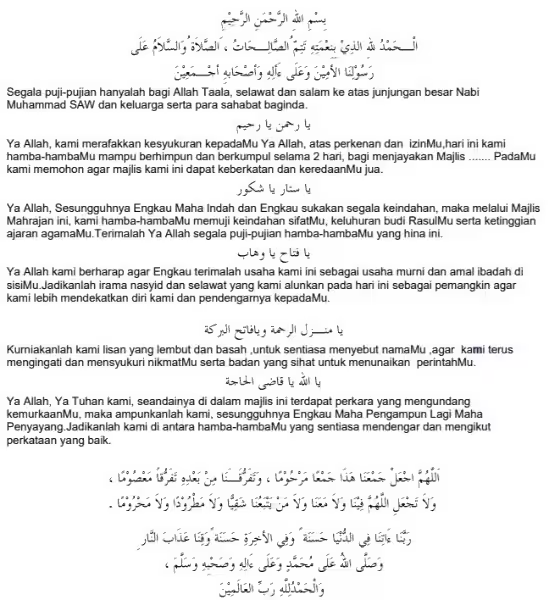
Within Islam, the Arabic prayer words are considered profoundly sacred, believed to be the direct words revealed to the Prophet Muhammad. The Salah, the ritual prayer performed five times a day, is a cornerstone of Islamic practice and is filled with specific prayer words and verses from the Quran. The Surah Al-Fatiha, often called the “Opening Chapter,” is recited in every unit of Salah and begins with: “Bismillah ir-Rahman ir-Rahim” (In the name of Allah, the Most Gracious, the Most Merciful). This invocation sets a tone of utter dependence and complete trust in Allah’s boundless compassion.
The prayer words within Salah are not merely recited but are deeply contemplated, fostering a sense of direct communion with the Divine. Phrases like “Allahu Akbar” (God is the Greatest) are repeated at various points, reminding the worshipper of God’s supreme power and majesty. The Du’a, or supplication, offers a more personal form of prayer, where Muslims can use any prayer words they choose to express their needs, gratitude, or seek forgiveness directly from Allah. This unfiltered dialogue emphasizes the intimacy and accessibility of the divine in Islamic belief.
Judaism: A Covenant of Words and Remembrance
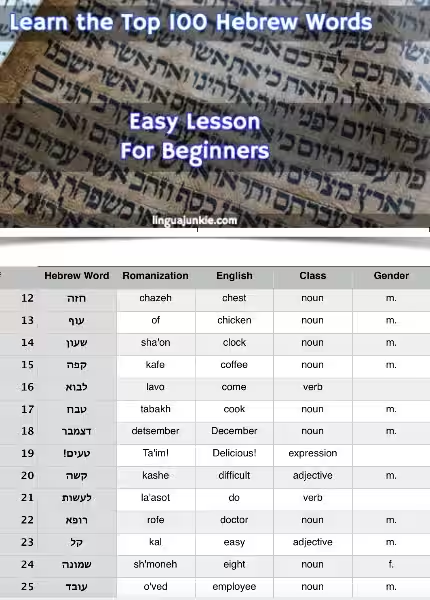
Judaism places immense value on prayer words, viewing them as a vital component of the covenant between God and the Jewish people. The Amidah, or the “Standing Prayer,” is a central prayer recited three times daily, comprising nineteen blessings. These prayer words are a profound expression of gratitude, petition for wisdom and sustenance, and a plea for the restoration of Jerusalem. The ancient Hebrew prayer words carry a deep historical and spiritual weight, connecting individuals to generations of their ancestors who recited the same phrases.
Beyond formal prayers, Jewish tradition encourages personal prayer and reflection. The act of learning and reciting Torah verses can also be considered a form of prayer, a way of engaging with God’s word and understanding His will. The concept of kavanah, or intention and focus, is crucial. When reciting prayer words, it’s not just about the sound but the deep understanding and emotional engagement behind them. This ensures that the prayer words are a genuine outpouring of the heart, not just a ritualistic exercise.
Buddhism: Mantras as Potent Prayer Words for Transformation
While Buddhism often emphasizes meditation and mindfulness over petitionary prayer in the Western sense, the use of mantras can be considered a form of prayer words. Mantras are sacred sounds or syllables, often in Sanskrit, believed to possess spiritual and psychological power. Reciting them, either silently or aloud, is a practice that aims to focus the mind, purify consciousness, and cultivate positive qualities. The mantra “Om Mani Padme Hum” is perhaps the most well-known Tibetan Buddhist mantra, believed to embody the essence of compassion and wisdom.
The repetition of mantras is a form of active contemplation, a way to imbue the mind with specific vibrations and energies. It’s less about asking for external intervention and more about internal transformation. The prayer words of a mantra are seen as a key to unlocking one’s own inherent potential for enlightenment. The rhythm and sound of the mantra work to quiet the incessant chatter of the mind, allowing for a deeper connection to one’s true nature and the interconnectedness of all beings. This practice highlights how prayer words can be a tool for self-realization.
The Universal Power of Prayer Words: Finding Your Voice
Regardless of religious affiliation, the act of engaging with prayer words offers a profound opportunity for introspection and connection. Whether you are reciting ancient scriptures, composing a personal plea, or chanting a mantra, the underlying principle remains the same: to vocalize your inner world and seek a response from the divine. The power lies not just in the specific words themselves, but in the faith, intention, and sincerity that we bring to them. Even a simple, unadorned phrase like “Thank you” spoken with genuine gratitude can be a powerful prayer.
Ultimately, prayer words are a testament to the human longing for meaning, purpose, and connection. They are the tools we use to navigate the complexities of life, to celebrate our joys, to bear our sorrows, and to seek guidance on our journey. By understanding and embracing the diverse ways in which prayer words are used across religions, we can discover new avenues for spiritual growth and a deeper understanding of ourselves and the universe. So, find the prayer words that resonate with your soul, and let them be your guide.
Frequently Asked Questions about Prayer Words and Religion
What are prayer words?
Prayer words are the specific phrases, sentences, or passages that individuals use when communicating with a divine being or higher power. These can be recited verbatim from religious texts, spontaneously composed, or a combination of both.
How do different religions view prayer words?
Different religions have varying approaches to prayer words. Some emphasize reciting specific, traditional prayers as a way to connect with the divine and preserve religious heritage. Others encourage personal and spontaneous prayer, focusing on the sincerity of individual expression. Many traditions incorporate both forms.
Are there “correct” prayer words?
The concept of “correct” prayer words is largely dependent on the specific religious tradition and individual belief. Within many religions, there are established, revered prayers considered to be particularly effective or theologically sound. However, the sincerity and intention behind the prayer are often considered paramount, regardless of the exact wording.
Can I create my own prayer words?
Yes, in many religious and spiritual traditions, creating personal prayer words is not only accepted but encouraged. This allows for a more intimate and individualized connection with the divine, expressing personal needs, gratitude, or reflections.
What is the purpose of prayer words?
Prayer words serve multiple purposes, including:
* Communication: To address a divine being or higher power.
* Devotion and Worship: To express reverence, love, and adoration.
* Supplication: To ask for guidance, help, or blessings.
* Gratitude: To express thanks for blessings received.
* Meditation and Reflection: To center oneself and focus the mind.
* Community and Tradition: To unite in shared practice and uphold religious heritage.
Do prayer words need to be spoken aloud?
Prayer words can be spoken aloud, recited silently in one’s mind, or even expressed through gestures or internal thought. The method of delivery often depends on personal preference, the specific religious practice, and the context of the prayer.