In the tapestry of religious history, certain figures emerge whose lives, though seemingly ordinary, resonate with extraordinary faith and inspire countless others. Among these luminous souls is Jacinta Marto, one of the three shepherd children of Fátima. Her story, intertwined with profound religious experiences and a deep commitment to prayer and penance, offers a powerful testament to the enduring strength of faith, even in the face of suffering and worldly distractions. For many, Jacinta’s journey is not just a historical account but a living guide, a relatable path toward a deeper spiritual life.
Born in Almeirim, Portugal, on March 5, 1910, Jacinta Marto, along with her brother Francisco and cousin Lúcia Santos, became central figures in the widely recognized Marian apparitions at Fátima in 1917. While the apparitions themselves are a cornerstone of Catholic devotion, it is the personal lives and spiritual evolution of these children, particularly Jacinta, that continue to captivate and inform believers. Her short but impactful life serves as a potent reminder that profound spiritual connection is accessible to all, regardless of age or circumstance.
The Fátima Phenomenon: A Divine Encounter and its Impact on Jacinta
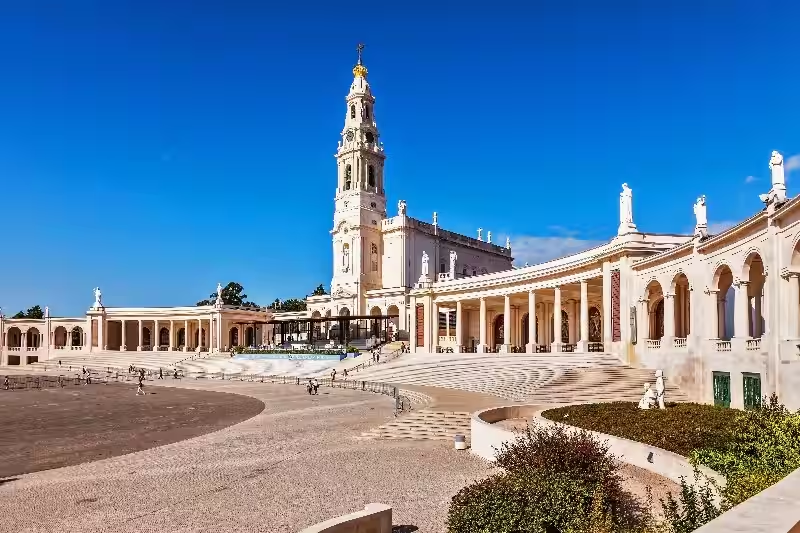
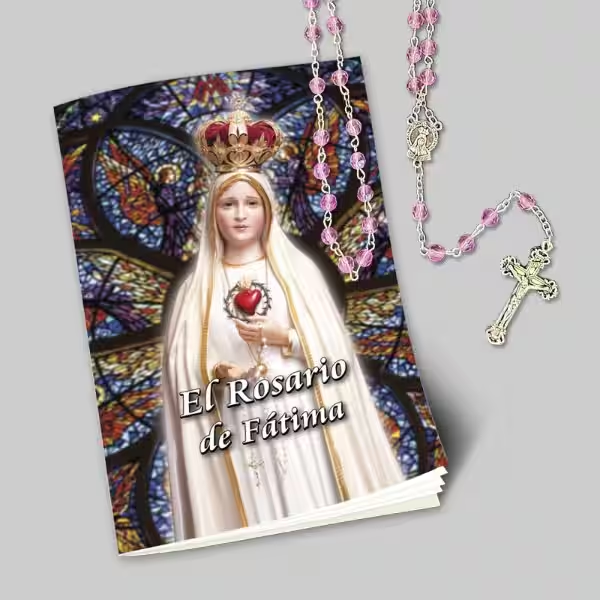
The year 1917 marked a turning point not only for Portugal but for the global Catholic Church. The apparitions of the Blessed Virgin Mary, which began on May 13th and continued for several months, profoundly impacted the lives of Jacinta Marto and her young companions. These celestial encounters weren’t just fleeting visions; they were immersive experiences that demanded a response. The Virgin Mary, appearing as the “Lady of the Rosary,” delivered messages of peace, called for prayer and penance, and warned of the dangers of sin and war.
For young Jacinta, these revelations were not abstract theological concepts but deeply personal directives. The spiritual intensity of the apparitions, especially after witnessing the “miracle of the sun,” ignited a fervent devotion within her. She embraced the call to prayer with an eagerness that surprised many, particularly the urgent plea for the conversion of sinners and the recitation of the Holy Rosary. This transformative experience laid the foundation for her understanding and practice of religion, shaping her entire being around the messages she received.
The core of Jacinta Marto’s spirituality, as understood through her life and the messages of Fátima, revolved around an extraordinary commitment to prayer and penance. She truly embodied the call to “pray for sinners” and to offer up sacrifices for their conversion. This wasn’t a passive acceptance of suffering; it was an active, willing participation in the redemptive work of Christ. Her prayers were not rote recitations but heartfelt pleas, imbued with a profound sense of empathy for those who had strayed from God’s path.
Her small acts of self-denial, often mirroring the sacrifices she was asked to make, are particularly relatable. For instance, Jacinta might have given up a favorite treat or endured a discomfort without complaint, seeing it as a way to alleviate the suffering of others. This willingness to embrace hardship for the sake of love and atonement is a powerful example for modern believers. It demonstrates that religious devotion can manifest in tangible, everyday actions, making the spiritual accessible and actionable in our own lives.
From Shepherdess to Saint: The Spiritual Maturity of Jacinta Marto
Despite her tender age, Jacinta Marto exhibited a spiritual maturity that belied her years. The intense experiences at Fátima accelerated her spiritual growth, leading her to a profound understanding of sin, suffering, and divine mercy. She deeply grasped the concept of the Immaculate Heart of Mary and its significance in the spiritual life, often speaking of it with a wisdom that resonated with adults.
Her willingness to accept suffering, particularly during her final illness, is a testament to her faith. Jacinta understood that her pain could be united with Christ’s suffering for the salvation of souls. This perspective, while challenging, offers a profound insight into the Catholic understanding of suffering and its potential for spiritual fruitfulness. She didn’t shy away from the difficult aspects of her faith; instead, she embraced them with a courageous spirit, transforming what could have been a purely physical ordeal into a powerful spiritual witness.
The canonization of Jacinta Marto, alongside her brother Francisco, on May 13, 2017, the centenary of the Fátima apparitions, cemented her status as a saint and a powerful intercessor for the faithful. Her life story continues to inspire millions, offering a beacon of hope and a practical guide for living a devout Catholic life in the 21st century. Her example reminds us that faith is not confined to grand gestures but is woven into the fabric of our daily lives.
For individuals seeking to deepen their religious practice, Jacinta Marto’s life offers several key takeaways. Firstly, the importance of consistent prayer, particularly the Rosary, as a means of drawing closer to God and seeking His intercession. Secondly, the value of penance and sacrifice, not as acts of self-punishment, but as tangible expressions of love and solidarity with those who suffer. Finally, her unwavering trust in God’s divine mercy serves as a constant encouragement, reminding us that even in our darkest moments, hope and redemption are always within reach through faith. Jacinta, the young shepherdess, remains a vital and relatable figure, proving that holiness is attainable for all who earnestly seek it.
Frequently Asked Questions About Jacinta Marto and Religion
Who was Jacinta Marto?
Jacinta Marto was one of the three shepherd children who witnessed the apparitions of the Blessed Virgin Mary in Fátima, Portugal, in 1917. She is known for her deep piety and her profound spiritual experiences during the apparitions.
What is the religious significance of the Fátima apparitions for Jacinta Marto?
The Fátima apparitions are central to Jacinta Marto’s religious significance. During these apparitions, she, along with her cousins Lúcia dos Santos and Francisco Marto, received messages from the Virgin Mary concerning prayer, repentance, and the recitation of the Rosary. Jacinta embraced these messages with great fervor and a deep commitment to spiritual life.
What role did prayer play in Jacinta Marto’s life?
Prayer was a cornerstone of Jacinta Marto’s life, especially after the apparitions. She became known for her intense prayer life, particularly for the conversion of sinners and for peace. She often engaged in acts of penance and sacrifice, seeing them as ways to unite herself with the suffering of Jesus and to fulfill the requests of the Virgin Mary.
How is Jacinta Marto venerated in the Catholic Church?
Jacinta Marto was canonized as a saint by Pope Francis on May 13, 2017, the centenary of the first Fátima apparition. She is venerated as Saint Jacinta of Fátima. Her feast day is celebrated on February 20th.
What are the key religious messages associated with Jacinta Marto’s life?
The key religious messages associated with Jacinta Marto’s life are those of the Fátima apparitions: the importance of praying the Rosary, the need for repentance and conversion, devotion to the Immaculate Heart of Mary, and the offering of sacrifices for the salvation of souls and for peace in the world.
What can people learn from Jacinta Marto’s religious example?
People can learn from Saint Jacinta Marto’s religious example the power of faith, the importance of prayer and sacrifice, the virtue of obedience to God’s will, and a profound love for Jesus and Mary. Her life serves as a testament to the fact that even a young child can achieve great spiritual heights through devotion and trust in God.