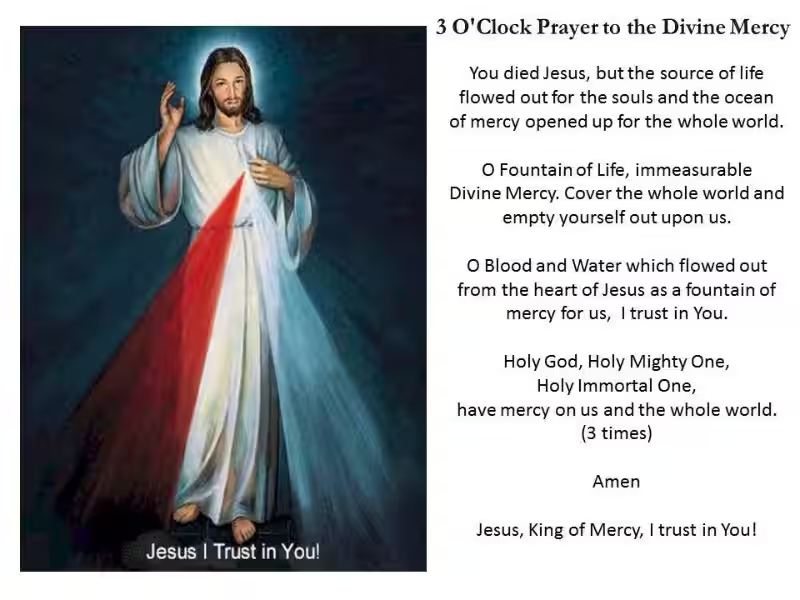
In the tapestry of our lives, moments of quiet reflection and spiritual connection can often feel like rare treasures. We are bombarded by the constant hum of daily responsibilities, the demands of work, family, and the ever-present digital world. Yet, amidst this whirlwind, there exists a sacred invitation, a potent reminder of God’s boundless love and compassion, readily available at a specific hour each day: the 3 o’clock prayer, intimately linked with the devotion to Divine Mercy. This isn’t just a ritual; it’s a doorway to profound spiritual renewal, a chance to reconnect with the very heart of God’s unfailing grace, regardless of your specific religious affiliation or understanding of the concept of mercy. For many within the Christian tradition, this hour holds particular significance, a time to pause and remember Christ’s ultimate sacrifice.
The beauty of the 3 o’clock prayer lies in its accessibility and its profound simplicity. It doesn’t demand elaborate preparations or extensive theological knowledge. It’s a heartfelt offering, a moment to consciously invite God’s mercy into our lives and to extend it to others. This article will delve into the origins, meaning, and practical application of this powerful practice, exploring how embracing the 3 o’clock prayer and the spirit of Divine Mercy can transform our spiritual journeys and bring a deeper sense of peace and purpose to our days. Let’s embark on this exploration together, discovering the transformative potential that awaits when we align ourselves with this sacred hour.
The hour of 3 PM holds a special place in the devotional life of many, particularly those who follow the teachings of St. Faustina Kowalska and the devotion to the Divine Mercy. This specific time is believed to be the hour of Christ’s death on the cross, a moment of immense suffering and ultimate love. Therefore, it is considered an especially opportune time to pray for mercy, to remember His sacrifice, and to ask for God’s grace. It’s a time when the veil between the earthly and the divine is believed to be thinnest, allowing for a more direct and profound communion.
For many, the 3 o’clock hour serves as a powerful religious anchor in their day. It’s a pre-arranged moment to step away from the mundane and focus on the eternal. Imagine the world at 3 PM: potentially the peak of the workday for some, the afternoon slump for others. It’s a time when energy might be waning, and the weight of daily tasks can feel heaviest. This is precisely why setting aside this moment for the 3 o’clock prayer, a prayer of Divine Mercy, is so impactful. It’s a conscious act of turning towards God, acknowledging our need for His divine intervention, and seeking solace in His unconditional love, even in the midst of our busiest schedules.
The Origins of the Divine Mercy Devotion
The devotion to the Divine Mercy, deeply intertwined with the 3 o’clock prayer, has its roots in the mystical experiences of a Polish nun, St. Faustina Kowalska, in the 20th century. Throughout her life, Sister Faustina received visions and messages from Jesus, which she meticulously recorded in her diary. These revelations emphasized the immense and unending love of God for humanity, and His profound desire for us to embrace His mercy. Jesus Himself instructed her on the importance of praying at the hour of His death, stating in her diary, “At three o’clock, implore My mercy, especially for sinners; and if only for a brief moment, immerse yourself in My passion, especially in My abandonment at the critical moment of My agony.”
These divine instructions formed the bedrock of the Divine Mercy devotion. The 3 o’clock prayer became a central practice, a specific time designated for believers to unite their prayers with Christ’s sacrifice and to actively seek and offer mercy. This isn’t about adhering to a rigid schedule for its own sake, but about recognizing the spiritual significance of that moment and intentionally engaging with God’s divine compassion. The message of Divine Mercy resonates universally, reminding us that no sin is too great, no wound too deep, for God’s healing love to reach.
Crafting Your 3 O’Clock Prayer: A Simple Yet Profound Act
The beauty of the 3 o’clock prayer is its inherent simplicity, making it accessible to everyone, regardless of their prayer background. There’s no need for complex liturgy or lengthy scripture readings. At its core, it’s a heartfelt appeal for God’s mercy. A common and highly recommended prayer is the Chaplet of the Divine Mercy, but even a simple, sincere prayer from the heart is incredibly powerful. For instance, one can simply pause, acknowledge the hour, and say, “Jesus, I trust in You,” or a more elaborate plea like, “For the sake of His sorrowful Passion, have mercy on us and on the whole world.” The key is sincerity and a genuine desire to connect with Divine Mercy.
Think of it like this: if you were facing a difficult challenge, you wouldn’t necessarily need a formal speech to ask for help from a loved one. A simple, earnest plea, “Please help me,” spoken with genuine need, carries immense weight. Similarly, the 3 o’clock prayer is about expressing that same earnest reliance on God’s divine grace and compassion. It’s about recognizing our human limitations and turning to the infinite love of God for strength, guidance, and forgiveness. This practice can become a religious touchstone, a reliable moment of grace in the midst of our often unpredictable lives.
Key Elements of the Prayer
While the specific words can vary, the essence of the 3 o’clock prayer, rooted in Divine Mercy, often includes several key elements: a profound act of trust in Jesus, a plea for mercy for oneself and for the entire world, and a remembrance of Christ’s Passion. The phrase “Jesus, I trust in You” is central, embodying the core of the devotion. This act of faith is paramount, as it acknowledges our reliance on God’s unfailing goodness and His infinite love. It’s a conscious surrender of our worries and burdens into His capable hands, trusting that His divine plan is always for our ultimate good.
Furthermore, the inclusion of “for the sake of His sorrowful Passion” connects our prayers directly to the ultimate act of mercy – Christ’s sacrifice on the cross. This imbues our prayers with immense spiritual power. It’s like presenting a petition to a king, not based on our own merits, but on the merits of his beloved son. This understanding deeply enriches the 3 o’clock prayer, transforming it from a simple request into a profound communion with the very source of salvation. The inclusion of “have mercy on us and on the whole world” broadens the scope of our prayers, extending God’s healing touch beyond our personal needs to encompass all of humanity, especially those who are suffering or estranged.
Integrating the 3 O’Clock Prayer into Your Daily Routine
Making the 3 o’clock prayer a consistent part of your life doesn’t require a radical upheaval of your schedule. It’s about finding small, practical ways to honor this sacred time. Setting a recurring alarm on your phone, similar to how you might set a reminder for an important meeting or appointment, can be incredibly effective. Even a simple vibration or a gentle chime can serve as a prompt to pause, take a deep breath, and turn your thoughts towards Divine Mercy. This consistent rhythm can help to build a habit, making the 3 o’clock prayer an integral part of your spiritual discipline, a reliable anchor in your day.
Consider the metaphor of a small, carefully tended garden. You don’t water it just once and expect it to thrive. It requires consistent, gentle care. Similarly, nurturing your spiritual life through the 3 o’clock prayer benefits from regularity. It doesn’t have to be a lengthy meditation every day. Sometimes, it might be a silent moment of reflection, a quiet repetition of “Jesus, I trust in You,” or a brief recitation of the Divine Mercy chaplet. The most important aspect is the intentionality and the sincere desire to connect with God’s boundless love and mercy at this significant hour. This religious practice can become a source of profound strength and solace.
Set Reminders: As mentioned, phone alarms are your best friend here. Experiment with different sounds to find one that is noticeable but not jarring.
Create a Sacred Space: If possible, designate a small area in your home, even a corner, where you can feel a sense of peace. Perhaps a crucifix, an icon, or a candle. This can help signal to your mind and spirit that it’s time for prayer.
Combine with Existing Habits: Can you pray the 3 o’clock prayer just before lunch, or immediately after finishing a particular task? Linking it to something you already do can make it stick.
Be Flexible with Location: You might be at work, in a store, or driving. The 3 o’clock prayer can be offered anywhere. A silent prayer in your heart is just as potent as one spoken aloud.
Don’t Strive for Perfection: If you miss a day, don’t despair. Simply recommit to praying the next day. The Divine Mercy is always waiting.
The goal is not to add another stressful item to your to-do list, but to cultivate a deeper, more intimate relationship with God. The 3 o’clock prayer offers a structured yet flexible way to do this. Think of these tips as simple tools to help you build a bridge to Divine Mercy. Each act of prayer, no matter how brief, strengthens that connection. Embracing these practical strategies can transform the intention into a consistent and enriching religious practice, offering a constant reminder of God’s abiding grace throughout your day.
The Transformative Impact of Divine Mercy
Embracing the 3 o’clock prayer and the spirit of Divine Mercy can have a truly transformative impact on our lives. When we consciously invite God’s mercy into our hearts, we open ourselves to healing, forgiveness, and a deeper sense of peace. This devotion reminds us that no matter our past mistakes or current struggles, God’s love is always available, a boundless ocean of compassion waiting to embrace us. This realization can free us from the chains of guilt and shame, allowing us to move forward with renewed hope and a lighter spirit. The religious aspect of this practice is about recognizing our inherent dignity as children of God, worthy of His unending grace.
Beyond personal transformation, the spirit of Divine Mercy calls us to extend that same compassion to others. When we experience God’s mercy, we are better equipped to offer it. This means practicing patience with those who annoy us, offering forgiveness to those who have wronged us, and showing kindness to those in need. The 3 o’clock prayer becomes not just a time for receiving grace, but also a time for actively participating in the distribution of God’s love. It’s a powerful reminder that mercy is a two-way street, flowing from God to us, and from us to the world around us. This outward expression of divine love can ripple outwards, creating waves of goodness and understanding.
Living a Life of Mercy
The 3 o’clock prayer is more than just a daily ritual; it’s a catalyst for living a life infused with mercy. By consistently turning to Divine Mercy, we begin to internalize its principles. This means cultivating empathy for those who are struggling, offering support to the marginalized, and speaking words of encouragement to those who are discouraged. It’s about actively seeking opportunities to demonstrate God’s love in tangible ways. For example, instead of holding onto resentment, we choose forgiveness. Instead of judging, we choose understanding. This shift in perspective, fostered by our devotion, can profoundly change our interactions and relationships.
Consider the ripple effect of a single act of kindness. It can brighten someone’s day, inspire them to be kind to another, and so on. When we live by the principles of Divine Mercy, we become instruments of that grace in the world. This doesn’t mean we become doormats or ignore injustices. Rather, it means approaching challenging situations with a heart full of compassion and a commitment to seeking reconciliation and healing. The religious journey of embracing Divine Mercy is a lifelong one, marked by continuous growth in love, patience, and generosity. The 3 o’clock prayer serves as a constant, gentle reminder of this noble pursuit.
In conclusion, the 3 o’clock prayer and the devotion to Divine Mercy offer a profound and accessible path to spiritual connection and transformation. By setting aside this sacred hour each day, we invite God’s boundless grace into our lives, fostering healing, peace, and a deeper understanding of His unconditional love. This powerful religious practice encourages us not only to receive mercy but also to actively extend it to others, becoming conduits of God’s goodness in the world. May we all find the time and the inclination to embrace this precious gift, allowing the transformative power of Divine Mercy to illuminate our days and enrich our souls.
Frequently Asked Questions: The 3 O’Clock Prayer and the Divine Mercy
What is the significance of praying at 3 o’clock?
The 3 o’clock hour is significant because it is believed to be the hour of Jesus’ death on the cross. Praying at this time is a way to remember and honor His sacrifice.
What is the Divine Mercy devotion?
The Divine Mercy devotion is a spiritual devotion centered on the belief that God’s mercy is infinite and available to all who turn to Him. It was revealed to Saint Faustina Kowalska in the 1930s.
What is the 3 o’clock prayer, also known as the Chaplet of Divine Mercy?
The Chaplet of Divine Mercy is a specific prayer recited using rosary beads. It involves praying the Our Father, Hail Mary, and the Creed, followed by a series of prayers invoking God’s mercy for the sake of His sorrowful Passion.
What are the benefits of praying the 3 o’clock prayer?
According to the teachings associated with the Divine Mercy, praying the 3 o’clock prayer at the appointed hour can offer special graces, including the remission of sins and temporal punishment, and a profound sense of peace.
Can anyone pray the 3 o’clock prayer?
Yes, the 3 o’clock prayer and the devotion to Divine Mercy are open to all Christians who wish to embrace God’s infinite mercy.
Is the 3 o’clock prayer exclusive to the Catholic Church?
While the Divine Mercy devotion as revealed to Saint Faustina is most prominently practiced within the Catholic Church, the concept of praying for mercy at the hour of Christ’s death resonates with many Christians.
What should I do if I can’t pray at exactly 3 o’clock?
If you are unable to pray at precisely 3 o’clock, you are encouraged to make an act of mercy or prayer at a time that is convenient for you, still keeping the intention in your heart. The spirit of the prayer is more important than the exact timing.
What is the role of Jesus in the 3 o’clock prayer?
Jesus is central to the 3 o’clock prayer. The prayer is directed to God the Father, through the merits of Jesus’ Passion, death, and resurrection, for the sake of His sorrowful Passion. It is an appeal for mercy based on Christ’s sacrifice.