The practice of prayer is a cornerstone of the Catholic faith, a direct and intimate conversation with God. Among the most cherished and foundational prayers are the Our Father and the Hail Mary. These sacred invocations are not mere recitations but profound expressions of trust, love, and reliance on God’s providence and the intercession of His mother. For Catholics, praying the Our Father and the Hail Mary is a daily, often hourly, reminder of their relationship with the divine, a spiritual anchor in the storms of life, and a source of immeasurable comfort and strength. These prayers, passed down through generations, offer a tangible way to connect with the core tenets of Christianity and to feel the living presence of God in our everyday experiences.
Understanding the depth and significance of the Our Father and the Hail Mary can transform them from rote repetition into a vibrant spiritual encounter. They are invitations to a deeper communion, not just with God the Father, but also with Jesus Christ and His Blessed Mother. The rhythm of these prayers can be a calming balm, a consistent thread woven through the fabric of a busy life, reminding us of eternal truths amidst temporal concerns. Whether whispered in a moment of quiet solitude, prayed in a bustling church, or even silently in the heart during a challenging day, the Catholic prayer Our Father Hail Mary holds a unique and powerful place in the spiritual arsenal of believers. They are more than just words; they are spiritual pathways, opening the soul to divine grace and deeper understanding.
Jesus Himself taught us the Our Father, presenting it as the ultimate model for how we should approach God in prayer. Its very structure reveals a profound theological understanding. It begins with an address to God, “Our Father, who art in heaven,” immediately establishing a personal and intimate relationship. This is not a distant, unknowable deity, but a loving Father who desires to be known and to care for His children. The subsequent petitions, such as “hallowed be thy name,” “thy kingdom come,” and “thy will be done, on earth as it is in heaven,” demonstrate a focus on God’s glory and His divine plan above our own immediate desires. This selfless orientation is a crucial element of authentic Christian prayer.
The prayer then moves to our needs, both spiritual and temporal: “Give us this day our daily bread,” “forgive us our trespasses, as we forgive those who trespass against us,” and petitions for protection from evil “lead us not into temptation, but deliver us from evil.” This progression from God’s sovereignty to our dependence and our moral responsibilities is a masterclass in approaching the Almighty. The inclusion of forgiveness is particularly powerful, as it directly links our own reception of God’s mercy to our willingness to extend it to others. This interconnectedness is a vital aspect of the Catholic prayer Our Father Hail Mary and underscores the communal nature of our faith. For instance, when we pray “forgive us our trespasses,” we are simultaneously acknowledging our own failings and committing ourselves to a path of reconciliation with those who have wronged us, mirroring the boundless forgiveness God offers us.
Deepening Your Understanding of “Thy Will Be Done”
The petition “thy will be done, on earth as it is in heaven” is often one of the most challenging for us to truly embrace. It calls for a surrender of our own plans and desires to the perfect wisdom and love of God. This doesn’t mean passively accepting suffering, but rather actively seeking to align our lives with God’s intentions for us and for the world. It is an act of profound trust, believing that God’s plan, even when it is difficult to understand, ultimately leads to our greatest good and the fulfillment of His kingdom on earth. This is where the Catholic prayer Our Father Hail Mary encourages a spiritual maturity that goes beyond mere comfort.
Living out “thy will be done” means actively discerning God’s calling in our lives, striving to live according to His commandments, and working towards justice and peace. It involves embracing the crosses we are given with faith, knowing that God can bring good even out of suffering. Think of a child who trusts their parent to guide them through a new skill, even if it’s initially frustrating; similarly, we are called to trust God’s guidance in our spiritual journey. This understanding transforms the Our Father from a request into a commitment to co-create with God, participating in His ongoing work of redemption and love. The consistent practice of the Our Father helps cultivate this disposition of surrender and service, making us more receptive to God’s active presence in our lives.
The Hail Mary: A Prayer of Reverence and Intercession
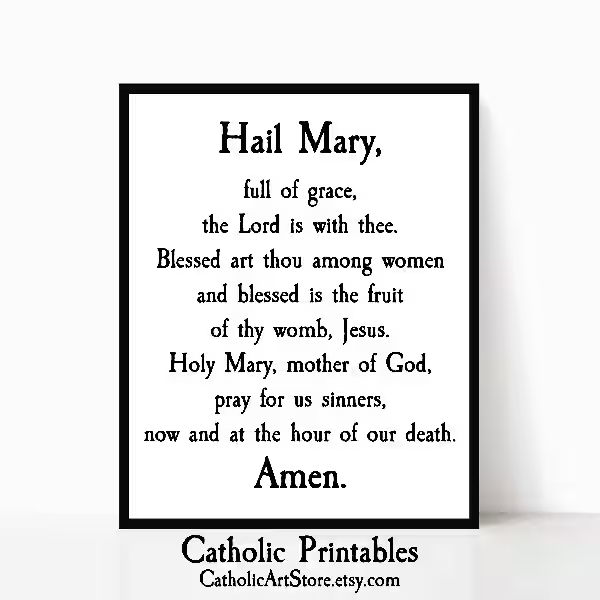
The Hail Mary is a beautiful and deeply personal prayer that invokes the Blessed Virgin Mary, the Mother of God. It is rich with biblical imagery and theological significance, beginning with the angelic greeting: “Hail Mary, full of grace, the Lord is with thee.” This recognition of Mary’s unique holiness sets the tone for the prayer, acknowledging her special role in salvation history. The subsequent phrase, “blessed art thou amongst women, and blessed is the fruit of thy womb, Jesus,” directly references the Magnificat, Mary’s own hymn of praise, and reaffirms the centrality of Jesus Christ in our faith. This prayer isn’t about worshipping Mary, but about honoring her as the one chosen by God to be the mother of His Son, and as a powerful intercessor for us.
The prayer continues with “Holy Mary, Mother of God, pray for us sinners, now and at the hour of our death. Amen.” This is a plea for Mary’s intercession. We ask her, as our spiritual mother, to pray for us, recognizing her closeness to God and her profound love for humanity. This is where the Catholic prayer Our Father Hail Mary intertwines beautifully – the Our Father speaks directly to the Father, while the Hail Mary asks the Mother to guide and support us on our journey to Him. This dual approach allows for a rich and comprehensive prayer life, acknowledging both the direct relationship with God and the supportive role of the Mother of God. The repetition of the Hail Mary can be meditative, helping to calm the mind and open the heart to divine grace, much like the gentle rhythm of waves on a shore.
In Catholic tradition, Mary is not seen as a co-redeemer, but as a supreme intercessor. Because of her perfect love for her Son and her unique position as His mother, her prayers are considered particularly efficacious before God. When we pray “pray for us sinners,” we are asking her to present our needs, our struggles, and our petitions to Jesus. Imagine a child asking their mother, who has a close relationship with the king, to speak to the king on their behalf; this is a simplified analogy for Mary’s role. She doesn’t dictate to God, but she lovingly pleads for us, her spiritual children.
The inclusion of “now and at the hour of our death” highlights the continuous need for Mary’s intercession throughout our lives, and especially at the most critical moment when we face eternity. The Catholic prayer Our Father Hail Mary is a testament to this belief in the communion of saints, where those in heaven can pray for those still on earth. This understanding provides immense comfort and a sense of constant spiritual companionship. By reciting the Hail Mary, we are not alone in our struggles; we have a loving mother in heaven who hears our cries and intercedes for us with a mother’s tender heart, guiding us towards her Son.
Integrating Catholic Prayer into Daily Life
The Catholic prayer Our Father Hail Mary are not meant to be reserved for special occasions or moments of crisis. Integrating them into the fabric of daily life can profoundly transform one’s spiritual journey. Many Catholics make it a practice to pray the Our Father upon waking and before sleeping, using it as a bookend to their day, grounding themselves in God’s love and provision. The Hail Mary is often prayed multiple times, especially when reciting the Rosary, a devotion that meditates on the life of Christ through the lens of Mary’s experiences.
Making these prayers a habitual practice can be as simple as setting aside five minutes in the morning, during a commute, or before a meal. The repetition, far from being monotonous, can become a powerful form of meditation and a way to cultivate a consistent awareness of God’s presence. For example, during a stressful work meeting, a silent, internal recitation of the Our Father can bring a sense of calm and focus, reminding you of God’s ultimate control and your reliance on His strength. Similarly, a quick Hail Mary before making a difficult decision can invite Mary’s gentle guidance and ask for her intercession for wisdom. The Catholic prayer Our Father Hail Mary are accessible tools for maintaining a vibrant relationship with God and His Mother, enriching every moment with spiritual significance.
Finding Strength and Peace in Repetition
The repetition inherent in prayers like the Our Father and the Hail Mary is not a sign of weakness or unoriginality, but a deliberate spiritual discipline. This repetition helps to internalize the words, allowing them to move from the mind to the heart. It is akin to learning a musical piece; the more you practice, the more deeply it resonates within you. In moments of anxiety or uncertainty, the familiar rhythm and comforting words of these prayers can act as a steadying force, bringing a profound sense of peace and reassurance. The Catholic prayer Our Father Hail Mary offers a reliable source of solace, a constant in a world of flux.
Furthermore, the consistent prayer of the Our Father reinforces our understanding of God as our loving Provider and Forgiver, while the repeated Hail Mary cultivates devotion to the Blessed Mother and strengthens our trust in her intercession. Consider the effect of a lullaby sung to a child; the gentle, repeated melody brings comfort and security. In a similar way, these prayers, when prayed with intention, can soothe the soul and foster a deeper connection with the divine. The act of praying these foundational prayers regularly cultivates a spiritual discipline that can withstand life’s challenges, offering a consistent anchor of faith and hope in the ever-present love of God. This consistent engagement with Catholic prayer Our Father Hail Mary builds a spiritual resilience that can see believers through all of life’s seasons.
Frequently Asked Questions about Catholic Prayer: Our Father and Hail Mary
What is the Our Father prayer?
The Our Father, also known as the Lord’s Prayer, is a foundational Christian prayer taught by Jesus to his disciples. It is found in the Gospels of Matthew and Luke and addresses God as a loving Father, asking for his will to be done on Earth as it is in heaven, for daily needs, forgiveness, and protection from evil.
What is the Hail Mary prayer?
The Hail Mary is a popular Catholic prayer that honors the Virgin Mary. It consists of two parts: the first part is an angelic greeting to Mary, acknowledging her as blessed and the mother of Jesus. The second part is a petition for her intercession, asking her to pray for us, sinners, now and at the hour of our death.
What is the significance of the Our Father in Catholic tradition?
The Our Father is considered the most perfect of all prayers because it was taught by Jesus himself. It serves as a model for all prayer, guiding Catholics in their relationship with God, their understanding of his will, and their requests for spiritual and temporal needs.
What is the significance of the Hail Mary in Catholic tradition?
The Hail Mary is central to Marian devotion in Catholicism. It is believed that through Mary’s intercession, prayers are brought directly to Jesus. The prayer expresses reverence for Mary’s role in salvation history and seeks her maternal guidance and protection.
Are these prayers exclusive to Catholicism?
While the Our Father prayer is central to most Christian denominations, the Hail Mary prayer, in its current form and with its specific devotional emphasis, is primarily associated with the Catholic Church and some other traditions that hold a high regard for the Virgin Mary.
How often are these prayers recited by Catholics?
Catholics recite these prayers frequently. The Our Father is part of the Mass and is often prayed individually. The Hail Mary is a core component of the Rosary, a devotional practice involving meditation on the life of Jesus and Mary, and is also prayed individually as a common form of personal prayer.