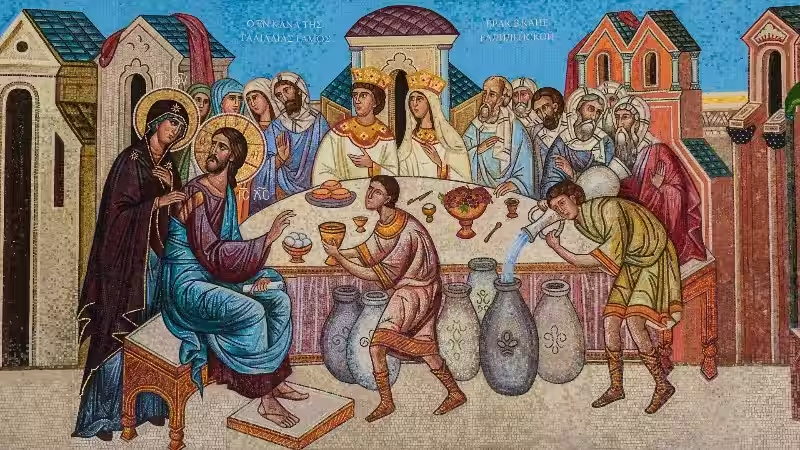
The Wedding at Cana isn’t just a quaint story from the Gospels; it’s a profound theological event that resonates deeply within Christian tradition, offering a glimpse into the very nature of faith, religion, and divine intervention. This pivotal moment, where Jesus performed his first public miracle, serves as a foundational narrative for understanding his mission and the transformative power of his presence. For many, the Wedding at Cana is more than a biblical account; it’s a symbol of hope, abundance, and the sacredness of human relationships, particularly marriage.
The narrative of the Wedding at Cana unfolds with a seemingly simple problem: the wine ran out. This isn’t just a tale of a party in distress; it’s a masterful illustration of how Jesus enters into the ordinary, even the mundane, aspects of human life and elevates them. The depletion of wine, a symbol of joy and celebration, at a wedding feast, a cornerstone of community and family, highlights a moment of potential embarrassment and disappointment. It is precisely at this point of human need, where earthly resources failed, that the divine stepped in, demonstrating that God’s grace is not reserved for extraordinary circumstances but is available in our everyday lives.
The Miracle of Water Turned Wine: A Symbol of Transformation
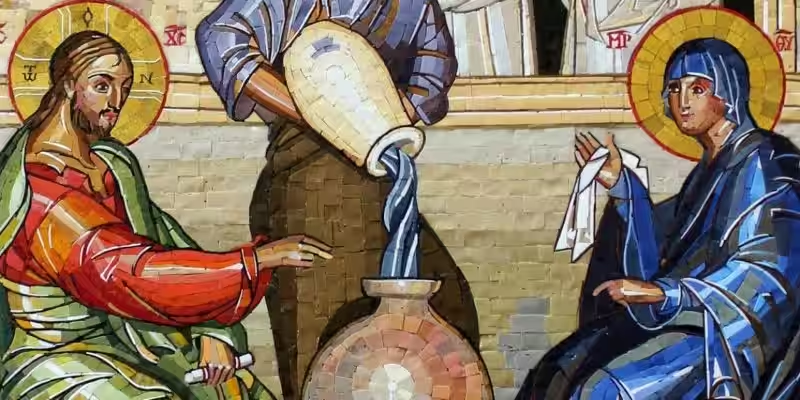
The transformation of water into wine at the Wedding at Cana is a powerful metaphor for spiritual renewal and the abundant blessings God bestows. This act, orchestrated by Jesus at his mother Mary’s gentle prompting, signifies a profound shift. It’s not just about providing more wine; it’s about providing the best wine, indicating a superior quality and a generous abundance that far surpasses human expectations. This miraculous act serves as a powerful reminder that with God, nothing is impossible, and that even our most pressing limitations can be overcome by His power.
Consider the practical implications of this miracle. The servants were instructed to fill large stone jars, often used for ritual purification, with water. When they drew out the wine, it was of such exceptional quality that the master of the feast marveled, commenting, “Everyone serves good wine first, and then the inferior wine after the guests have drunk freely; but you have kept the good wine until now.” This detail underscores the quality and superabundance of God’s gifts. It’s a testament to the fact that God doesn’t just meet our needs; He often exceeds them, offering richness and joy that we might not have even imagined. This aspect of the Wedding at Cana speaks directly to the religious concept of divine benevolence and lavish generosity.
Mary’s presence and her quiet insistence to Jesus, “They have no wine,” are crucial to the narrative of the Wedding at Cana. Her faith and her understanding of her son’s divine mission are evident. She approaches Jesus not with a demand, but with a gentle observation of a problem, trusting that he has the solution. This act positions her as a powerful intercessor within Christian theology, a model of discreet faith and maternal concern. Her role at the Wedding at Cana is a cornerstone of Marian devotion for many Christians.
Mary’s instruction to the servants, “Do whatever he tells you,” is perhaps one of the most significant pronouncements in the entire biblical account. It encapsulates the essence of discipleship and obedience within religion. It’s an invitation for all believers to listen to Jesus’s teachings and to act upon them without hesitation. This simple yet profound statement offers a roadmap for navigating life’s challenges, reminding us that surrendering our will to God’s guidance is the surest path to experiencing His transformative power, as was so clearly demonstrated at the Wedding at Cana.
Theological Implications: Jesus’s Divinity and Mission
The Wedding at Cana is widely considered the first of Jesus’s miracles, a public unveiling of his divine identity and the beginning of his public ministry. This event wasn’t just a demonstration of power; it was a sign, as the Gospel of John explicitly states, intended to reveal Jesus’s glory and to help people believe in him. The miracle served as a powerful testament to his divine authority and the unique relationship he shared with God the Father. It laid the groundwork for the deeper theological understandings that would unfold throughout his earthly mission.
This initial miracle also foreshadowed the eschatological banquet, the ultimate celebration in God’s kingdom where Christ is the host. The Wedding at Cana can be seen as a microcosm of this future joy, a foretaste of the eternal abundance and celebration that awaits believers. By transforming ordinary water into exquisite wine, Jesus was not just solving a social faux pas; he was announcing the coming of a new covenant, a time of spiritual richness and unending celebration, firmly rooted in the religious promise of salvation.
Jesus and the Sacrament of Marriage
The Wedding at Cana holds particular significance for the religious sacrament of marriage. Jesus’s willing participation in a wedding, and his decision to bless it with a miracle, elevates marriage to a sacred institution. It signifies that God is present in marital unions and that he desires to bless and sanctify them. This event provides a theological foundation for the Christian understanding of marriage as a holy covenant, reflecting the love between Christ and his Church.
By intervening to ensure the joy and continuity of the celebration at the Wedding at Cana, Jesus demonstrated that he values human connections and the celebration of love and commitment. This is a deeply relatable aspect for couples preparing for marriage. It assures them that their union is not just a personal commitment but a divine undertaking, blessed and honored by God. The Wedding at Cana therefore becomes a beacon of hope and divine assurance for countless marriages, underscoring that the divine presence can transform even the most ordinary beginnings into extraordinary blessings.
Frequently Asked Questions: Wedding at Cana and Religion
What is the significance of the Wedding at Cana in Christianity?
The Wedding at Cana is significant because it is the first public miracle performed by Jesus in the Gospel of John. It marks the beginning of his public ministry and demonstrates his divine power and authority. The transformation of water into wine is often interpreted as a symbol of the Eucharist and the new covenant Jesus would establish.
What does the Wedding at Cana teach us about Jesus?
The event highlights Jesus’ compassion and concern for human needs and joys. It shows his ability to intervene in ordinary life and bring about extraordinary results. It also reveals his respect for family and tradition, as he honors his mother’s request and participates in a wedding celebration.
Does the Catholic Church recognize the Wedding at Cana as a sacrament?
While the Wedding at Cana is a foundational event in understanding Jesus’ ministry and the nature of his miracles, it is not considered a sacrament in the Catholic Church. Sacraments are specific rites instituted by Christ to confer grace. The Wedding at Cana is a miraculous event that points to Christ’s divinity and the coming of his kingdom.
How does the Wedding at Cana relate to the sacrament of Matrimony?
The Wedding at Cana is deeply connected to the sacrament of Matrimony. Jesus’ presence and his first miracle at a wedding bless marriage and elevate it. It signifies that marriage is a holy institution, and that Christ’s grace can be present and active within it, transforming ordinary elements (like water) into something sacred and life-giving (like wine).
Are there similar miracle stories in other religions that involve transforming common substances?
While the specific narrative of the Wedding at Cana is unique to Christianity, many religions have stories of divine intervention where sacred figures transform ordinary elements or provide sustenance. These often serve to demonstrate the power of the divine and offer spiritual lessons, though the theological context and symbolism differ significantly.