The very mention of the Land of Israel evokes a profound sense of spiritual resonance for millions worldwide. It is a place steeped in millennia of religious history, a cradle of faiths, and a constant source of deeply personal and communal prayer. For many, engaging with Israel prayers is not merely a ritual; it’s a way to forge a connection to the divine, express gratitude, seek guidance, and offer intercession for the well-being of the Jewish people and the land itself. These prayers are a living testament to the enduring faith of those who have held this land sacred for generations, a vibrant thread woven into the fabric of daily life and significant historical moments.
The act of praying for Israel transcends denominational boundaries within Judaism, and even extends to sincere prayers from individuals of other faiths who recognize its biblical significance and its role in global peace. Whether articulated in ancient Hebrew liturgy, whispered in hushed tones at the Western Wall, or contemplated in quiet reflection, Israel prayers carry immense weight and meaning. They are a powerful expression of hope, a plea for peace, and a steadfast declaration of unwavering faith in the face of challenges.
The Heartbeat of Devotion: Understanding the Essence of Israel Prayers
At its core, Israel prayer is an act of devotion and connection. It’s about acknowledging the sacredness of the land and its people, and recognizing the divine covenant that binds them. These prayers are not static pronouncements; they are dynamic expressions of the human spirit, responding to the joys and sorrows, the triumphs and tribulations that have shaped the history of Israel. They serve as a constant reminder of the spiritual heritage that is so intimately tied to this unique geographical and historical space.
Think of it like tending a garden. Israel prayers are the watering, the nurturing, the careful tending that keeps the roots of faith strong and the blossoms of hope vibrant. Just as different plants require different care, there are various forms and intentions behind Israel prayers. Some are deeply personal, a quiet conversation with God about one’s own life, while others are communal, a collective voice raised in unison for the welfare of the nation. The immeasurable significance of these prayers lies in their ability to unite individuals in a shared purpose, fostering a sense of belonging and collective responsibility.
Prayers for Peace and Protection: A Universal Yearning
Perhaps the most prevalent and heartfelt category of Israel prayers are those that call for peace and protection. In a region that has witnessed so much conflict, the yearning for serenity and security is palpable. These prayers are not just for the cessation of hostilities, but for a lasting and profound peace that embraces understanding and coexistence. They are a fervent plea for the safety of every resident, for the protection of the land, and for a future where harmony prevails.
Consider the simple yet powerful prayer for “shalom” – peace. This word, deeply ingrained in Jewish tradition, encompasses far more than the absence of war; it signifies completeness, wholeness, and well-being. When individuals offer Israel prayers for peace, they are invoking this holistic concept, praying for a state of genuine tranquility that permeates all aspects of life. We see this manifest in prayers asking for protection against enemies, for the well-being of soldiers, and for the flourishing of all inhabitants, regardless of their background. It is a testament to the universal human desire for a secure and peaceful existence.
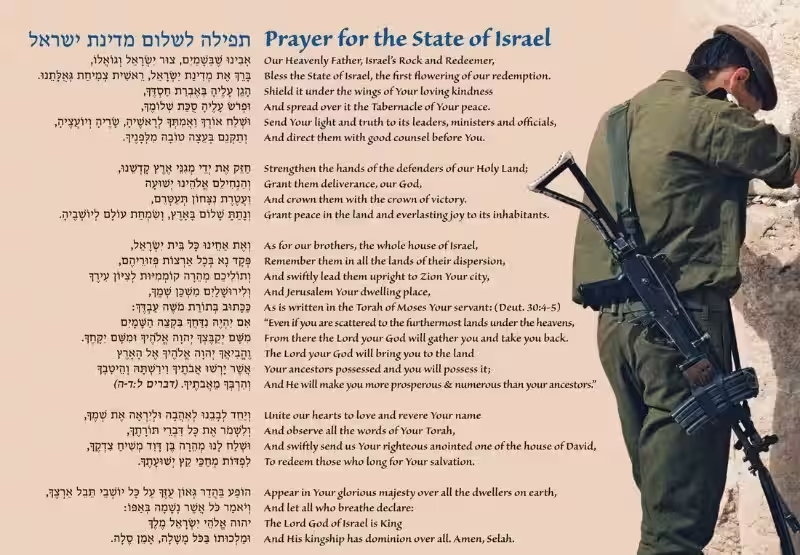
Specific Prayers for Protection: Many prayers are directed towards the safety of the Israeli Defense Forces (IDF), acknowledging the difficult and dangerous work they undertake to safeguard the nation. These often include petitions for their guidance, courage, and successful return to their loved ones.
Prayers for National Well-being: Beyond military protection, there are prayers for the prosperity and success of the State of Israel as a whole. This includes petitions for wise leadership, economic stability, and the flourishing of its people.
Intercession for Global Peace: Many individuals of faith, recognizing Israel’s pivotal role in the world, extend their Israel prayers to encompass broader calls for universal peace and understanding, believing that the well-being of Israel is intrinsically linked to the well-being of the entire planet.
Prayers of Gratitude and Thanksgiving: Recalling Divine Providence
Alongside pleas for peace and protection, an equally significant aspect of Israel prayer is the expression of gratitude and thanksgiving. For many, the very existence and continuity of the Jewish people, and the re-establishment of the State of Israel, are seen as clear manifestations of divine providence. These prayers serve as a way to acknowledge the miracles of the past, celebrate the joys of the present, and express profound appreciation for the enduring relationship between God and the people of Israel.
This gratitude can be as simple as a personal blessing for a good meal, or as grand as a public recitation of ancient psalms at significant historical sites. The act of giving thanks is a powerful way to reinforce faith and to foster a mindset of positive expectation. It’s about recognizing the blessings, both big and small, that have been bestowed upon the land and its people, fostering a deep sense of humility and appreciation.
Celebrating Milestones:Israel prayers of thanksgiving are often offered during holidays and national celebrations, commemorating historical events and expressing gratitude for the fulfillment of ancient prophecies.
Personal Blessings: On a more individual level, people offer personal prayers of gratitude for life’s daily blessings, for family, health, and the opportunity to live in the Holy Land.
Acknowledging Resilience: A profound aspect of these prayers is the acknowledgment of the resilience and survival of the Jewish people throughout centuries of hardship. This resilience is often attributed to divine intervention and unwavering faith, making gratitude a central theme in many Israel prayers.
Prayers for Spiritual Growth and Connection: Deepening the Divine Bond
Beyond the immediate concerns of peace and gratitude, Israel prayers also serve as a vital conduit for spiritual growth and deepening the connection between individuals and the divine. The land itself is considered holy, a place where prayers are believed to be heard with particular clarity. These prayers are an invitation to introspection, a quest for wisdom, and a desire to live a life aligned with divine will.
Imagine standing at the Western Wall, the ancient stones radiating centuries of devotion. In such a sacred space, Israel prayers often take on a deeply personal dimension, as individuals pour out their hearts, seeking guidance, strength, and clarity for their life’s journey. It’s a profound act of surrender and trust, acknowledging that true fulfillment comes from aligning one’s life with a higher purpose.
Seeking Wisdom and Understanding:Israel prayers frequently involve petitions for wisdom and understanding, both for personal guidance and for the leaders of the nation to make just and righteous decisions.
Cultivating Faith: These prayers are also a means of strengthening and cultivating faith. By actively engaging in prayer, individuals reinforce their belief in God’s presence and their active participation in the unfolding of history.
Connecting to Heritage: For many, Israel prayers are a way to connect with their ancestors and the rich spiritual heritage of the Jewish people. It’s a way of saying, “I am part of this lineage, and I am continuing this sacred tradition.”
In conclusion, Israel prayers are a multifaceted and enduring expression of faith, hope, and devotion. They are a living testament to the unbreakable bond between the Jewish people and their ancestral land, a constant plea for peace, a profound expression of gratitude, and a powerful catalyst for spiritual growth. Whether whispered in solitude or sung in unison, these prayers resonate with the timeless aspirations of the human heart and continue to shape the spiritual landscape of Israel and the world.
Frequently Asked Questions: Israel Prayers & Religion
What are common prayers in Judaism?
Judaism has a rich tradition of prayer, with many communal and individual prayers recited daily. Some of the most central are the Shema, a declaration of faith in God’s oneness, and the Amidah, a standing prayer recited three times a day. The Siddur, or prayer book, contains the order of services and a vast collection of prayers, blessings, and psalms.
What is the significance of prayer for Jews in Israel?
For Jews in Israel, prayer often carries a heightened sense of connection to their heritage, land, and people. Synagogues are central to community life, and prayer services are an integral part of daily and weekly routines. Many prayers specifically mention Jerusalem and the Land of Israel, reinforcing this connection.
Are there specific prayer times in Judaism?
Yes, traditional Judaism observes specific prayer times. There are three main prayer services: Shacharit (morning prayer), Mincha (afternoon prayer), and Maariv (evening prayer). The timing of these services is based on the position of the sun.
What are some different denominations of Judaism and their prayer practices?
Judaism has several major denominations, each with variations in prayer practices and liturgy. These include Orthodox, Conservative, Reform, and Reconstructionist Judaism. While all share core prayers and beliefs, there can be differences in language used (Hebrew vs. vernacular), the inclusion of certain prayers, and the style of worship.
Is prayer in Israel exclusively Jewish?
No, Israel is a diverse country with significant Christian and Muslim populations, as well as smaller communities of other faiths. These communities have their own places of worship and prayer traditions. For example, Christians pray in churches, and Muslims pray in mosques, with specific holy sites in Israel holding immense importance for both religions.