For millennia, humanity has grappled with profound questions about existence, morality, and the divine. These inquiries have given rise to a tapestry of beliefs and practices we broadly categorize as religion. Within this expansive landscape, a particular focus often emerges: the true Bible. But what does it mean to identify a true Bible within the vast spectrum of religious texts and interpretations? This isn’t a simple quest for a single, universally accepted volume; rather, it’s an exploration of authenticity, understanding, and personal connection to the sacred.
The concept of a true Bible often stems from a desire for unwavering truth and divine guidance. Many individuals, seeking a solid foundation for their spiritual journey, look to scriptures they believe to be divinely inspired and accurately preserved. This pursuit is not about rejecting other faiths, but about finding the core message and teachings that resonate most deeply with their understanding of God and humanity’s purpose. It’s a journey of discernment and conviction, an effort to find a compass that reliably points towards spiritual integrity.
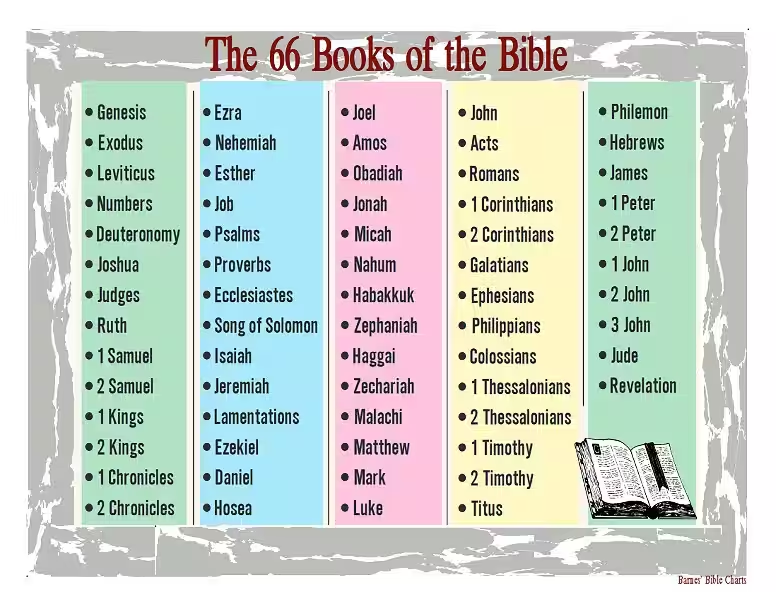
When we speak of the true Bible, we are often referencing the Christian scriptures, encompassing both the Old and New Testaments. For believers, this collection of books is considered the inspired word of God, containing the history of God’s relationship with humanity, the life and teachings of Jesus Christ, and the foundational principles for Christian living. The assertion of its “trueness” lies in its perceived divine authorship, historical accuracy, miraculous accounts, and prophetic fulfillment.
However, the journey to understanding the true Bible is rarely straightforward. It involves grappling with different translations, interpretations, and theological perspectives that have developed over centuries. The textual integrity of the Bible, its preservation through various historical periods, and the consensus of scholars on its canon are all crucial elements in this discussion. For many, the true Bible is not just a book, but a living revelation that continues to speak to contemporary issues and personal struggles, offering wisdom, hope, and a path to salvation.
The Role of Interpretation in Accessing the True Bible
The true Bible isn’t a static monument; it’s a dynamic source of truth that requires active engagement. Interpretation, therefore, becomes paramount. How we approach the text, the lenses through which we read it, and the community we engage with all profoundly shape our understanding of its message. This is where the concept of “true” can become a point of significant discussion and, sometimes, disagreement.
Consider the parable of the Good Samaritan. A literal, historical reading might focus on the geographical location and the cultural animosity between Jews and Samaritans. However, a deeper interpretation, accessible through the insights of faithful commentators and personal reflection, reveals a universal message of compassion and love for one’s neighbor, regardless of background. This demonstrates how the true Bible reveals its profound truths when approached with an open heart and a willingness to learn, not just to read.
Key Elements of the True Bible for Believers
For those who hold the Bible as the true Bible, several key themes and elements stand out as central to its authority and message. These are the cornerstones of their faith, guiding their understanding of God, themselves, and the world around them.
Divine Inspiration: The belief that the Bible was written by humans but guided by the Holy Spirit, ensuring its divine origin and message. This means that the words within it are not merely human opinions but God’s own communication.
Jesus Christ as Messiah: The centrality of Jesus Christ is a defining characteristic. His life, death, and resurrection are seen as the fulfillment of prophecy and the means of salvation for humanity. The Gospels, detailing his earthly ministry, are considered the heart of the New Testament.
Moral and Ethical Guidance: The Bible provides a comprehensive framework for righteous living, outlining principles of love, justice, forgiveness, and stewardship. These teachings offer a moral compass for navigating the complexities of life.
Promise of Redemption and Eternal Life: A powerful promise of forgiveness of sins and the assurance of eternal life through faith in Christ is a core tenet for many who consider this their true Bible. This offers hope and comfort in the face of mortality.
These elements, woven together, form the compelling narrative that many find within the true Bible, offering not just a religious text, but a divine roadmap for spiritual fulfillment.
Frequently Asked Questions about the True Bible and Religion
What is the “True Bible”?
The concept of a “True Bible” is often debated. For Christians, the Bible is considered the divinely inspired Word of God. Different denominations may follow slightly different canons (lists of accepted books) of the Bible, but the core texts are largely consistent. For those of other faiths, the term “True Bible” may not be applicable, as they have their own sacred texts.
What is religion?
Religion is a system of beliefs, practices, and rituals that are usually centered around a supernatural being or beings, or a transcendent reality. It often involves a moral code, a worldview, and a sense of community. Religions can provide meaning, purpose, and guidance to individuals’ lives.
How do different religions view the Bible?
For Christians, the Bible is the central religious text. Judaism recognizes the Old Testament (Hebrew Bible) as its sacred scripture. Islam considers the Quran to be the final revelation of God, and while it acknowledges the original Torah and Gospels, it believes they have been altered over time. Other religions do not typically consider the Bible a primary religious text.
Is there one “true” religion?
The question of whether there is one “true” religion is a matter of faith and personal conviction. Different religions offer diverse paths to understanding the divine, morality, and the human condition. Many people find fulfillment and truth within their own religious tradition.
How can I find out more about different religions?
You can learn about different religions through various means: reading books and scholarly articles, visiting houses of worship (respectfully), speaking with adherents of those faiths, and exploring reputable online resources. It’s important to approach such learning with an open mind and a desire for understanding.