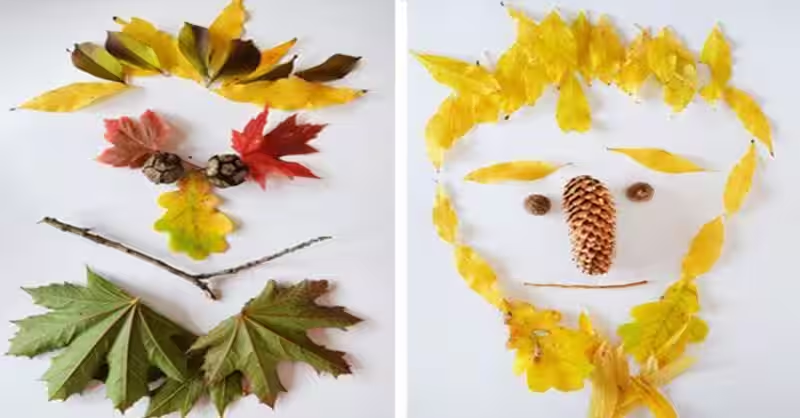
The concept of a “nature face,” a divine presence perceived within the intricate tapestry of the natural world, has resonated with humanity across millennia and cultures. It’s more than just appreciating a beautiful sunset or a towering redwood; it’s a profound sense of connection, a recognition of an intelligence and artistry that transcends the mundane. This inherent spirituality found in nature forms the bedrock for many religious and philosophical traditions, offering solace, inspiration, and a tangible pathway to the sacred.
From the earliest animistic beliefs to the sophisticated theological frameworks of major world religions, the nature face has been a constant source of awe and wonder. It’s in the rustling leaves that whisper ancient secrets, the majestic mountains that touch the heavens, and the life-giving rivers that flow with ceaseless energy. This article explores how this ubiquitous nature face has shaped religious thought, offering us profound insights into our place in the universe and the very essence of the divine.
Echoes of the Divine: Early Perceptions of the Nature Face
Long before organized religions emerged, early humans looked to the nature face for answers. The raw power of storms, the fertility of the earth, the cyclical rhythm of seasons – all these were seen as direct manifestations of divine will or spirits residing within. This animistic worldview, where every living thing, and even inanimate objects, possess a spirit, was the genesis of religious thought, intrinsically linking human existence to the natural world.
Consider the vast and unpredictable oceans. For ancient coastal communities, the ocean was not merely a source of food, but a powerful deity or a realm inhabited by gods. Its moods – calm and providing, or tempestuous and destructive – directly influenced their lives. This primal understanding of a nature face that could be both benevolent and fearsome laid the groundwork for more complex religious narratives, where deities were often associated with specific natural phenomena. The sun’s life-giving warmth, the moon’s gentle glow, the earth’s nurturing embrace – these were the first temples, the first scriptures, the first profound encounters with the divine.
Nature Face as Sacred Text: Religious Narratives and Symbolism
As human societies evolved, so did their understanding of the nature face. Religious traditions began to codify these experiences into narratives, myths, and rituals, imbuing natural elements with deep symbolic meaning. The nature face wasn’t just seen; it was interpreted. Mountains became stairways to the divine, forests became sacred groves, and bodies of water became sources of spiritual purification.
In Shinto, Japan’s indigenous religion, the concept of kami—spirits or deities that inhabit natural objects and phenomena—is central. A particularly ancient tree, a waterfall with a distinctive cascade, or a snow-capped mountain peak like Mount Fuji can all be considered a nature face, a dwelling place for the sacred. Similarly, many Indigenous American creation stories deeply intertwine the origins of humanity with specific geographical features and the creatures that inhabit them, viewing the land itself as a sacred ancestor. This reverence for the nature face is not merely aesthetic; it’s a profound recognition of interconnectedness and the divine presence woven into the fabric of existence.
The Great Mother: Earth as a Divine Source
Across numerous cultures, the Earth itself is personified as a maternal divine entity, the ultimate source of life and sustenance. This nature face, in its nurturing and generative aspects, has inspired reverence and devotion for millennia. The fertile soil that yields crops, the life-giving rains that quench thirst, the gentle embrace of the land that cradles us in death – these are all expressions of the earth’s divine generosity.
Think of the Greek goddess Gaia, the primordial embodiment of the Earth, or the Hindu goddess Prithvi Mata, also known as Mother Earth. These figures represent the all-encompassing power of creation, a palpable nature face that provides for all living beings. This concept is not confined to ancient pantheons; it resonates in modern environmental movements that advocate for the protection of our planet, often framing it as a moral and spiritual imperative. The cycle of birth, growth, and decay is a profound testament to this divine feminine nature face, a constant reminder of our dependence and our innate connection to this living entity.
Celestial Wonders: The Nature Face in the Cosmos
The night sky, with its countless stars and celestial bodies, has always been a profound source of religious contemplation. These distant lights, the ever-changing moon, and the predictable orbits of planets offered early humans a nature face that spoke of order, mystery, and the infinite. The constellations, often interpreted as divine figures or mythic heroes, provided a celestial roadmap and a narrative of cosmic events.
Many indigenous cultures developed sophisticated astronomical calendars based on observations of the stars, linking celestial movements to agricultural cycles and spiritual ceremonies. For example, the Pleiades cluster holds significant meaning in the mythology of many Aboriginal Australian groups, often marking seasonal changes and important ceremonies. This nature face in the heavens speaks of a grand design, a cosmic dance that inspires awe and a sense of our small yet significant place within a vast, divinely orchestrated universe. The vastness of space and the brilliance of distant galaxies are a constant reminder of a power and beauty that dwarfs human endeavors.
In our increasingly secularized world, the concept of the nature face is experiencing a resurgence, not necessarily within the confines of traditional religious dogma, but as a source of personal spirituality and well-being. Many individuals find solace, meaning, and a profound sense of the sacred by connecting with the natural world. This is not about worshipping trees or rivers in a literal sense, but about recognizing the inherent divine intelligence and beauty that permeates them.
The practice of mindful nature walks, forest bathing, or simply spending quiet time in natural settings can be deeply spiritual experiences. These activities allow us to shed the anxieties of modern life and reconnect with a primal sense of peace and belonging. The rhythmic sound of waves, the unfurling of a fern frond, the sheer resilience of a wildflower pushing through concrete – these are all potent manifestations of the nature face that can offer profound wisdom and healing. This connection can be a powerful antidote to feelings of alienation and can foster a deeper appreciation for the delicate balance of life on Earth.
The Sacredness of Biodiversity: A Multifaceted Nature Face
The incredible diversity of life on Earth is, in itself, a profound expression of the nature face. Each species, from the smallest microorganism to the largest whale, represents a unique facet of the divine creative impulse. The intricate ecosystems, where every element plays a crucial role, demonstrate a complex and beautiful order that points to a higher intelligence.
The intricate patterns of a butterfly’s wings, the astonishing camouflage of a chameleon, the complex social structures of ant colonies – these marvels of nature offer endless opportunities for wonder and reflection. When we consider the sheer variety of forms, functions, and adaptations found in the natural world, it’s difficult to dismiss the notion that there is something profoundly sacred and intentional at play. This biodiversity is a testament to the unfathomable creativity of the nature face, a living library of divine expression.
Environmentalism as a Spiritual Path
For many, the urgent need to protect our planet has become a spiritual calling, a direct response to the perceived sacredness of the nature face. Environmental activism, conservation efforts, and sustainable living practices are often motivated by a deep-seated reverence for the Earth and its inhabitants. This modern interpretation sees the degradation of nature as a spiritual crisis, and its preservation as a sacred duty.
The beauty of a pristine wilderness, the resilience of a recovering ecosystem, the joy of witnessing endangered species thrive – these experiences can deeply move individuals and inspire them to act. This is not simply about preserving resources; it’s about safeguarding the divine presence evident in the natural world. The interconnectedness of all living things, a core tenet of many spiritual traditions, finds its most urgent expression in the environmental movement. Protecting the nature face becomes synonymous with protecting our own spiritual and physical well-being.
The nature face is not an abstract concept confined to temples or ancient texts; it is present in our everyday lives, waiting to be acknowledged and appreciated. From the sunlight streaming through our windows to the loyal companionship of a pet, from the humble houseplant on our desk to the vast expanse of the sky above us, the divine is woven into the fabric of our existence. Cultivating a greater awareness of this presence can enrich our lives immeasurably.
Making a conscious effort to spend time outdoors, even for a few minutes each day, can reconnect us with this vital energy. Observing the changing seasons, listening to the songs of birds, or simply feeling the earth beneath our feet can all serve as powerful reminders of the nature face. This constant, accessible divinity offers a source of strength, inspiration, and profound peace, reminding us that we are not alone, but deeply connected to a sacred, living universe. The simple act of breathing in fresh air can be a profound spiritual experience when viewed through this lens.
Frequently Asked Questions
What is “nature face”?
“Nature face” is a term used to describe the visual patterns, forms, and arrangements found in nature that resemble a human face. These can be coincidental formations in rocks, clouds, trees, or other natural elements.
Is “nature face” a religious concept?
No, “nature face” is not inherently a religious concept. It is primarily an observation of pareidolia, a psychological phenomenon where the brain perceives familiar patterns (like faces) in random stimuli. While some individuals might imbue these sightings with religious or spiritual meaning, the phenomenon itself is not rooted in any specific religion.
Can the appearance of “nature face” be explained by religion?
Different religions might interpret such occurrences in various ways. Some might see them as signs or messages from a divine entity, while others may view them as natural wonders that inspire awe and reflection on creation. However, there is no single, universally accepted religious explanation for “nature face.”
Does religion have a stance on pareidolia?
Most major religions do not have specific doctrines or stances on the psychological phenomenon of pareidolia. They tend to focus on matters of faith, morality, and the divine rather than on the specific neurological processes of pattern recognition. Individual believers may integrate their understanding of such phenomena into their personal spiritual framework.