Pope Leo XIV’s Peruvian Pilgrimage: A Spiritual Convergence
The whispers began months in advance, building into a crescendo of anticipation: Pope Leo XIV was coming to Peru. This wasn’t just any papal visit; it was a journey steeped in profound religious significance, a carefully orchestrated pilgrimage that promised to galvanize faith, foster unity, and illuminate the spiritual landscape of this vibrant South American nation. For millions, the prospect of Pope Leo XIV’s Peru visit was a beacon of hope and a deeply personal spiritual event, a chance to connect with the heart of Catholicism in a land rich with its own unique spiritual heritage.
Peru, a country where ancient indigenous beliefs often intertwine with fervent Catholicism, presented a compelling backdrop for such a momentous occasion. The diverse tapestry of Peruvian society, from the bustling cities to the remote Andean villages, was united by a shared excitement for the pontiff’s arrival. This visit by Pope Leo XIV was more than just a diplomatic tour; it was a powerful affirmation of the Church’s enduring presence and its commitment to serving the faithful across the globe, particularly in regions where faith plays such a central role in daily life.
A papal visit is never a casual undertaking. Each journey is meticulously planned, bearing immense theological and pastoral weight. For Peru, the arrival of Pope Leo XIV represented a momentous occasion to reaffirm core Christian values and to address contemporary challenges facing the Church and society. These visits often serve as powerful catalysts for evangelization, encouraging deeper engagement with religious teachings and practices. The pontiff’s presence can inspire a renewed sense of purpose and mission among clergy and laity alike, fostering a stronger collective identity within the Catholic community.
Furthermore, the Pope’s itinerary is always designed to highlight specific aspects of the local Church and culture. In Peru, this meant acknowledging the country’s rich indigenous roots, a crucial element in understanding its spiritual evolution. The interactions of Pope Leo XIV with indigenous communities, his recognition of their traditions, and his emphasis on intercultural dialogue were anticipated with great interest. This approach underscores the Church’s commitment to inclusivity and its understanding that faith is expressed in myriad ways, reflecting the unique cultural expressions of its followers.
Peru’s history is intrinsically linked to the spread of Catholicism. The arrival of the Spanish conquistadors in the 16th century marked a profound cultural and religious shift, introducing Christianity to a continent already rich with its own spiritual traditions. Over centuries, these two forces have intertwined, creating a unique syncretic faith that is distinctly Peruvian. From the veneration of local saints to the incorporation of indigenous symbolism in religious art, the Catholic faith in Peru has developed its own vibrant character.
Therefore, the visit of Pope Leo XIV wasn’t just about the present; it was also a journey through centuries of faith. It offered an opportunity to honor the sacrifices and dedication of missionaries and local leaders who have nurtured the Church in Peru. By engaging with the historical context, the pontiff could draw parallels between past challenges and present-day realities, reminding believers of the resilience of faith and the ongoing work of evangelization. The anticipation surrounding Pope Leo XIV’s Peru visit was amplified by this deep historical resonance.
Key Themes and Objectives of Pope Leo XIV’s Visit
While the official agenda of Pope Leo XIV’s Peru visit would be multifaceted, certain overarching themes were expected to dominate. Primarily, a focus on social justice and the dignity of all human beings was a given. Pope Leo XIV, like his predecessors, has consistently emphasized the importance of caring for the poor, the marginalized, and those suffering from injustice. Peru, with its economic disparities and social challenges, provided a fertile ground for such pronouncements and pastoral actions.
Another crucial objective would undoubtedly be the strengthening of family values and the promotion of vocations. In an increasingly secularized world, the Church seeks to reinforce the foundational role of the family as the primary unit of faith formation. Furthermore, encouraging young men and women to consider religious life is a constant priority for the Holy See. The presence of Pope Leo XIV was intended to inspire a new generation, igniting a passion for service and a commitment to the Gospel message.
Addressing Contemporary Challenges with Divine Guidance
The modern world presents a complex array of challenges, from environmental concerns and technological advancements to societal shifts that can impact faith. Pope Leo XIV’s visit to Peru offered a platform to address these contemporary issues through the lens of Catholic social teaching. Discussions on sustainable development, ethical technology use, and the importance of responsible stewardship of God’s creation were likely to be integral parts of his message.
Moreover, the pontiff’s presence served as a powerful symbol of unity and reconciliation. In a diverse nation like Peru, where different regions and communities can face unique struggles, Pope Leo XIV’s message of solidarity aimed to foster a sense of common purpose. His ability to bridge divides and inspire hope makes papal visits incredibly impactful, offering spiritual direction in navigating the complexities of modern life. The successful execution of Pope Leo XIV’s Peru visit was seen as vital for national spiritual cohesion.
The Power of Presence: Impact on the Faithful
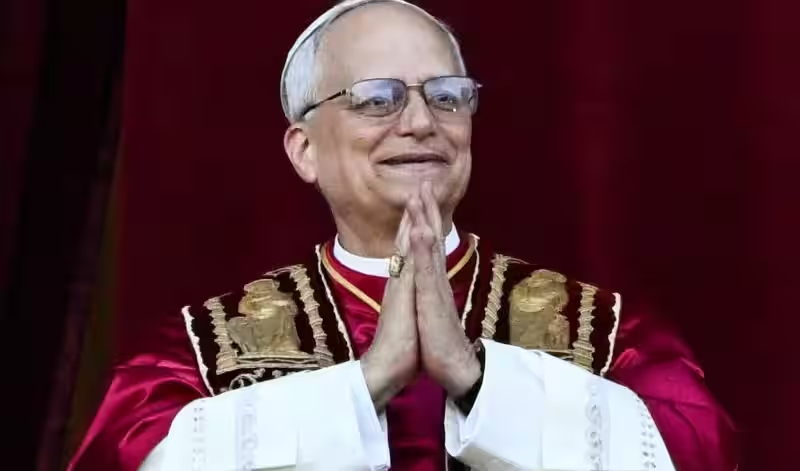
There is an undeniable power in the physical presence of the Pope. For many, seeing and hearing Pope Leo XIV in person would be a transcendent experience, a tangible connection to the Vicar of Christ. These encounters often leave an indelible mark on individuals, strengthening their faith and encouraging them to live out their Christian calling with renewed vigor. The anticipation for Pope Leo XIV’s Peru visit was fueled by this profound human element of connection.
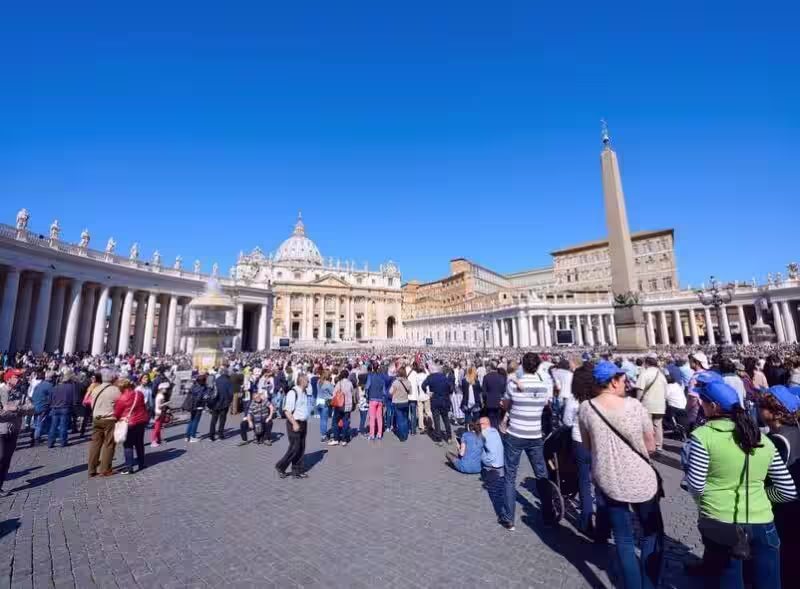
The impact extends beyond individual spiritual renewal. Large gatherings, such as Masses and public addresses, create a sense of collective spiritual uplift and shared identity. These events foster a feeling of belonging to a global Church, reminding believers that they are part of a vast community united by faith. The memories created during Pope Leo XIV’s Peru visit would undoubtedly be cherished for generations, serving as powerful reminders of God’s love and presence in their lives and in their nation.
Beyond the Masses: Pastoral and Social Engagement
While large public Masses are a hallmark of papal visits, the itinerary of Pope Leo XIV in Peru would undoubtedly include more intimate pastoral engagements. These could range from meetings with bishops and clergy to visits with vulnerable populations, such as the sick, the imprisoned, or those affected by natural disasters. Such encounters demonstrate the Church’s preferential option for the poor and its commitment to serving those most in need.
Furthermore, the Pope’s visit often serves as an opportunity to highlight and support existing charitable initiatives and social programs run by the Catholic Church in Peru. By lending his voice and presence to these efforts, Pope Leo XIV could inspire greater generosity and volunteerism, thereby amplifying the Church’s positive impact on society. The success of Pope Leo XIV’s Peru visit would be measured not only by the spiritual fervor ignited but also by the tangible improvements in social well-being that his visit helped to catalyze.
Every papal visit leaves behind a legacy, a ripple effect that continues long after the pontiff has departed. The legacy of Pope Leo XIV’s Peru visit would be built upon the seeds of faith sown, the encouragement given, and the challenges addressed. It would be seen in the strengthened resolve of believers, the renewed commitment of clergy, and the broader societal discourse on values and justice.
Ultimately, the journey of Pope Leo XIV to Peru was more than just a series of events; it was a divine encounter, a spiritual convergence that sought to uplift, inspire, and transform. The echoes of his words, the memory of his presence, and the lessons learned would continue to resonate, guiding the faithful of Peru on their spiritual journeys for years to come, a testament to the enduring power of faith and the unwavering commitment of the Holy See to its global flock. The memorable Pope Leo XIV Peru visit would undoubtedly be etched in the annals of Peruvian religious history.
Frequently Asked Questions: Pope Leo XIV’s Visit to Peru & Religion
Will Pope Leo XIV visit Peru?
At this time, there have been no official announcements or confirmations from the Vatican or Peruvian authorities regarding a papal visit by Pope Leo XIV to Peru.
What is Peru’s predominant religion?
Peru is a predominantly Christian nation, with the Roman Catholic Church being the largest denomination.
What is the significance of the Pope in Peru?
As the head of the Catholic Church, the Pope holds significant religious and symbolic importance for the large Catholic population in Peru. Papal visits are seen as moments of great spiritual and national significance, often drawing large crowds and media attention.
How does religion influence Peruvian culture?
Religion, particularly Catholicism, is deeply intertwined with Peruvian culture. It influences traditions, festivals, social norms, and the country’s historical development. Many national holidays and celebrations have religious origins.
Are there other religions practiced in Peru?
While Catholicism is dominant, Peru also has a growing evangelical Christian population and smaller communities of other faiths, including Buddhism, Judaism, and indigenous religions. The country guarantees freedom of religion.