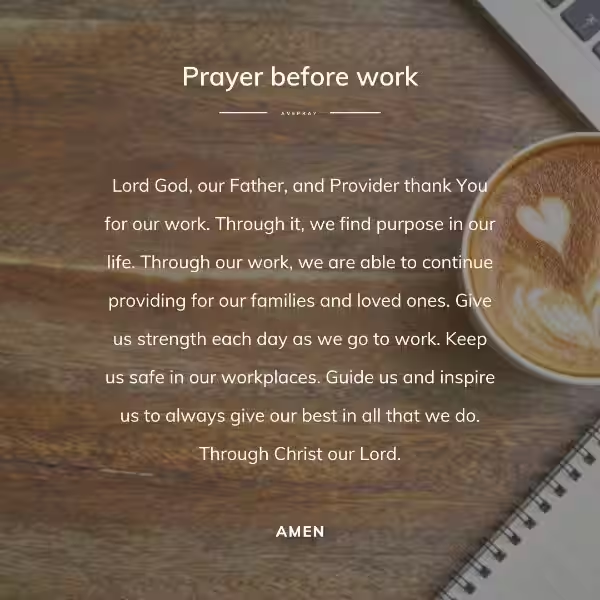
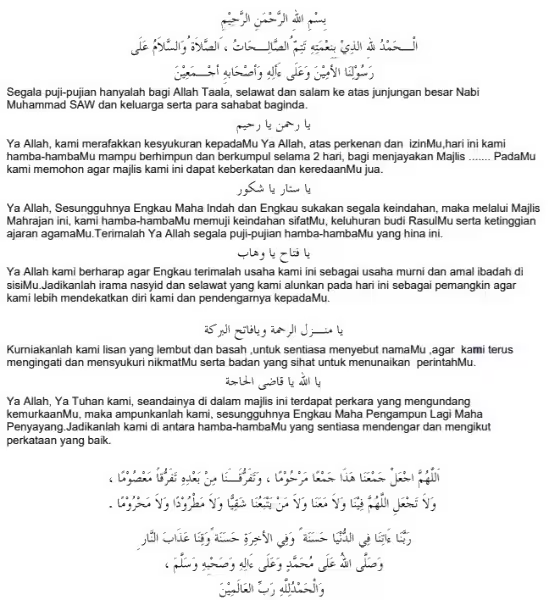
In the tapestry of human experience, few threads are as consistently woven as the practice of prayer. Whether seeking solace in times of trial, expressing gratitude for life’s blessings, or simply striving for a deeper understanding of the divine, prayer offers a profound avenue for connection. Yet, for many, the act of praying can feel amorphous, a well-intentioned but sometimes unfocused conversation with a higher power. This is where a carefully considered prayer outline can become an invaluable tool, transforming intention into impact and fostering a more profound spiritual life. It’s not about rigid formulas, but rather about creating a structure that guides our thoughts and emotions, ensuring our prayers are not just spoken words, but heartfelt expressions with a clear purpose.
Think of a prayer outline like a roadmap for your spiritual journey. Without one, you might wander aimlessly, arriving at your destination feeling lost or unfulfilled. With a well-defined outline, you can navigate your prayer with intention and clarity, ensuring you touch upon the most important aspects of your relationship with the divine. This article will explore the fundamental elements of a prayer outline, demonstrating how it can enrich your practice within the broader context of religion and personal spirituality. We’ll delve into practical steps, offer relatable examples, and illuminate how this structured approach can unlock a more authentic and powerful prayer life.
Understanding the Foundation: What is a Prayer Outline?
At its core, a prayer outline is a framework, a guide designed to help individuals structure their prayers in a way that is both comprehensive and personal. It’s not a script to be recited verbatim, but rather a series of prompts or categories that encourage us to address different dimensions of our spiritual lives and our relationship with God, the Universe, or whatever higher power we connect with. This structured approach helps ensure that our prayers are not just fleeting thoughts but deliberate conversations, encompassing praise, confession, thanksgiving, and supplication. For instance, some might find it helpful to begin with acknowledging God’s attributes, followed by expressing personal needs or concerns.
Consider the diverse forms prayer takes across various religions and spiritual traditions. From the structured liturgy of Christianity to the meditative chants of Buddhism, the underlying principle of intentional communication remains. A prayer outline can be adapted to suit any belief system, offering a flexible yet effective way to deepen one’s devotional practice. It’s about creating a personal liturgy, a rhythm that resonates with your soul. For example, a Hindu might incorporate elements of devotion to specific deities, while a Muslim might focus on the Five Pillars of Islam within their prayer structure. The key is to tailor the outline to your unique spiritual path.
The Pillars of a Purposeful Prayer: Key Components
While the specifics can vary, most effective prayer outlines share common foundational pillars. These are the building blocks that ensure our prayers are well-rounded and address the multifaceted nature of our spiritual connection. Understanding these components can transform a seemingly daunting practice into an approachable and deeply rewarding one. Let’s break down these essential elements, which can serve as the backbone of any prayer outline, regardless of religious affiliation.
Adoration/Praise: Beginning by acknowledging and celebrating the divine nature, power, and majesty. This sets a tone of reverence and awe.
Confession/Repentance: Honestly examining our actions and thoughts, acknowledging any wrongdoing, and seeking forgiveness. This fosters humility and a desire for spiritual growth.
Thanksgiving: Expressing gratitude for blessings, both big and small, recognizing the gifts we have received. This cultivates a spirit of contentment and appreciation.
Supplication/Intercession: Presenting our needs and the needs of others to the divine, asking for guidance, strength, or intervention. This highlights our reliance and our concern for the wider world.
To illustrate, let’s imagine a simple prayer outline for a Christian. It might start with acknowledging God as Creator and Sustainer (Adoration). Then, perhaps reflecting on a moment of impatience or unkindness and asking for forgiveness (Confession). Following this, expressing thanks for a supportive friend or a sunny day (Thanksgiving). Finally, praying for a sick loved one or for wisdom in a difficult decision (Supplication). This structured approach ensures that no vital aspect of communication with the divine is overlooked, making the prayer a holistic expression of one’s spiritual state.
Crafting Your Personal Prayer Outline: A Step-by-Step Guide
Creating a personal prayer outline is an act of self-discovery and spiritual intention. It’s about taking ownership of your prayer life and tailoring it to your unique needs and beliefs. This process isn’t about inventing something entirely new, but rather about understanding the core elements of prayer and arranging them in a way that feels authentic and resonant for you. The goal is to build a framework that supports, rather than constrains, your connection with the divine. Let’s embark on this journey together, step by step, to build a robust and meaningful prayer outline.
To begin, consider your current spiritual journey. What are your primary motivations for prayer? Are you seeking solace, strength, guidance, or closer communion? Understanding your ‘why’ will help you prioritize certain elements within your outline. For example, if you are going through a challenging time, your prayer outline might place a greater emphasis on Supplication and seeking Strength. Conversely, during periods of peace and prosperity, Thanksgiving and Adoration might naturally come to the forefront. This flexibility is key to a living, breathing prayer practice.
Step 1: Identifying Your Core Spiritual Values and Beliefs
Before you can build a prayer outline, it’s essential to understand the bedrock of your faith or spiritual path. What are the fundamental truths you hold dear? What does your understanding of the divine entail? Reflecting on these questions will provide the essential context for your prayer. For instance, if you believe in a God of boundless love and mercy, your Confession might focus on acknowledging your human imperfections rather than dwelling on perceived failures. Similarly, if you view the divine as a source of universal wisdom, your Supplication could be framed as a request for enlightenment.
Take some time for quiet contemplation or journaling. Consider the teachings that resonate most deeply with you. Are you drawn to the concept of divine justice, or perhaps divine compassion? These core values will inform the language and focus of your prayers. For example, a person who deeply values interconnectedness might weave prayers for global well-being into their Intercession, recognizing that their own spiritual health is tied to the health of the collective. This foundational step ensures your prayer outline is rooted in your authentic spiritual identity.
Step 2: Structuring the Flow of Your Prayer
Once you have a grasp of your core beliefs, you can begin to arrange the fundamental pillars of prayer into a cohesive flow. While the order can be flexible, a common and effective approach often begins with acknowledging the divine, moving towards personal reflection and needs, and concluding with expressions of gratitude and hope. This movement from the external (God’s attributes) to the internal (your needs and feelings) and then back outwards (gratitude, intercession) can create a powerful spiritual dynamic. Think of it as ascending a spiritual ladder, each step bringing you closer to a deeper connection.
A simple yet effective structure for your prayer outline might look like this: 1. Praise and Adoration, 2. Confession and Humility, 3. Petition and Needs (Yours and Others’), and 4. Gratitude and Thanksgiving. This sequence naturally builds momentum, starting with reverence, moving to introspection, then to active engagement with your concerns and the world, and finally culminating in a spirit of thankfulness. For instance, you might begin by marveling at the vastness of the universe (Praise), then honestly admitting a moment of pride (Confession), followed by praying for clarity on a career decision and for a friend’s recovery (Petition), and concluding with thanks for the gift of life and the love you have received (Gratitude).
Step 3: Personalizing the Language and Content
This is where your prayer outline truly becomes your own. Move beyond generic phrases and infuse your prayers with language that speaks to your heart. Use the names or titles for the divine that resonate with you. Incorporate specific life experiences, people, and situations into your prayers. The more personal and specific you are, the more alive and meaningful your prayer will feel. This is not a time for performance, but for authentic communication. For example, instead of a general prayer for “peace,” you might pray for “peace in my heart amidst this overwhelming stress” or “peace in my family as we navigate this difficult transition.”
Consider using metaphors and imagery that are meaningful to you. If nature inspires you, you might liken God’s presence to the steadfastness of a mountain or the nurturing warmth of the sun. If music moves you, you might describe your prayers as a melody offered to the divine. The key is to express your inner world in ways that feel genuine. A prayer outline can include specific prompts like: “What attribute of God am I most aware of today?” or “What is one small blessing I often overlook that I can thank God for?” These personalized prompts transform a generic outline into a dynamic tool for connection.
Integrating Your Prayer Outline into Daily Life
Having a well-crafted prayer outline is a significant step, but its true power lies in its consistent integration into your daily life. A prayer outline is not a static document to be admired; it is a living guide to be used, adapted, and cherished. Think of it as a compass, always there to help you orient yourself, even when the path ahead seems unclear. The more you practice with your outline, the more natural and intuitive it will become, transforming your prayer life from an occasional event into a consistent and enriching spiritual discipline.
The beauty of a prayer outline is its adaptability. It can be used for a brief, five-minute moment of reflection or for a more extended period of deep communion. The key is to find moments throughout your day to engage with it. This could be first thing in the morning, during a quiet lunch break, or before you go to sleep. Each engagement, no matter how short, reinforces your connection and strengthens your spiritual muscle. Remember, consistency trumps duration when it comes to building a meaningful prayer practice.
Finding the Right Time and Place
The effectiveness of prayer is often enhanced by intentionality surrounding its practice. While prayer can happen anywhere, designating specific times and places can help cultivate a sense of sacredness and focus. Consider what moments in your day offer the most potential for quiet reflection and minimal distraction. This might be the quiet predawn hours, a peaceful corner of your home, or even a quiet walk in nature. The goal is to create an environment that supports your spiritual engagement and minimizes external interruptions.
For some, a consistent morning routine is ideal. Waking up a little earlier to engage with their prayer outline can set a positive and centered tone for the entire day. Others might find solace in an evening prayer, reflecting on the day’s events and seeking peace before rest. It’s also beneficial to be flexible and recognize that life’s demands may necessitate adapting your schedule. The important aspect is to consciously choose and honor these moments, making prayer a priority rather than an afterthought. For instance, if a sudden crisis arises, your prayer outline can serve as an immediate anchor, guiding you through supplication and seeking strength.
Adapting Your Outline for Different Needs and Occasions
Life is rarely static, and neither should our prayer outlines be. The brilliance of a personal prayer outline lies in its capacity for adaptation. Different situations call for different emphases. A period of intense personal struggle might require a greater focus on Confession and Supplication, while a time of great joy and celebration might naturally lead to an outpouring of Adoration and Thanksgiving. Your outline should be a flexible guide, not a rigid decree.
Consider creating variations of your outline for specific occasions. You might have a “Daily Reflection” outline, a “Crisis Prayer” outline, or even a “Gratitude-Focused” outline. This allows you to approach prayer with the precise intention needed for the moment. For example, during a time of global unrest, your Intercession section might expand to include prayers for peace and reconciliation across nations. Conversely, when celebrating a personal milestone, your Praise and Thanksgiving sections would likely be more prominent. This dynamic approach ensures your prayer remains relevant and responsive to the ebb and flow of life.
The Transformative Power of a Structured Prayer Life
The journey of faith is a deeply personal exploration, and within the realm of religion, prayer stands as a cornerstone practice. While spontaneous prayers can be deeply meaningful, the intentional structure offered by a prayer outline can unlock new depths of connection and understanding. It elevates prayer from a casual address to a deliberate dialogue, fostering a more profound and transformative relationship with the divine. The benefits extend far beyond the immediate act of praying, influencing our perspectives, our actions, and our overall spiritual well-being.
Embracing a prayer outline is not about stifling spontaneity, but about providing a fertile ground from which deeper spiritual expression can blossom. It equips us to navigate the complexities of life with greater clarity and resilience, knowing we have a reliable framework for seeking guidance, expressing gratitude, and finding solace. The consistent practice, guided by a thoughtful outline, can lead to a profound sense of peace, purpose, and an unwavering connection to something greater than ourselves. This structured approach is a testament to the human desire for order and meaning, applied to our most sacred conversations.
Frequently Asked Questions about Prayer Outlines
What is a prayer outline?
A prayer outline is a structured guide or framework that helps individuals organize their thoughts and intentions when praying. It breaks down prayer into different components or themes to ensure a comprehensive and focused approach to communicating with the divine.
Why should I use a prayer outline?
Using a prayer outline can provide several benefits. It can help you stay focused, ensure you cover important aspects of prayer, deepen your understanding of prayer, and offer structure for those who find it challenging to spontaneously articulate their prayers. It can also be a valuable tool for communal prayer or for teaching others how to pray.
What are the common elements of a prayer outline?
While prayer outlines can vary, common elements often include elements like adoration (praising God), confession (acknowledging sins), thanksgiving (expressing gratitude), supplication (making requests for oneself and others), and intercession (praying for others). Some outlines might also include elements of meditation or listening for divine guidance.
Are there different types of prayer outlines?
Yes, there are various types of prayer outlines. Some are very simple, while others are more detailed. Some are tailored to specific prayer styles (e.g., contemplative prayer, intercessory prayer), while others are designed for general use. The best outline is often the one that resonates most with your personal spiritual journey.
Can I create my own prayer outline?
Absolutely! Creating your own prayer outline allows you to personalize it to your specific needs and spiritual understanding. You can adapt existing outlines or build one from scratch, incorporating elements that are meaningful to you and your relationship with the divine.
Is it necessary to follow a prayer outline rigidly?
No, it’s not necessary to follow a prayer outline rigidly. A prayer outline is a tool to assist, not to constrain. While it provides structure, prayer is fundamentally a dialogue. Feel free to deviate from the outline as your prayer flows, allowing for spontaneity and genuine expression.
How can a prayer outline help me in my religion?
In many religions, prayer is a central practice. A prayer outline can help its adherents to pray according to the teachings and traditions of their faith. It can ensure that prayers align with religious doctrines, express devotion in ways consistent with the religion’s values, and facilitate prayers for the community and its leaders, as often encouraged in religious contexts.