The Bible, a cornerstone of faith for billions, can sometimes feel like an imposing tome, a collection of ancient stories and laws that are difficult to grasp in their entirety. Yet, beneath its vastness lies a profound and cohesive narrative that has shaped civilizations and continues to offer guidance and inspiration. This article aims to demystify the Bible by offering a chapter-by-chapter summary, not as a dry academic exercise, but as an invitation to discover the richness and relevance of its unfolding story. We’ll explore the foundational events, the pivotal characters, and the enduring themes that resonate even today, making this journey accessible and illuminating for everyone, regardless of their religious background.
Think of the Bible as a grand unfolding drama, a cosmic play with humanity at its center. Each book, and indeed each chapter, represents a scene, contributing essential details to the overarching plot. By breaking it down, we can appreciate the intricate artistry of its composition, from the sweeping creation accounts of Genesis to the hopeful prophecies of Isaiah and the revolutionary teachings of Jesus. Our goal is to make this exploration personally meaningful, allowing you to connect with the Bible’s timeless wisdom and see how its ancient narratives still speak to the human condition in powerful and relatable ways. Let’s embark on this adventure together, chapter by chapter.
The Foundation: Genesis – Beginnings and Brokenness
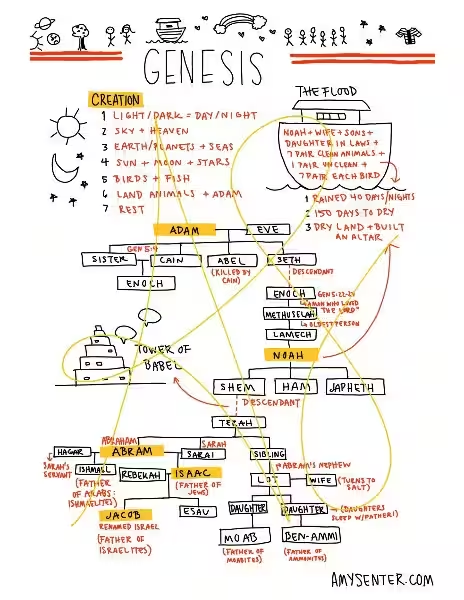
Our journey begins with Genesis, the book of beginnings. It lays the groundwork for everything that follows, introducing us to the creation of the universe and the first humans, Adam and Eve. Imagine a perfect garden, a sanctuary of innocence, where life was lived in unbroken fellowship with the Creator. This initial harmony, however, is tragically disrupted by disobedience, introducing sin and its consequences into the world. This pivotal event, the Fall, sets in motion a cycle of human struggle and separation from God, a theme that echoes throughout the Bible.
As we move through the early chapters of Genesis, we encounter the patriarchs: Abraham, Isaac, and Jacob. These are not perfect people, but rather individuals grappling with faith, doubt, and human frailty, much like ourselves. God makes a covenant with Abraham, promising him descendants and a land, a promise that forms the bedrock of the Israelite nation. We witness Jacob’s journey of wrestling with God, his name changed to Israel, signifying a profound transformation. The story of Joseph, sold into slavery by his brothers but ultimately rising to a position of power and saving his family from famine, is a powerful testament to God’s providence and redemptive purposes, even amidst deep betrayal and suffering. These early chapters are crucial for understanding the origins of humanity, the nature of sin, and the unfolding of God’s plan for a chosen people.
Exodus – Liberation and Law
The narrative continues with Exodus, a pivotal book detailing the liberation of the Israelites from slavery in Egypt. Picture the immense suffering of a people yearning for freedom. Moses, a divinely appointed leader, emerges to confront the powerful Pharaoh, leading the Israelites through miraculous plagues and ultimately, the parting of the Red Sea – a breathtaking display of divine intervention. This isn’t just a historical event; it’s a powerful metaphor for redemption, for being pulled out of bondage into a new life.
Following their escape, the Israelites arrive at Mount Sinai, where they receive the Ten Commandments and the Law. This is the establishment of the covenant, a framework for how God’s people are to live in relationship with Him and with each other. Think of these commandments not as restrictive rules, but as guidelines for a flourishing community, designed to foster justice, love, and obedience. The construction of the Tabernacle, a mobile sanctuary, signifies God’s desire to dwell among His people, a tangible presence within their midst. Exodus is a story of overcoming oppression, receiving divine instruction, and learning to live as a distinct nation set apart for God.
Leviticus, Numbers, and Deuteronomy – Life in the Wilderness and Covenant Renewal
The subsequent books – Leviticus, Numbers, and Deuteronomy – delve into the practicalities of life for the Israelites in the wilderness as they journey towards the Promised Land. Leviticus is primarily concerned with holiness and worship, outlining detailed laws regarding sacrifices, purity, and festivals. It emphasizes the sanctity of God and the need for a purified approach to approaching Him. Imagine the meticulous instructions for rituals, all designed to teach the people about the gravity of sin and the necessity of atonement, pointing towards a future sacrifice that would bring ultimate reconciliation.
Numbers chronicles the census of the tribes and, perhaps more famously, their forty years of wandering in the desert due to their unbelief and disobedience. This period is marked by challenges, rebellions, and the consequences of their choices, but also by God’s unwavering faithfulness and provision. It’s a stark reminder that even with divine guidance, human choices have significant repercussions. Finally, Deuteronomy is Moses’ final address to the people, a powerful renewal of the covenant before they enter Canaan. He recounts their journey, reiterates the Law, and passionately urges them to choose obedience and love for God, highlighting the blessings that come from faithfulness and the curses that follow disobedience. These books, though sometimes challenging to read, are vital for understanding the foundations of Israelite society, their relationship with God, and the principles of covenant living.
The Promised Land and the Kingdom: Joshua to Esther
With the wilderness journey concluded, the Bible shifts its focus to the conquest and settlement of the Promised Land, followed by the establishment and eventual division of the Israelite kingdom. This era is a testament to both human courage and divine power, but also to the recurring theme of falling away from God. This section of the Bible provides a rich tapestry of stories about leadership, warfare, justice, and the consequences of both faithfulness and unfaithfulness.
We see the heroic leadership of Joshua, who leads the Israelites in conquering Canaan, a process that involved both military campaigns and the careful allocation of land to the twelve tribes. Following Joshua, the era of the Judges emerges, a period characterized by cycles of apostasy, oppression, and deliverance. Figures like Deborah, Gideon, and Samson rise as charismatic leaders, empowered by God to rescue the Israelites from their enemies, but their stories also reveal human flaws and the ongoing struggle for consistent obedience. The transition to kingship marks a significant development, with Saul being the first, followed by the iconic reign of David, a man after God’s own heart, despite his significant failings. His son, Solomon, ushers in a golden age of prosperity and builds the magnificent Temple in Jerusalem, a central place of worship. However, Solomon’s later life and the subsequent reigns are marked by division and decline, leading to the eventual split of the kingdom into Israel (north) and Judah (south), setting the stage for national decline and exile.
The Wisdom Literature and the Prophets: Job to Malachi
Beyond the historical narratives, the Bible offers a profound exploration of wisdom, poetic expression, and prophetic pronouncements. This section delves into the inner lives of individuals, the nature of suffering, and God’s persistent call to His people. These books offer a diverse range of literary styles and themes, providing solace, challenge, and a deeper understanding of God’s character and His relationship with humanity.
The Wisdom Literature, including Job, Psalms, Proverbs, Ecclesiastes, and Song of Solomon, offers profound insights into everyday life, human struggles, and the pursuit of meaning. Job grapples with the perplexing question of suffering, questioning why the righteous endure hardship. Psalms offers a rich collection of prayers, hymns, and laments, expressing the full spectrum of human emotion in communication with God. Proverbs provides practical advice for living a life of wisdom and integrity, offering pithy sayings for daily guidance. Ecclesiastes reflects on the vanity of life apart from God, urging a focus on eternal values. These books provide a deeply relatable and introspective dimension to our understanding of faith and human experience.
The Prophets – figures like Isaiah, Jeremiah, Ezekiel, Daniel, and the Minor Prophets – served as God’s messengers, calling the people back to faithfulness, denouncing injustice, and proclaiming God’s judgment as well as His promises of future hope and restoration. Imagine standing before a nation that has strayed far from God, with a message of both warning and unwavering love. They spoke of impending judgment due to sin and idolatry, but also of a coming Messiah, a deliverer who would bring ultimate redemption. Their words often went unheeded in their time, but they underscore God’s persistent pursuit of His people and His ultimate plan for reconciliation. The book of Esther, though often placed here or in the historical section, tells the story of a Jewish queen who bravely saves her people from annihilation, highlighting divine providence working through human courage in a foreign land.
The Life and Teachings of Jesus: The Gospels
We now arrive at the heart of the Bible’s narrative: the life, ministry, death, and resurrection of Jesus Christ, as recorded in the four Gospels: Matthew, Mark, Luke, and John. These accounts, while distinct in their perspectives, converge to present Jesus as the incarnation of God, the promised Messiah who came to offer salvation and a new way of life. Imagine a world yearning for hope, and then encountering the radical love and transformative power of Jesus.
Each Gospel offers a unique lens through which to view Jesus. Matthew emphasizes Jesus as the fulfillment of Old Testament prophecy, the kingly Messiah. Mark portrays Jesus as the servant and suffering Messiah, highlighting his action and authority. Luke presents Jesus as the compassionate Savior for all people, with a particular focus on the marginalized. John delves into the divine nature of Jesus, emphasizing his identity as the Son of God and the source of eternal life. Through parables, miracles, and direct teachings, Jesus reveals the nature of God’s kingdom, calling for repentance, faith, and love. His interactions with people from all walks of life – the poor, the sick, the outcast – demonstrate his unconditional grace and transformative power. The climax of his earthly ministry is his crucifixion, a sacrifice for the sins of humanity, followed by his glorious resurrection, conquering death and offering eternal hope for all who believe.
The Early Church and the Spread of the Gospel: Acts and the Epistles
Following Jesus’ ascension, the Holy Spirit empowers the disciples, igniting the birth and rapid expansion of the early Christian church, as chronicled in the Book of Acts. This book is a dynamic account of missionary zeal and courageous witness, illustrating how the message of Jesus spread from Jerusalem to the ends of the Roman Empire. Imagine the early followers, empowered and emboldened, sharing the revolutionary message of a crucified and risen Christ, facing persecution but remaining steadfast.
The Epistles, or letters, written by apostles like Paul, Peter, James, and John, provide invaluable theological instruction and practical guidance for the burgeoning Christian communities. These letters address a wide range of issues, from doctrinal understanding and ethical living to church governance and the nature of Christian fellowship. Paul’s letters, in particular, unpack the implications of Christ’s work for believers, explaining concepts like justification by faith, the indwelling of the Holy Spirit, and the unity of the church. They offer encouragement, correction, and exhortation, helping believers to navigate the challenges of living out their faith in the world and to grow in their understanding of God’s grace. These writings are essential for understanding the foundations of Christian theology and practice.
Looking to the Future: Revelation
Our biblical journey culminates with the Book of Revelation, a highly symbolic and prophetic vision of the ultimate triumph of God’s kingdom and the final establishment of His eternal reign. While often perceived as daunting, Revelation offers profound hope and assurance to believers, revealing God’s sovereign control over history and the ultimate defeat of evil. Imagine a grand finale, a cosmic unfolding where God’s justice is fully realized and His people are eternally secure.
Through vivid imagery of seals, trumpets, bowls, and symbolic battles, John, the author, depicts the struggles and persecutions faced by the early church, as well as the ultimate judgment of the wicked and the vindication of the righteous. It speaks of a final confrontation between good and evil, culminating in the return of Christ, the establishment of a new heaven and a new earth, and the eternal dwelling of God with His redeemed people. Revelation is not primarily about predicting specific future events, but about reinforcing God’s ultimate victory and calling believers to faithful endurance and unwavering hope in the face of present challenges. It’s a powerful reminder that God’s story has a glorious and triumphant conclusion.
Embarking on a chapter-by-chapter summary of the Bible is more than an intellectual exercise; it’s an invitation to engage with a divine narrative that spans millennia, offering timeless truths and profound relevance for our lives today. From the foundational narratives of creation and covenant in Genesis, through the liberation and law in Exodus, the wisdom and prophetic calls, the life and teachings of Jesus, the growth of the early church, and the ultimate hope of Revelation, each part contributes to a grand and overarching story of God’s love, His redemptive plan, and His ultimate victory. May this journey through the Bible’s chapters inspire you to explore its depths further and to discover its transformative power for yourself.
Frequently Asked Questions: Bible Summary Chapter by Chapter & Religion
What is the Bible?
The Bible is a collection of religious texts or scriptures, considered sacred by Christians and Jews. It is divided into two main parts: the Old Testament and the New Testament.
What is the Old Testament?
The Old Testament is the first major part of the Christian Bible, and the entire Hebrew Bible. It contains accounts of the creation of the world, the history of the Israelites, the laws given by God, and the writings of the prophets.
What is the New Testament?
The New Testament is the second major part of the Christian Bible. It focuses on the life and teachings of Jesus Christ, the establishment of the early Christian church, and letters written to various Christian communities.
What is the purpose of a chapter-by-chapter Bible summary?
A chapter-by-chapter Bible summary aims to provide a concise overview of the events, key themes, and main characters found within each chapter of the Bible, making it more accessible and understandable for readers.
How are Bible summaries typically structured?
Bible summaries are usually organized chronologically, following the order of the books and chapters within the Bible. Each summary focuses on the most important narratives, teachings, and theological points of that specific chapter.
What is “religion”?
Religion is a complex system of beliefs, practices, and rituals that are organized around a particular understanding of the divine or the sacred. It often involves a moral code, a worldview, and a community of followers.
Are there different types of religions?
Yes, there are thousands of different religions worldwide, each with its own unique doctrines, traditions, and historical development. Major categories include Abrahamic religions (Judaism, Christianity, Islam), Dharmic religions (Hinduism, Buddhism, Sikhism), and various indigenous and folk religions.
What is the difference between a summary and an interpretation of the Bible?
A summary aims to present the content of a Bible chapter in a condensed form. An interpretation, on the other hand, seeks to explain the meaning, significance, and application of that content.
Can Bible summaries help me understand the Bible better?
Yes, chapter-by-chapter summaries can serve as a helpful starting point for understanding the Bible, providing a framework and highlighting key elements that can then be explored in more detail through personal reading and study.