The concept of sin is a cornerstone of many religious traditions, and within Roman Catholicism, the distinction between venial and mortal sins carries significant theological weight. For those seeking a deeper understanding of their faith, or perhaps grappling with questions about spiritual well-being, exploring the Roman Catholic mortal sins list is an essential journey. This isn’t about fear-mongering or dwelling on the negative; rather, it’s about understanding the gravity of actions and intentions, and how they can impact one’s relationship with God and the Church community. By delving into this topic, we can gain clarity on the path to spiritual growth and reconciliation.
Understanding mortal sin is crucial for living a full and authentic Catholic life. It speaks to the seriousness with which the Church views certain transgressions, not as minor slips, but as actions that can sever one’s connection to divine grace. This exploration aims to demystify this concept, providing clear explanations, relatable examples, and practical insights for the modern believer. We will navigate the core tenets, the specific categories of sins, and the profound implications of these actions on our spiritual journey.
At its heart, a mortal sin in Roman Catholicism is an act that is gravely contrary to the law of God. It’s not just a mistake or an oversight; it’s a deliberate choice to turn away from God’s love and guidance. Three essential conditions must be met for an act to be considered a mortal sin: grave matter, full knowledge, and deliberate consent. Without all three, a sin, while still an offense, doesn’t carry the same damning consequence of cutting off God’s grace.
Imagine a child who accidentally breaks a vase while playing. They didn’t intend to break it, and they might not have fully grasped the value of the vase. This is akin to venial sin – an offense but not a malicious rejection of parental love. Now, imagine that same child, knowing full well the vase is precious and that they will be punished, deliberately throwing it against the wall in anger. This act, with its clear intent to cause harm and disregard for rules, better illustrates the concept of grave matter, full knowledge, and deliberate consent that define a mortal sin. It’s about the quality of the choice made.
Grave Matter: The Seriousness of the Offense
The concept of grave matter refers to the inherent seriousness of the sin itself. These are actions that, by their very nature, represent a significant departure from God’s commandments and the teachings of the Church. Think of them as the “big ten” of spiritual dangers, though the specific categories are broader than just the Ten Commandments. The Catechism of the Catholic Church provides guidance on what constitutes grave matter, and it often aligns with actions that cause profound harm to oneself, others, or the divine relationship.
For instance, actions like murder (taking an innocent human life), adultery (breaking the marital covenant), or sacrilege (treating sacred things with disrespect) are universally recognized as grave matters. These aren’t actions taken lightly; they are fundamental violations of God’s law and the dignity of human life and sacredness. Even in less dramatic scenarios, actions like grave theft (stealing a substantial amount of property) or bearing false witness (lying in a way that severely damages someone’s reputation) can also fall into the category of grave matter.
Full Knowledge and Deliberate Consent: The Mind and Will at Play
Beyond the nature of the act itself, the internal disposition of the person is paramount. Full knowledge means understanding that the action is indeed wrong and contrary to God’s will. A person who acts out of ignorance, or who genuinely misunderstands the gravity of their actions, may not be committing a mortal sin, even if the act itself is grave matter. Similarly, deliberate consent implies a conscious and free choice to commit the act. If someone is coerced, forced, or acts impulsively due to extreme duress or mental illness, their consent may not be considered deliberate.
Consider someone struggling with addiction. While the act of using the substance might be considered grave matter, if they are acting under the overwhelming compulsion of the addiction and their capacity for deliberate consent is significantly impaired, they may not be committing a mortal sin in the same way as someone who casually chooses to engage in the same behavior without such a struggle. This highlights the importance of personal responsibility and the nuances of the human will when assessing the weight of a sin. The Church recognizes the complexities of human psychology and the reality of addiction and mental health challenges.
The Roman Catholic Mortal Sins List: Categories of Concern
While the Church doesn’t provide an exhaustive, itemized “list” in the way one might find a shopping list, its teachings categorize actions that constitute mortal sin. These categories help us understand the broad strokes of what actions can lead to a grave offense. Understanding these Roman Catholic mortal sins list categories is key to self-examination and spiritual growth. They serve as guideposts, not rigid pronouncements for every conceivable situation, but rather as indicators of areas where our faith is most vulnerable.
These categories often revolve around how we treat God, ourselves, and our neighbors. They are intertwined with the Ten Commandments and the teachings of Jesus. By examining these broader themes, we can better identify potential pitfalls in our own lives and work towards greater holiness. It’s a dynamic understanding, encouraging continuous reflection and a striving for virtue.
Sins Against God: The First Commandment and Beyond
The most profound category of mortal sins involves direct offenses against God. This begins with violations of the First Commandment: “You shall have no other gods before me.” This includes idolatry, which is the worship of anything or anyone other than the true God, and superstition, which is the belief in supernatural powers apart from God or in practices that rely on such powers. It also encompasses heresy, the obstinate denial of fundamental Catholic doctrines, and apostasy, the complete rejection of the Christian faith.
Beyond these, blasphemy (speaking disrespectfully of God) and taking God’s name in vain (using it lightly or profanely) can also be mortal sins if committed with grave matter, full knowledge, and deliberate consent. These sins strike at the very heart of our relationship with the divine, demonstrating a profound disrespect and disregard for the sacred. For example, a casual use of God’s name might be venial, but a calculated curse directed at God with intent to harm would be grave matter.
Sins Against Others: The Second Great Commandment
The Second Great Commandment, “Love your neighbor as yourself,” provides a framework for understanding sins that harm others. This encompasses a wide range of actions that violate the dignity of persons or damage societal well-being. Murder and abortion are among the most serious transgressions in this category, as they directly violate the sanctity of human life. Adultery, fornication (sexual intercourse between unmarried people), and other serious forms of sexual immorality also fall under this umbrella, as they damage the integrity of relationships and the sanctity of sexuality as ordained by God.
Furthermore, grave theft, slander, calumny (spreading malicious rumors), and bearing false witness are serious offenses that harm the reputation, well-being, and property of others. Even actions like envy (desiring what belongs to another) can become a mortal sin if it leads to other grave offenses, such as theft or malicious gossip. The Church emphasizes that our love for our neighbor is a direct reflection of our love for God, and thus, harming our neighbor is a serious spiritual offense.
Sins Against Oneself: Stewardship of Body and Soul
Mortal sins can also be directed against oneself, reflecting a failure to be a good steward of the gifts God has given us. This includes suicide, which is seen as a grave offense against God’s sovereignty over life and a rejection of the gift of existence. Grave gluttony (excessive indulgence in food and drink to the point of harming one’s health or neglecting spiritual duties), grave drunkenness, and the abuse of drugs can also be considered mortal sins if they are habitual, deliberately pursued, and cause significant harm to oneself, thereby neglecting one’s responsibility to care for the temple of the Holy Spirit – our bodies.
This category also touches upon actions that intentionally damage one’s spiritual life or capacity for good. For example, deliberately seeking out occult practices or engaging in sinful entertainment that actively promotes immoral behavior can be seen as endangering one’s soul. It’s about recognizing that we are called to live lives of virtue and self-control, honoring the sacredness of our own being.
The Consequences and the Path to Reconciliation
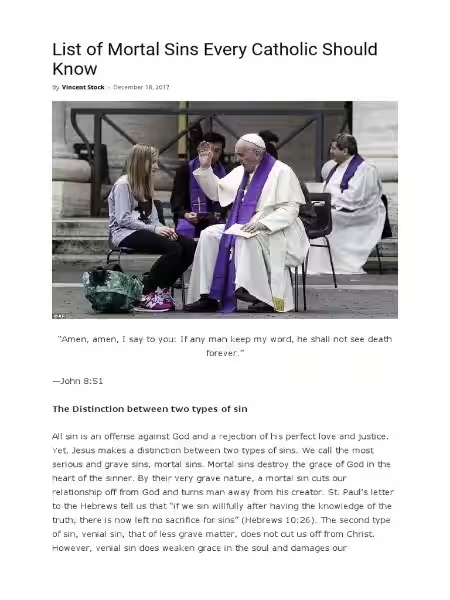
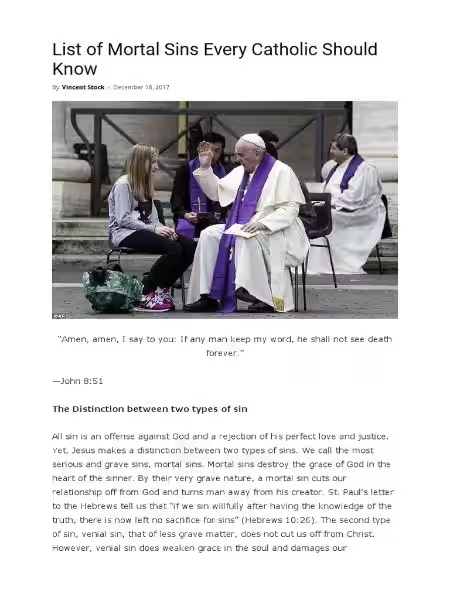
The gravity of mortal sin lies in its potential to sever one’s relationship with God. It is believed to extinguish divine grace from the soul, leaving one spiritually vulnerable. This is why the Church strongly encourages the Sacrament of Reconciliation (Confession) for those who have committed mortal sins. Through confession, one can receive God’s forgiveness and be restored to a state of grace.
It’s important to remember that the Catholic faith is not one of despair but of hope and redemption. While mortal sins are serious, they are not unforgivable. The Church offers a path back to God through repentance, confession, and a commitment to amend one’s life. The journey of faith is one of continuous growth, and understanding the implications of mortal sin is a vital part of that process, encouraging a deeper reliance on God’s mercy.
The Importance of the Sacrament of Reconciliation
Confession is not merely about reciting a list of wrongdoings; it’s a profound encounter with the merciful love of Christ. When we confess our mortal sins with contrition (sorrow for our sins because they offend God, not just because we fear punishment), the priest, acting in the person of Christ, absolves us. This sacrament restores sanctifying grace to the soul, healing the spiritual wound inflicted by mortal sin and re-establishing communion with God and the Church.
Think of it like a broken relationship. If you’ve deeply hurt someone you love, simply saying “sorry” might not be enough. You need to express your remorse, understand the impact of your actions, and commit to changing your behavior. Confession offers this structured opportunity for healing and reconciliation, providing spiritual strength and assurance of God’s forgiveness. It’s a vital lifeline for navigating the challenges of living a moral life.
Moving Forward: Living a Life of Grace and Virtue
Understanding the Roman Catholic mortal sins list should not lead to a life of crippling fear, but rather to a more intentional and virtuous living. It encourages us to be more mindful of our choices, to examine our consciences regularly, and to strive for greater holiness. This involves actively cultivating virtues like charity, temperance, justice, and prudence, which help us to resist temptation and live in accordance with God’s will.
The goal of Catholic teaching on sin is not to condemn, but to guide us towards a deeper, more loving relationship with God. By understanding the gravity of mortal sin and the avenues for forgiveness, we are empowered to live lives of greater spiritual integrity, embracing God’s abundant mercy and striving to reflect His love in all that we do. This journey of faith is a lifelong endeavor, marked by both stumbles and profound moments of grace.
Frequently Asked Questions: Roman Catholic Mortal Sins
What are mortal sins in the Catholic Church?
In Roman Catholicism, a mortal sin is a grave offense against God, committed with full knowledge and deliberate consent. It is considered “mortal” because it can kill the spiritual life of the soul, preventing one from receiving God’s grace and potentially leading to eternal damnation if unrepented.
What are the criteria for a sin to be considered mortal?
For a sin to be classified as mortal, three conditions must be met:
The act must be a grave matter.
The person must have full knowledge that the act is sinful and grave.
The person must have deliberate consent, meaning they freely choose to commit the act.
Is there an official, exhaustive list of mortal sins?
The Catholic Church does not provide a single, exhaustive, and universally binding list of every single act that is a mortal sin. Instead, it identifies categories of grave offenses that, when committed with the three conditions mentioned above, are considered mortal. The Catechism of the Catholic Church outlines these categories.
What are some examples of grave matters that can constitute mortal sin?
While the determination of whether a specific act is a mortal sin depends on the individual circumstances and intent, some commonly understood examples of grave matters include:
Theft or serious damage to another’s property.
Spreading malicious rumors or serious detraction.
Adultery and other forms of serious sexual sin outside of marriage.
Murder or intentionally causing serious harm to another person.
Willful and malicious hatred of God.
Disrespect for one’s parents or lawful superiors.
Intentional and grave disrespect for the Blessed Sacrament.
Willfully missing Mass on Sundays and Holy Days of Obligation.
Giving or receiving Holy Communion while knowing one is in a state of mortal sin.
Rejection of fundamental Catholic doctrines.
Grave injustice towards others.
Coveting what belongs to others in a serious and persistent way.
Bearing false witness that seriously harms another.
It is important to note that the gravity of these acts can be influenced by the specific context and the intent of the person.
What is the difference between a mortal sin and a venial sin?
A venial sin is a less serious offense against God’s law. While it weakens one’s relationship with God, it does not destroy it. Venial sins do not require confession for forgiveness, though they can be confessed and forgiven through prayer and acts of charity. Mortal sins, conversely, sever the relationship with God and require sacramental confession for reconciliation.
What is the role of confession in relation to mortal sins?
Confession, specifically the Sacrament of Reconciliation (also known as Penance or Confession), is the primary means by which Catholics confess mortal sins and receive God’s forgiveness. To receive the Eucharist worthily after committing a mortal sin, one must first confess the sin to a priest and receive absolution.
Can a sin that is typically considered grave be venial under certain circumstances?
Yes. The gravity of a sin is determined by the three conditions: grave matter, full knowledge, and deliberate consent. If one of these conditions is lacking, a sin that is generally considered grave matter might be considered venial. For instance, if someone accidentally causes harm to another, it is not considered murder. Similarly, if someone has grave doubts about a Church teaching and seeks clarification rather than outright rejecting it, their action may not be considered a mortal sin.
What are the consequences of dying in a state of unrepented mortal sin?
According to Catholic teaching, dying in a state of unrepented mortal sin leads to eternal separation from God, which is commonly understood as hell. This is why the Church emphasizes confession and repentance for those who have committed mortal sins.
Where can I find more information about Catholic teachings on sin?
For more detailed information, consult the Catechism of the Catholic Church, particularly paragraphs 1854-1876, which address sin, its types, and its consequences. Consulting with a priest or a knowledgeable Catholic leader is also highly recommended for clarification and guidance.