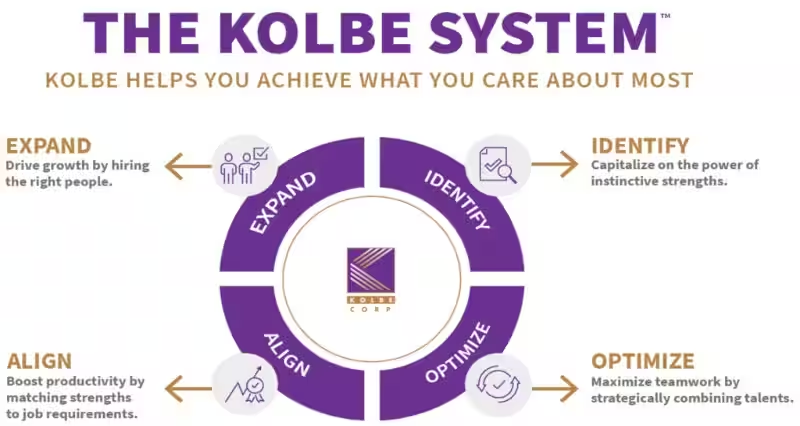
In the tapestry of human experience, our individual inclinations, our innate ways of approaching tasks and challenges, play a profound role. For centuries, people have sought to understand these intrinsic differences, recognizing that some individuals naturally excel at planning, others at execution, and still others at conceptualization. The Kolbe System, a groundbreaking methodology developed by Dr. Conrad Kolbe, offers a powerful lens through which to view these natural strengths. More than just a personality test, it’s a framework for understanding your unique “conative strengths” – the instinctive ways you act and are most effective. This understanding can be a powerful tool, particularly when applied to the realm of religion, illuminating how we can more authentically and effectively engage with our faith.
Many of us, when considering our spiritual journey, might feel a sense of pressure to conform to certain spiritual archetypes. We might admire the fervent preacher, the diligent scholar, or the compassionate caregiver, and wonder if we measure up. The Kolbe System liberates us from this comparison by highlighting that there isn’t one “right” way to be religious. Instead, it suggests that our individual strengths, when understood and leveraged, can lead to a deeply fulfilling and impactful expression of faith. This article will delve into how this system can enrich your personal religious experience, offering practical insights and relatable examples.
Understanding Your Conative Strengths: The Core of the Kolbe System
At its heart, the Kolbe System identifies three primary conative strengths, each representing a distinct facet of how we initiate and carry out action: the Fact Finder, the Follow Thru, and the Quick Start. These aren’t about intelligence or personality in the traditional sense, but rather about your natural inclination to gather information, to organize and execute, or to initiate and take risks. Recognizing where you fall within this spectrum can be the first step towards a more effective and less stressful approach to life, including your religious practices.
Imagine a community organizing a charity drive. The Fact Finder is the individual who naturally delves into researching the needs of the recipient organization, understanding the logistics, and gathering all the relevant data. They ask the crucial “what” and “why” questions. The Follow Thru is the one who meticulously plans the collection schedule, ensures every donation is accounted for, and oversees the delivery with precision. They embody the “how” and “when.” The Quick Start, on the other hand, is the driving force behind the initial buzz, the one who enthusiastically rallies volunteers, brainstorms creative fundraising ideas, and gets the ball rolling with infectious energy. They represent the “let’s do it!” attitude.
The Fact Finder: The Seeker of Truth and Understanding
Individuals who lean towards the Fact Finder strength have an innate drive to gather, sort, and analyze information. They are the natural researchers, the investigators, the ones who want to truly understand the ‘why’ behind things. In a religious context, this manifests as a deep desire to study scripture, explore theological concepts, and understand the historical and philosophical underpinnings of their faith. They are not content with superficial answers; they crave depth and clarity.
For a Fact Finder, engaging with their religion might involve spending hours in contemplative study, engaging in robust theological discussions, or delving into the original texts of sacred writings. They might find profound meaning in dissecting a parable, understanding the context of a prophetic utterance, or exploring the evolution of religious thought. Their faith journey is often characterized by intellectual curiosity and a profound respect for knowledge. Think of someone who, when presented with a religious concept, immediately reaches for a commentary, a concordance, or a historical account to fully grasp its nuances. This methodical approach isn’t about doubt, but about a genuine desire for informed belief. They are the bedrock of understanding, ensuring that faith is built on a solid foundation of comprehension.
The Follow Thru: The Architect of Order and Execution
The Follow Thru strength is all about organization, planning, and bringing things to completion. These are the doers, the implementers, the individuals who ensure that ideas are transformed into tangible realities. They are driven by a need for structure, a commitment to detail, and a satisfaction in seeing tasks through to their successful conclusion. Without the Follow Thru, even the most brilliant ideas might remain just that – ideas.
In the context of religion, a Follow Thru individual might excel in organizing church events, managing charitable initiatives, or ensuring the smooth functioning of religious institutions. They are the ones who ensure that services run on time, that volunteers are scheduled, and that community outreach programs are effectively managed. Their faith is often expressed through acts of faithful service and a dedication to upholding the practical aspects of their religious community. Consider the person who diligently coordinates the food bank donations, meticulously tracks inventory, and ensures that every family receives the assistance they need. This commitment to systematic action is a powerful expression of their spiritual values. They are the ones who translate spiritual intent into concrete, impactful results.
The Quick Start: The Catalyst for Action and Innovation
The Quick Start strength is characterized by enthusiasm, initiative, and a willingness to jump into action. These individuals are the catalysts, the innovators, the ones who are quick to embrace new ideas and generate momentum. They are often the first to volunteer, the ones who can inspire others with their energy, and the ones who are comfortable with taking risks. The Quick Start thrives on action and is often the spark that ignites significant endeavors.
When it comes to religion, a Quick Start might be the driving force behind new ministries, innovative outreach programs, or inspiring calls to action. They are the ones who can mobilize a congregation for a new cause, who are not afraid to experiment with different forms of worship, or who can ignite passion for social justice. Their faith is often expressed through bold evangelism, passionate advocacy, and a dynamic approach to spiritual engagement. Think of the individual who, upon hearing about a pressing need, immediately starts brainstorming solutions, rallying support, and initiating the first steps, often before others have even fully processed the problem. This proactive spirit is invaluable in bringing spiritual energy and tangible change to the world. They are the vital force that sets spiritual movements in motion.
Applying the Kolbe System to Your Religious Journey
The true power of the Kolbe System lies not just in identifying your strengths, but in understanding how to leverage them to deepen your faith and contribute more meaningfully to your religious community. It’s about working with your natural inclinations, rather than against them. This leads to a more authentic, less draining, and ultimately more fruitful spiritual life. When we are operating within our natural strengths, we experience less frustration and more joy.
Instead of trying to force yourself into a mold that doesn’t fit, the Kolbe System encourages you to explore how your unique way of operating can be a gift to your faith. It’s about understanding that while you might not be the sermon-giver or the meticulous record-keeper, your specific conative strengths are essential to the vibrant functioning of any religious body. This self-awareness fosters a sense of belonging and purpose, allowing you to contribute in ways that feel natural and fulfilling.
Finding Your Niche: Aligning Strengths with Religious Roles
Once you understand your primary conative strength, the next step is to identify opportunities within your religious community where you can best utilize it. This isn’t about being assigned a task, but about actively seeking out or creating roles that resonate with your natural abilities. For instance, a confessed Fact Finder might find immense satisfaction in joining a study group, contributing to the church newsletter’s in-depth articles, or serving on a committee that researches new initiatives. Their analytical mind can bring clarity and informed perspective.
A strong Follow Thru might be invaluable in leading a volunteer team for the annual fundraising gala, meticulously organizing the logistics for a community service project, or ensuring that all aspects of a religious education program are properly managed and executed. Their dedication to completion and detail ensures that important endeavors are successful. Meanwhile, a natural Quick Start might be the one to spearhead a new outreach program to the youth, to initiate a petition for a social justice cause, or to enthusiastically recruit volunteers for an upcoming event. Their energetic approach can galvanize support and bring fresh ideas to life.
From Passive Observer to Active Contributor
Many individuals, particularly those who identify primarily as Fact Finders or perhaps have a more introverted disposition, might find themselves on the fringes of active participation. They might attend services regularly, engage in private prayer and study, but feel less inclined towards the more visible roles. The Kolbe System offers a pathway to move from passive observation to active contribution by highlighting how their unique strengths are not only valuable but often crucial to the health and growth of a religious community. A Fact Finder‘s deep understanding of scripture, for example, can inform sermons or facilitate insightful adult education classes, even if they’re not the ones delivering the sermon. Their ability to connect complex ideas can be a profound gift.
Similarly, a Quick Start might feel restless in traditional settings, but their drive to initiate can be channeled into creating small, informal Bible study groups, organizing impromptu community service events, or even starting an online forum for faith-based discussions. Their energy, when directed, can be infectious. The Follow Thru, often content with ensuring the existing systems run smoothly, can be empowered to identify areas for improvement and implement them systematically, ensuring long-term success for religious programs. Recognizing these innate drives allows everyone to feel like an essential part of the spiritual fabric, rather than just an attendee.
The Kolbe System and the Nature of Religious Service
The concept of religious service, often framed as selfless giving, can be profoundly enriched by the Kolbe System. It reframes “service” not as a universally identical act of sacrifice, but as the application of one’s natural strengths for the betterment of the community and in alignment with one’s faith. This perspective combats burnout and fosters a sustainable, joyful approach to spiritual engagement. When we serve in ways that align with our innate abilities, the act of giving becomes less of a chore and more of a natural expression of who we are.
Consider the difference between a Follow Thru meticulously organizing the church pantry for a food drive and a Quick Start enthusiastically spreading the word about the need for donations. Both are acts of service, both are vital, but they stem from different innate drivers. Understanding these differences allows for a more nuanced appreciation of each person’s contribution and a better allocation of tasks to maximize effectiveness and minimize personal strain. This understanding also validates the diverse ways in which faith can be lived out.
Beyond Traditional Roles: Recognizing Diverse Contributions
The Kolbe System encourages us to look beyond the conventional roles of religious leadership and service. It highlights that innovation and understanding are as vital as organization and execution. For instance, a Fact Finder who spends their time researching and articulating the historical context of a particular religious practice might be providing a crucial service by clarifying misunderstandings or deepening the community’s appreciation for their traditions. This intellectual contribution is just as valuable as organizing a bake sale.
A Quick Start who initiates a new prayer initiative, even if it’s unconventional, might be sparking a spiritual renewal within the community. Their willingness to try new things can open doors to deeper spiritual experiences for others. The Follow Thru, in their consistent and reliable execution of responsibilities, provides the stability and infrastructure that allows other initiatives, including those of the Fact Finder and Quick Start, to flourish. Recognizing these diverse contributions fosters a more inclusive and dynamic religious environment.
The Harmony of Strengths: Building a Stronger Faith Community
Ultimately, the Kolbe System reveals that a truly robust and vibrant faith community is one that embraces and leverages the diverse conative strengths of its members. It’s about recognizing that the ideal religious group isn’t one where everyone acts the same, but one where the unique talents of the Fact Finder, the Follow Thru, and the Quick Start all work in concert. This synergy creates a powerful force for good and a deeply enriching spiritual experience for all involved.
When individuals are empowered to operate within their natural strengths, they are more likely to feel fulfilled, engaged, and valued. This leads to a stronger sense of community, greater capacity for service, and a more profound and authentic expression of faith. The Kolbe System provides a framework for understanding this vital harmony, reminding us that our individual inclinations are not hindrances, but rather essential gifts to our spiritual journey and the communities we are a part of.
Frequently Asked Questions about the Kolbe System
A Kolbe Index is a tool used to measure a person’s innate abilities to act. It is based on the theory that everyone has a natural strength in three areas: Fact-Finding, Follow-Thru, and Quick-Start. Understanding your Kolbe Index can help you in career choices, team building, and personal development.
What is the Kolbe System?
The Kolbe System, developed by Kathy Kolbe, is a method for understanding an individual’s natural strengths in problem-solving and executing tasks. It identifies three core areas of operation: Fact-Finding (gathering information), Follow-Thru (organizing and executing), and Quick-Start (anticipating and improvising).
How is the Kolbe Index determined?
The Kolbe Index is determined through a series of carefully designed questions that measure your natural inclinations and how you approach tasks. It is not a test of knowledge or skills, but rather an assessment of your inherent way of operating.
What are the three Kolbe conations?
The three Kolbe conations are:
* Fact-Finders: Individuals who naturally want to gather information and understand the “why” behind things.
* Follow-Thru: Individuals who naturally focus on planning, organizing, and executing tasks efficiently.
* Quick-Starters: Individuals who naturally anticipate problems, improvise, and take initiative.
Can I improve my Kolbe scores?
The Kolbe Index measures your natural, inherent strengths. You cannot change your core conations, but you can learn to leverage your strengths more effectively and develop strategies to compensate for areas where you may have weaker natural inclinations.
How can the Kolbe System be used?
The Kolbe System is widely used in various contexts, including:
* Career development: Identifying roles that align with natural strengths.
* Team building: Creating balanced teams by understanding individual contributions.
* Personal growth: Gaining self-awareness and improving how you approach challenges.
* Education: Helping students understand their learning styles.
Is the Kolbe System related to personality tests like Myers-Briggs?
While both Kolbe and Myers-Briggs explore aspects of human behavior, they focus on different things. Myers-Briggs assesses personality preferences, while Kolbe assesses innate abilities and how individuals take action. They are complementary tools for self-understanding.
What does it mean if I have a high score in one Kolbe conation?
A high score in a particular conation indicates that this is a natural strength for you. You likely find it easy and satisfying to engage in activities related to that conation.
What does it mean if I have a low score in one Kolbe conation?
A low score suggests that this area is not your natural strength. You may find activities related to this conation more challenging or less instinctively appealing. This doesn’t mean you can’t perform these actions, but you might need to make a more conscious effort or develop specific strategies.
How long does a Kolbe Index assessment take?
The Kolbe Index assessment typically takes about 20-30 minutes to complete.
Where can I take a Kolbe Index assessment?
Kolbe Index assessments are available through certified Kolbe consultants and often directly through the Kolbe Corp website.