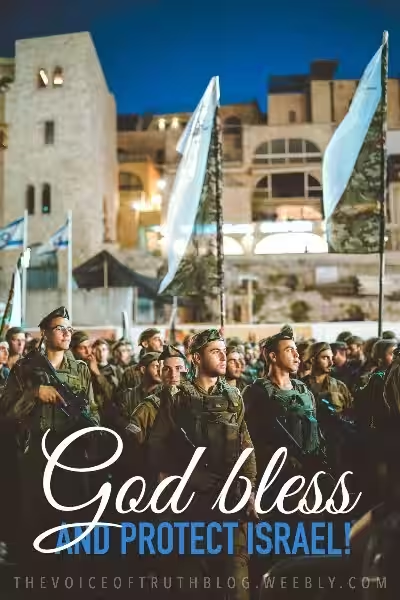
The tapestry of human history is woven with threads of both profound devotion and brutal conflict. In the crucible of war, where fear and desperation often overshadow reason, the human heart turns to a higher power. This is where the practice of war prayers emerges, a powerful and often complex intersection of faith, conflict, and the enduring human spirit. These are not simply requests for divine intervention on the battlefield; they are deeply personal expressions of hope, pleas for protection, meditations on morality, and sometimes, even pronouncements of righteous purpose. Understanding war prayers offers a window into the human condition at its most vulnerable and determined.
The act of praying before or during conflict is as old as warfare itself. From ancient civilizations invoking their gods for victory to modern soldiers whispering a heartfelt plea for survival, the impulse to seek solace and strength beyond oneself remains a constant. These prayers can take many forms, from formal religious services conducted before deployment to silent, individual supplications in the chaos of battle. They reflect a universal human need to grapple with the immense stakes of war and to find meaning in the face of chaos.
It’s crucial to recognize that war prayers are not monolithic. They encompass a wide spectrum of intentions and theological underpinnings, often shaped by the specific religion, the nature of the conflict, and the individual praying. The perceived justice of a cause, the desperation of survival, or the solemn duty of service can all influence the words and sentiments expressed in these urgent appeals.
Some war prayers are overtly directed at securing victory, asking for strength, courage, and divine assistance in overcoming the enemy. These might be recited by leaders before a battle or by soldiers marching into the fray. Conversely, other prayers focus on protection, beseeching a higher power to shield oneself and one’s comrades from harm, injury, or death. This plea for preservation is a primal instinct amplified by the extreme dangers of warfare.
Prayers for Victory: The Divine Mandate for Triumph
In many historical and contemporary contexts, war prayers are intrinsically linked to the pursuit of victory. Leaders and soldiers alike have historically sought divine favor to ensure their success on the battlefield. This often stems from a belief that their cause is just and, therefore, divinely sanctioned. Imagine a king addressing his troops before a crucial siege, his voice resonating with ancient pronouncements, “O Lord of Hosts, grant us strength this day! Let our swords be sharp and our hearts unwavering. Guide our arrows true and our shields firm. For justice and for our people, we pray for victory!”
This desire for victory isn’t solely about aggression; it can be rooted in a deep-seated belief that one is fighting for a righteous cause, such as defending one’s homeland, protecting the innocent, or upholding religious principles. The prayers become a way of channeling collective will and seeking divine endorsement for their struggle. The act of praying for victory can also foster a sense of unity and shared purpose among combatants, strengthening their resolve and their belief in the righteousness of their mission.
Prayers for Protection: A Shield Against the Storm
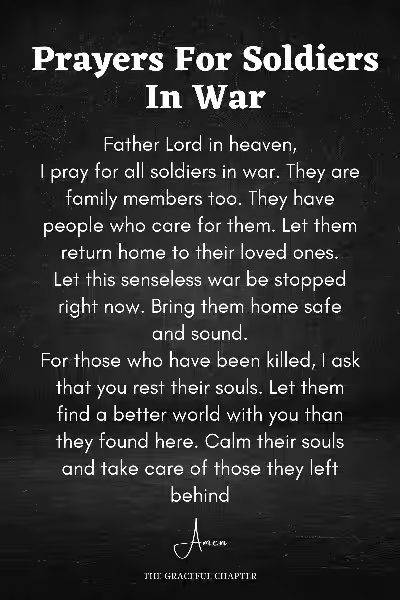
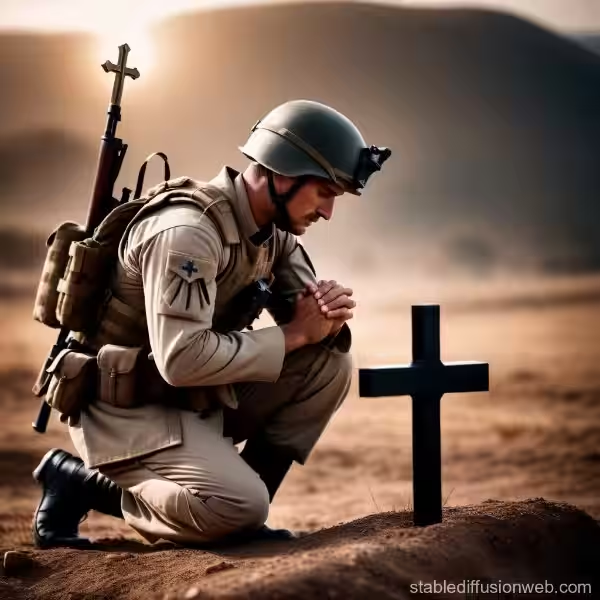
When the roar of cannons and the clash of steel fill the air, the most immediate and powerful prayer often becomes one for safety. The raw vulnerability of facing imminent danger naturally leads individuals to seek a divine shield. Consider a young soldier, his heart pounding, whispering, “Dear God, please keep me safe. Protect my brothers and me from the enemy’s fire. Bring us home to our families, whole and unharmed.”
These prayers for protection are deeply human and universally relatable, transcending religious dogma. They are a testament to the inherent value of life and the desperate yearning to survive. Even those who may not be overtly religious often find themselves uttering such pleas in moments of extreme peril, a testament to the enduring power of faith in the face of mortality. The war prayer for protection acknowledges the terrifying reality of war and seeks a divine hand to guide them through its treacherous currents.
Prayers for Guidance and Morality: Navigating the Ethical Minefield
War, by its very nature, presents profound ethical dilemmas. The taking of human life, even in the context of armed conflict, is a weighty matter. This is where war prayers can take on a more contemplative and moral dimension, seeking guidance on how to act justly and with compassion, even amidst the brutality. A chaplain, leading a service before deployment, might offer a prayer such as, “Almighty Father, imbue us with discernment. Help us to distinguish between duty and cruelty, between righteous force and senseless violence. Grant us the wisdom to act with honor and the courage to show mercy where possible.”
These prayers acknowledge the inherent tragedy of war and seek divine assistance in navigating its complex moral landscape. They are a recognition that even in the darkest of times, the pursuit of what is right remains paramount. The war prayer for guidance is an attempt to align one’s actions with higher ethical principles, even when faced with the grim necessities of combat.
The Diverse Expressions of War Prayers Across Religions
The practice of war prayers is not confined to a single faith tradition. Every major religion has, at some point in history, engaged with the concept of prayer in the context of warfare, albeit with varying theological interpretations and rituals. Examining these diverse expressions reveals the common threads of human experience that unite us, even in times of conflict.
From the ancient Israelites invoking Yahweh for victory against their enemies to the early Christian church grappling with its stance on military service, to the martial traditions of Islam and the samurai ideals of Buddhist Japan, war prayers have been integral to the way societies have understood and engaged in conflict. Each tradition offers unique perspectives on divine involvement, the justification of war, and the spiritual role of the combatant.
Judaism and the Prayers of the Warrior
Throughout Jewish history, war prayers have been woven into the narrative of the people, often invoking the covenantal relationship with God and the promise of divine protection and victory. The Psalms, in particular, contain numerous passages that can be interpreted as prayers or songs of warriors, expressing both pleas for deliverance and thanksgiving for God’s intervention. For instance, Psalm 144 speaks of God teaching hands to war and fingers to fight, a sentiment that underscores divine empowerment in conflict.
The communal aspect of prayer is also significant in Jewish warfare. Before battles, rabbis and community leaders might lead congregations in fervent prayers for the safety of their people and the success of their endeavors. These prayers often emphasize God’s role as a protector of Israel and a dispenser of justice, seeking His assistance in defending their homeland and their way of life. The emphasis is on divine support for a just defense.
Christianity has a complex and often contradictory history with war prayers. While Jesus’ teachings emphasize love and peace, the historical reality has seen Christians engage in numerous wars, often with prayers invoking divine blessing. The concept of a “just war” has been a significant theological framework, allowing for the use of force under specific conditions, and war prayers have often been offered within this context.
Consider the prayers offered during the Crusades, which sought divine favor for reclaiming holy lands, or the battlefield prayers of soldiers in more recent conflicts, invoking the protection of saints like St. George. The prayers might include petitions for God to grant courage, to guide their actions, and to ultimately bring about a righteous peace. The tension between the Gospel of peace and the realities of warfare has always been present, shaping the nature of Christian war prayers.
Islam and the Devotion of the Mujahideen
In Islam, the concept of jihad, often translated as “struggle,” encompasses both an inner spiritual struggle and an outer struggle against injustice. While often misrepresented, the outer jihad can, under strict conditions, involve armed conflict. War prayers in this context are deeply intertwined with the faith and devotion of the believer, seen as a righteous endeavor undertaken for the sake of God.
Muslim soldiers often recite specific supplications before engaging in battle, asking for God’s assistance, strength, and guidance. These prayers might include verses from the Quran, such as those found in Surat Al-Baqarah, which speaks of God being with those who are patient. The emphasis is on submission to God’s will and the belief that divine support is granted to those who fight for righteousness and defend the oppressed.
The Enduring Power and Ethical Considerations of War Prayers
The practice of war prayers continues to be a significant aspect of human engagement with conflict. It speaks to our innate need for connection, meaning, and hope in the face of overwhelming adversity. However, it also raises important ethical questions that warrant careful consideration.
The very act of praying for success in war can be interpreted in different ways. While for many it is a plea for protection and justice, for others it can be seen as a justification for violence. The war prayer is a powerful testament to the human spirit’s resilience, but it also compels us to reflect on the profound responsibility that accompanies the invocation of divine power in matters of life and death.
The Psychological and Spiritual Impact of Praying in Wartime
For individuals engaged in combat, war prayers can offer a crucial psychological and spiritual anchor. The act of prayer can provide a sense of calm amidst the chaos, a feeling of being connected to something larger than oneself, and a source of courage and resilience. It allows soldiers to process their fears, to find meaning in their suffering, and to maintain a sense of hope even in the direst circumstances.
The communal aspect of prayer within military units can also foster a strong sense of camaraderie and shared purpose. Worship services held before or during deployments can reinforce bonds between soldiers, providing them with a shared spiritual experience that can be both comforting and fortifying. This shared faith can be a powerful tool for maintaining morale and strengthening unit cohesion.
Ethical Reflections: When Prayers Intersect with Violence
The intersection of war prayers and violence necessitates careful ethical consideration. While many believe their prayers are for defense and justice, the reality of conflict is that prayers for one side often equate to the potential downfall of another. This raises questions about the nature of divine impartiality and the role of prayer in perpetuating conflict.
It is vital to distinguish between prayers that seek to end suffering and those that actively endorse violence. The war prayer that asks for the strength to defend one’s homeland is different from one that seeks the annihilation of an enemy. Understanding the nuances of these prayers and their underlying intentions is crucial for a balanced perspective on the complex relationship between religion and warfare. Ultimately, the war prayer serves as a stark reminder of the profound choices humanity faces when faith and fury collide.
Frequently Asked Questions About War Prayers and Religion
<h3>What is a war prayer?</h3>
<p>A war prayer is a prayer offered by individuals or groups before, during, or after a period of conflict or war. These prayers often seek divine intervention, protection, guidance, strength, or peace for those involved.</p>

<h3>Do all religions have war prayers?</h3>
<p>While the specific form and content of war prayers may vary significantly, the act of seeking divine support or understanding during times of conflict is present in many religious traditions. Some religions have more formalized or historically documented war prayers than others.</p>

<h3>What is the purpose of war prayers?</h3>
<p>The purpose of war prayers can be multifaceted. They can serve to: </p>
<ul>
    <li>Seek protection for soldiers and civilians.</li>
    <li>Ask for divine guidance for leaders.</li>
    <li>Express a desire for peace and an end to conflict.</li>
    <li>Provide spiritual comfort and strength to those affected by war.</li>
    <li>Acknowledge spiritual beliefs in the face of immense hardship and loss.</li>
    <li>Sometimes, to invoke divine favor for one's own side.</li>
</ul>

<h3>Are war prayers always about seeking victory for one's own side?</h3>
<p>Not necessarily. While some war prayers may indeed ask for victory, many focus on seeking peace, justice, compassion, and the protection of all lives, regardless of affiliation. The emphasis can differ greatly depending on the religious tradition, the specific context of the war, and the individuals or groups praying.</p>

<h3>How do different religions approach war prayers?</h3>
<p>Approaches vary. Some religions may have specific liturgical texts for wartime, while others rely on extemporaneous prayers. The theological understanding of God's role in conflict also influences prayer. For example, some traditions may emphasize God's justice, while others focus on God's mercy and peace. It's important to research specific religious traditions for their nuanced perspectives.</p>

<h3>Can war prayers be controversial?</h3>
<p>Yes, war prayers can be controversial. Some may find it problematic to invoke divine will in human conflicts, believing that war itself is contrary to religious teachings. Others may object to prayers that seem to bless or endorse violence, or that are seen as aligning God with one particular side in a conflict. The interpretation and intent behind a war prayer are often subjects of debate.</p>

<h3>What is the relationship between religion and war?</h3>
<p>The relationship between religion and war is complex and has been a subject of study and debate for centuries. Religion can be a source of justification for war (e.g., "holy wars"), a force for peace and reconciliation, or a refuge and source of comfort during wartime. The interpretation and application of religious texts and teachings by individuals and groups are key factors in this relationship.</p>