In today’s hyper-connected world, the church is no longer solely defined by its physical address. For many, the first point of contact, the initial exploration of faith, or even a consistent touchstone for spiritual growth happens online. A well-crafted church website is no longer a luxury; it’s an essential tool for ministry, community building, and outreach. It’s the digital welcome mat, the virtual bulletin board, and the online sanctuary extension. Whether you’re a seasoned church leader looking to revitalize your online presence or a newcomer exploring the possibilities, understanding what makes a great church website is paramount. This article will delve into the world of church website examples, dissecting what works and why, offering practical insights and inspiration for building a digital space that truly reflects your faith community.
Think of your church website as a vibrant, living entity, just like your congregation. It needs to be inviting, informative, and engaging, reflecting the heart and soul of your ministry. It’s a place where seekers can find answers, members can stay connected, and everyone can experience the welcoming embrace of your faith community. We’ll explore various approaches and highlight effective church website examples that demonstrate creativity, functionality, and a deep understanding of their audience’s needs. This journey will equip you with the knowledge to envision and create a digital presence that not only serves your current members but also reaches out to those who are yet to discover the transformative power of your church.
The Pillars of a Powerful Church Website: What Makes Them Shine
A truly impactful church website is built on a foundation of clarity, accessibility, and a genuine reflection of the church’s mission. It’s not just about pretty pictures; it’s about purposeful design and user-centric content. When browsing through various church website examples, you’ll notice recurring elements that contribute to their success. These are the core components that ensure visitors have a positive and informative experience, encouraging them to learn more and potentially get involved.
The most effective sites prioritize easy navigation. Imagine walking into a grand cathedral; you expect clear pathways and signs to guide you. Your website should offer the same. This means intuitive menus, clear calls to action, and a logical flow of information. Whether someone is looking for service times, contact details, information about upcoming events, or resources for spiritual growth, they should be able to find it quickly and without frustration. This fundamental aspect is often the difference between a visitor staying and exploring, or clicking away in search of a more user-friendly alternative.
Homepage: The Digital Welcome Mat
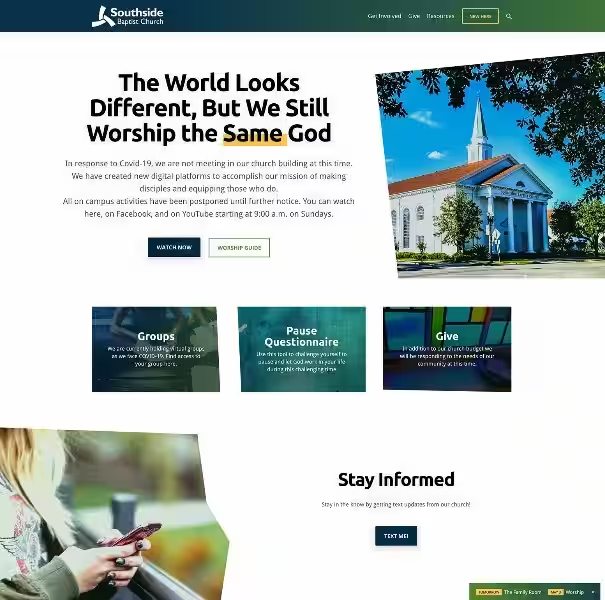
Your homepage is the first impression, the digital handshake that sets the tone for the entire visitor experience. A compelling homepage immediately communicates who you are, what you believe, and what you offer. It should be visually appealing, reflecting the personality of your church, and offer clear pathways to the most important information. Think about the emotional impact you want to create – is it one of warmth, peace, or vibrant community? Church website examples often use high-quality imagery or video to convey this feeling.
A strong homepage will typically feature:
A clear and concise mission statement or tagline that instantly communicates your church’s identity.
Prominent display of service times and locations, often with a map integration.
A prominent “About Us” or “Our Beliefs” link for those seeking to understand your theological underpinnings.
Highlights of upcoming events or ministries, enticing visitors to engage further.
A clear call to action, such as “Plan Your Visit” or “Get Involved.”
Consider the website of St. Jude’s Episcopal Church, which often features beautiful imagery and immediately presents service times and a welcoming message, making it easy for newcomers to find what they need.
About Us & Beliefs: Sharing Your Story
People are drawn to authenticity and purpose. Your “About Us” and “Beliefs” sections are where you get to share the heartbeat of your congregation. This isn’t just a dry recitation of doctrines; it’s an opportunity to tell your story, explain your history, introduce your leadership, and articulate the core values that guide your ministry. For many, understanding the theology and the people behind a church is crucial in their decision-making process.
A warm welcome from the pastor or leadership team, perhaps with a short video message.
A brief history of the church and its journey.
Profiles of your staff and key leadership, fostering a sense of personal connection.
A clear and accessible explanation of your core beliefs and values, avoiding jargon where possible.
Look at the website of The Potter’s House, a large non-denominational church. Their “About Us” section effectively communicates their passion, vision, and foundational beliefs in a way that is both informative and inspiring, making it relatable to a broad audience.
Ministries & Programs: Connecting People to Purpose
A church is a hub of activity, a place where people can serve, grow, and connect. Your website should clearly showcase the diverse array of ministries and programs you offer, making it easy for individuals to find opportunities that align with their interests and passions. Whether it’s children’s ministry, youth groups, small groups, community outreach, or worship teams, every offering deserves a spotlight.
When showcasing ministries, aim for:
Dedicated pages for each major ministry area with detailed descriptions.
Information on how to get involved, including contact persons and sign-up forms.
Testimonials from participants, sharing their positive experiences.
Calendar integration or clear event listings for specific ministry activities.
The website for Saddleback Church is a fantastic example here. They excel at showcasing their extensive range of ministries, from small groups to recovery programs, with clear pathways for people to explore and join, demonstrating the breadth of their community engagement.
Beyond the Basics: Enhancing Engagement and Connection
Once the foundational elements are in place, the real magic happens when a church website goes the extra mile to foster deeper engagement and connection. This involves utilizing technology and creative content to build a vibrant online community that mirrors the warmth and fellowship of the physical church. It’s about creating a space where people feel seen, heard, and connected, regardless of their physical location.
These enhanced features aim to bridge the gap between the digital and physical realms, offering a holistic experience. They acknowledge that faith is lived out in community and that the internet can be a powerful tool for facilitating that journey. By incorporating these elements, church website examples move from being mere information repositories to thriving digital extensions of the church body.
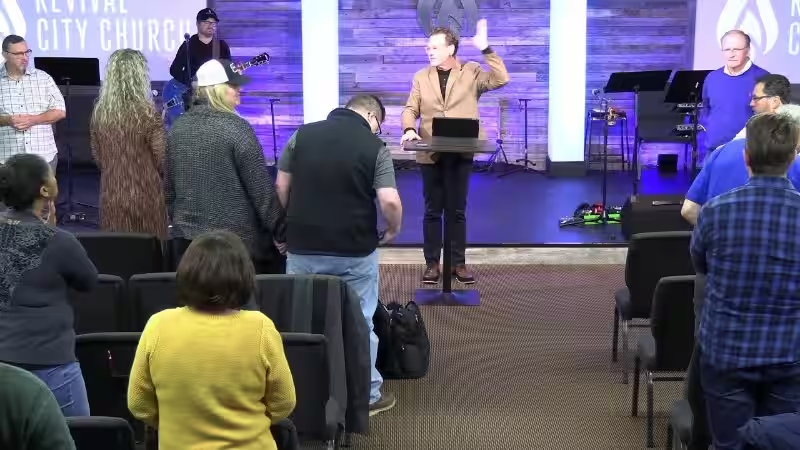
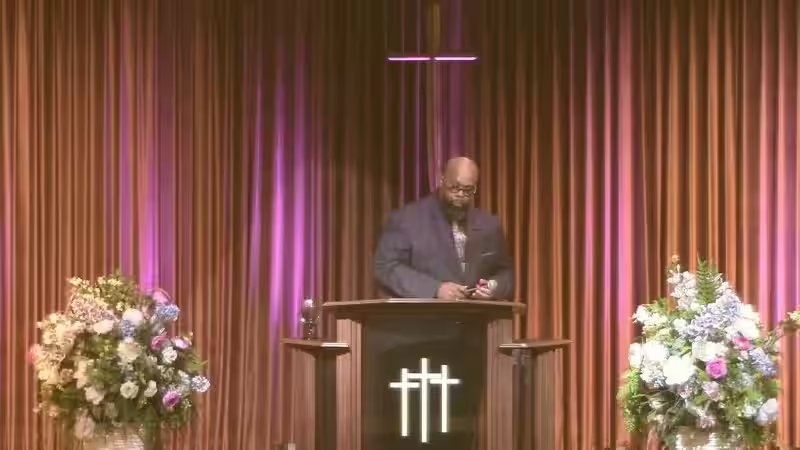
In our on-the-go world, the ability to access sermons and other spiritual content online is a game-changer. Offering recorded sermons, live streaming, and perhaps even podcasts allows individuals to engage with the teaching of your church on their own schedule, whether they’re traveling, unable to attend in person, or simply want to revisit a message. This is a powerful tool for spiritual growth and discipleship.
Key elements for a strong media presence include:
High-quality audio and video recordings of sermons, organized by date or series.
Live streaming capabilities for real-time worship experiences.
A dedicated media library or archive for easy access to past content.
Integration with popular podcasting platforms for broader reach.
Consider how churches like Cross Point Community Church effectively use their website to host a vast library of sermons, often with accompanying notes and resources, making their teaching accessible to a global audience.
Events Calendar: Keeping the Community Informed and Involved
A dynamic and up-to-date events calendar is the central nervous system of your church’s activity. It’s where members and visitors alike can discover everything from weekly Bible studies and prayer meetings to special conferences, outreach events, and social gatherings. A well-organized calendar not only informs but also actively encourages participation and builds a sense of shared experience.
An effective calendar should:
Clearly display event dates, times, and locations.
Provide detailed descriptions of each event, including any registration requirements.
Allow for easy filtering or searching by category (e.g., youth, women’s, outreach).
Integrate with personal calendars (like Google Calendar or Outlook) for user convenience.
Feature visually appealing graphics or images to draw attention to key events.
Many churches, like Elevation Church, utilize a visually engaging and easily navigable events calendar that highlights upcoming gatherings and provides all necessary details, encouraging members to be actively involved in the church’s various activities.
Giving & Donations: Supporting the Mission Digitally
Financial stewardship is a vital aspect of church life, and providing secure and convenient online giving options is essential. A well-integrated giving platform not only simplifies the process for donors but also ensures that your church has the resources to continue its ministry and outreach efforts. Trust and transparency are paramount in this area.
When implementing online giving, ensure:
A secure and user-friendly donation portal that is easily accessible from multiple pages.
Clear options for one-time donations, recurring gifts, and designation of funds.
Information about how donations are used to further the church’s mission.
Confirmation emails with donation receipts for tax purposes.
Churches like Life.Church have sophisticated online giving systems that are seamlessly integrated into their website, making it incredibly easy for supporters to contribute financially to their various ministries and global initiatives.
Designing for the Future: Trends and Innovations in Church Websites
The digital landscape is constantly evolving, and the best church website examples are those that embrace innovation while staying true to their core mission. Looking ahead, we see trends that emphasize personalization, accessibility, and community-building through technology. These advancements are not just about keeping up with the times; they are about enhancing the spiritual journey of every individual connected to the church.
By adopting these forward-thinking approaches, churches can create digital spaces that are not only functional but also deeply resonant with the needs and desires of their congregations in the 21st century. The goal is to create an online experience that is as welcoming and transformative as the church itself, fostering deeper connections and a stronger sense of belonging.
Mobile Responsiveness: Reaching Your Flock On-the-Go
In an era where smartphones are ubiquitous, a mobile-responsive website is non-negotiable. This means your website automatically adjusts its layout and content to display optimally on any device, from desktops to tablets and smartphones. If your website isn’t mobile-friendly, you’re likely alienating a significant portion of your audience who access information primarily through their phones.
A mobile-responsive design ensures:
Easy readability of text without excessive zooming.
Clickable buttons and navigation that are sized appropriately for touchscreens.
Fast loading times, crucial for users on mobile data.
A consistent and positive user experience across all devices.
Virtually all modern, well-designed church website examples demonstrate excellent mobile responsiveness. Look at sites like The Village Church; their website adapts flawlessly to any screen size, ensuring that users can access information and engage with the church no matter where they are.
Accessibility Features: Welcoming Everyone
Creating an inclusive digital environment is an extension of your church’s commitment to welcoming everyone. Website accessibility ensures that individuals with disabilities can easily navigate and understand your online content. This includes features like alt text for images, keyboard navigation, and sufficient color contrast.
Prioritizing accessibility means:
Providing alternative text descriptions for all images so screen readers can interpret them.
Ensuring that website navigation can be controlled entirely by a keyboard.
Using clear and readable fonts with good contrast against the background.
Offering captions or transcripts for all video and audio content.
While not always explicitly highlighted, many leading church website examples are built with accessibility in mind. Implementing these features demonstrates a profound commitment to serving all members of your community, reflecting the core Christian value of inclusivity.
Interactive Elements & Community Building: Fostering Deeper Connections
Moving beyond static content, modern church websites are incorporating interactive elements to foster a stronger sense of community. This can include features like online forums, comment sections on blog posts, integrated social media feeds, and even virtual prayer walls. These tools create spaces for dialogue, shared reflection, and mutual encouragement.
A blog or news section with opportunities for readers to comment and engage.
Links to active social media groups where members can interact.
Online forms for prayer requests that are visible and pray-able by the community.
Virtual small group platforms or connection hubs.
Churches like City on a Hill often utilize their website to foster community through engaging blog content, interactive event sign-ups, and clear links to their active social media communities, creating a vibrant online presence.
Ultimately, the most inspiring church website examples are those that feel authentic, are easy to navigate, and actively serve the needs of their congregation. They are digital extensions of the physical church, providing a welcoming space for exploration, connection, and spiritual growth. By focusing on these key principles and embracing emerging trends, your church can build a powerful online presence that genuinely enriches the lives of its members and reaches out to new seekers.
Frequently Asked Questions about Church Websites
What are the key elements of a good church website?
A good church website typically includes: an “About Us” section with the church’s mission and values, service times and locations, contact information, an events calendar, information about ministries and programs, an online giving option, and media (sermons, photos, videos). It should also be mobile-friendly and easy to navigate.
What kind of content is important to include on a church website?
Essential content includes service schedules, location details, staff biographies, upcoming events, news and announcements, information on how to get involved (ministries, volunteering), and resources like online sermons or Bible study materials. If applicable, consider adding a blog or a section for testimonials.
How can a church website effectively reach new visitors?
To attract new visitors, a church website should clearly communicate its welcoming message and what makes it unique. High-quality photos and videos of the church community and services can be very impactful. Easy-to-find information about services, parking, and what to expect for a first-time visitor is also crucial. Consider a “What to Expect” page.
What are some examples of successful church website designs?
Successful church websites often feature clean, modern designs with clear calls to action. They prioritize user experience with intuitive navigation and mobile responsiveness. Many utilize engaging visuals, such as professional photography or video tours. Examples can be found by searching for well-established or growing churches known for their online presence.
What is the purpose of a church website?
The primary purpose of a church website is to serve as a digital hub for the congregation and a point of connection for prospective members and visitors. It disseminates information, facilitates communication, promotes events, allows for online engagement (like giving or signing up for ministries), and can be a powerful tool for outreach and evangelism.
Should churches have online giving options?
Yes, having an online giving option is highly recommended. It provides a convenient and secure way for members to support the church financially, especially for those who cannot attend services regularly. A secure and reputable online giving platform is essential.
How can a church website incorporate its religious beliefs?
A church website should reflect its core religious beliefs through its “About Us” section, mission statement, theological statements, and the content of its sermons and resources. The overall tone and messaging should be consistent with the denomination or faith tradition it represents.
What are some common mistakes to avoid on a church website?
Common mistakes include outdated information, poor navigation, lack of mobile responsiveness, low-quality images, unclear calls to action, and not having up-to-date contact information. Overcrowding the homepage with too much information can also be a deterrent.