In a world often characterized by its relentless pace and overwhelming complexities, the quest for inner peace and spiritual solace is a journey many embark upon. Among the most profound and accessible spiritual tools available to us is the Holy Rosary. Yet, for many, the practice of reciting the Rosary might feel like a hushed tradition, perhaps even a little daunting. However, when we delve into the specific graces and powerful intercession associated with the Rosary of Fatima, a new light shines upon this ancient devotion. It offers not just a set of prayers, but a deeply personal encounter with the divine, a tangible pathway to hope, and a profound connection to the Blessed Virgin Mary.
The apparitions of Our Lady of Fatima in 1917 to three young shepherds – Lucia, Francisco, and Jacinta – brought with them a special message, a call to prayer and penance for the conversion of sinners and the peace of the world. Central to this message was the Rosary of Fatima, presented by the Angel of Peace and later by the Blessed Mother herself as a powerful weapon against evil and a vital instrument for grace. Understanding the context and the specific encouragements tied to this particular form of the Rosary can transform it from a rote recitation into a vibrant, life-giving spiritual practice.
The story of the Rosary of Fatima begins not with the Virgin Mary directly, but with an angel. In the spring of 1916, a year before the major apparitions, Lucia, Francisco, and Jacinta encountered an angel who identified himself as the “Angel of Peace.” This angelic visitor taught them a prayer, later known as the Angelic Prayer, and encouraged them to pray it with humility and confidence, offering it to God for the sake of the suffering souls in purgatory.
This initial encounter set the stage for the profound spiritual lessons that were to follow. The angel’s appearance, his gentle yet firm instruction, and the emphasis on offering prayers for others highlighted the communal and sacrificial nature of prayer. This preparation was crucial, as it imbued the children with a readiness to receive the even greater message that the Blessed Mother would soon deliver, a message where the Rosary of Fatima would play a central role.
The Angelic Prayer: A Foundation of Humility
The Angelic Prayer, as taught by the Angel of Peace, is a simple yet profound invocation: “My God, I believe, I adore, I hope, and I love You. I ask pardon for those who do not believe, do not adore, do not hope, and do not love You.” This prayer, recited three times by the children at the angel’s behest, served as a foundational exercise in faith, hope, and charity. It was a powerful lesson in contemplative prayer and the importance of intercession.
The repetition of this prayer, accompanied by acts of penance, demonstrated to the children, and subsequently to us, that even in the simplest of forms, prayer can be incredibly potent. It teaches us to focus our hearts and minds on God, to acknowledge His divine presence, and to extend our compassion to all souls, especially those in greatest need of His mercy. This early instruction was a crucial precursor to the full unfolding of the Rosary of Fatima.
Mary’s Urgent Message: The Rosary as a Divine Gift
The most significant moments of the Fatima apparitions occurred in the summer of 1917, when the Blessed Virgin Mary appeared to the three children. Her message was one of both profound love and urgent warning. She pleaded with them to pray the Rosary daily for the conversion of sinners and the cessation of wars. She explicitly stated, “Pray the Rosary every day to obtain peace for the world.” This was not a casual suggestion; it was a divine mandate carrying immense weight and promise.
During these apparitions, Mary repeatedly emphasized the importance of the Rosary. She called it her favorite prayer and assured the children that it was the key to unlocking God’s mercy and bringing about the desired peace. The Rosary of Fatima was thus presented not just as a devotional exercise, but as a potent spiritual weapon, a means by which heaven itself intervened in the affairs of humanity.
The Five First Saturdays Devotion: A Call to Reparation
Beyond the daily Rosary, Our Lady of Fatima also requested a specific devotion: the Five First Saturdays. She appeared to Lucia again in December 1925 and explained that if people would make the First Saturday of five consecutive months, confess their sins, receive Holy Communion, recite five decades of the Rosary, and keep her company for fifteen minutes while meditating on the mysteries of the Rosary, all with the intention of making reparation for offenses against her Immaculate Heart, she would grant them the grace of a good confession at the hour of their death.
This devotion is a powerful testament to the mercy and love of Mary, even in the face of humanity’s sins. It is a concrete action that allows us to actively participate in her plan for peace and conversion. The Rosary of Fatima is intrinsically linked to this devotion, serving as the primary prayer within its framework, demonstrating the continuous interplay between prayer, penance, and devotion to Mary’s Immaculate Heart.
The Mysteries of the Rosary: Meditations for a Deeper Faith
The Rosary, in its essence, is a meditative prayer. As we recite the Hail Marys, we are encouraged to reflect on the mysteries of the life, death, and resurrection of Jesus, as well as the life of His mother. The Rosary of Fatima amplifies this meditative aspect, urging us to consider these events through the lens of Mary’s own experiences and her profound love for her Son and for us.
The traditional four sets of mysteries – Joyful, Luminous, Sorrowful, and Glorious – offer a comprehensive journey through the Gospel narrative. Each decade presents an opportunity to pause, to contemplate, and to allow the words and actions of Jesus and Mary to transform our hearts. For instance, meditating on the Annunciation during the Joyful Mysteries, in the context of Fatima, reminds us of Mary’s humble acceptance of God’s will, a model for our own response to the calls of the Rosary of Fatima.
The message of Fatima is not confined to the hills of Portugal in 1917; it is a timeless call to action for believers today. Our Lady’s plea for the daily Rosary is a practical invitation to integrate prayer and reflection into the fabric of our busy lives. The Rosary of Fatima offers a structured yet flexible way to connect with God and His mother, even amidst the demands of modern living.
Consider how the simple act of praying a decade of the Rosary during your commute, or while doing household chores, can become a sanctuary of peace. The meditation on the mysteries provides a focal point, preventing our minds from wandering and grounding us in the spiritual reality of our faith. This consistent practice, infused with the spirit of Fatima, can lead to a deepened spiritual life and a greater sense of purpose.
The Power of the Rosary of Fatima in a Troubled World
In times of global unrest, personal anxieties, and spiritual confusion, the Rosary of Fatima stands as a beacon of hope. Our Lady promised that “In the end, my Immaculate Heart will triumph.” This promise is intrinsically linked to our willingness to embrace her requests, particularly the daily recitation of the Rosary. It is a testament to the power of intercessory prayer and the unwavering love of the Mother of God.
The world can often feel overwhelming, yet the Rosary offers a tangible way to combat the forces of negativity and despair. Each Hail Mary is a small act of love directed towards Mary, and through her, towards Jesus. The cumulative effect of these prayers, offered with sincerity and faith, can bring about profound changes, not only in our own lives but also in the world around us, echoing the very intentions of the Rosary of Fatima.
Embracing the Devotion for Personal Transformation
The journey of faith is a lifelong process of growth and conversion. The Rosary of Fatima provides a consistent and reliable path for this transformation. By dedicating ourselves to this devotion, we invite Mary’s constant intercession and guidance into our lives. We learn to see our struggles through the eyes of faith, to find strength in moments of weakness, and to cultivate a deeper love for God.
Whether you are a seasoned practitioner of the Rosary or new to its practice, the Rosary of Fatima offers an accessible and powerful entry point. It’s a gift from heaven, a reminder that we are never alone in our spiritual battles. Embrace its rhythm, meditate on its mysteries, and allow its grace to illuminate your path towards peace and spiritual fulfillment.
Frequently Asked Questions about the Rosary of Fatima
What is the Rosary of Fatima?
The Rosary of Fatima is a specific set of prayers and meditations within the Catholic tradition, often associated with the apparitions of the Virgin Mary in Fatima, Portugal, in 1917. It emphasizes praying the Hail Mary for each bead on the rosary, interspersed with other prayers like the Our Father, the Glory Be, and the Fatima Prayer.
What is the significance of the Fatima apparitions to this rosary?
During the apparitions, the Blessed Mother reportedly asked the children to pray the Rosary daily for peace in the world, to end the war (World War I), and for the conversion of sinners. She also revealed specific prayers, particularly the Fatima Prayer, which is to be recited after each decade.
What are the specific prayers in the Rosary of Fatima?
The Rosary of Fatima includes the standard prayers of the Catholic Rosary: the Sign of the Cross, the Apostles’ Creed, the Our Father, the Hail Mary, the Glory Be, and the Fatima Prayer. The structure involves meditating on mysteries of Christ’s life (Joyful, Luminous, Sorrowful, Glorious) while reciting these prayers.
What is the Fatima Prayer?
The Fatima Prayer is a short invocation that the Virgin Mary is said to have taught the children of Fatima. It is recited at the end of each decade of the Rosary of Fatima. The prayer is: “O my Jesus, forgive us our sins, save us from the fires of hell, lead all souls to Heaven, especially those in most need of Thy mercy.”
How does one pray the Rosary of Fatima?
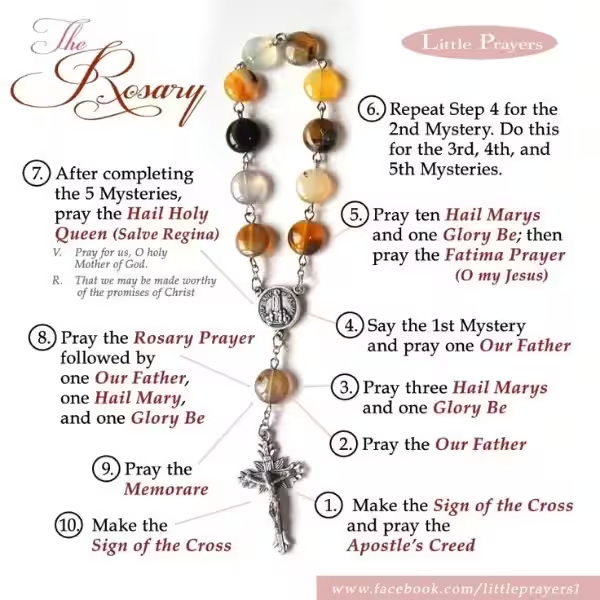
To pray the Rosary of Fatima, one typically begins with the Sign of the Cross and the Apostles’ Creed. Then, one announces the first mystery (e.g., the First Joyful Mystery: The Annunciation) and recites the Our Father. After that, ten Hail Marys are recited, followed by the Glory Be and the Fatima Prayer. This pattern is repeated for five decades, corresponding to the chosen set of mysteries.
What are the “mysteries” in the Rosary of Fatima?
The Rosary of Fatima, like the general Catholic Rosary, is structured around meditating on the mysteries of the life, death, and resurrection of Jesus Christ. These are divided into four sets: the Joyful Mysteries, the Luminous Mysteries, the Sorrowful Mysteries, and the Glorious Mysteries. The choice of mysteries can vary depending on the day of the week or one’s personal devotion.
Is the Rosary of Fatima the only way to pray if one is Catholic?
No, the Rosary of Fatima is a specific devotion within Catholicism. The Catholic Church has many forms of prayer, including the Liturgy of the Hours, private prayer, and the standard Rosary without the specific Fatima emphasis. The Rosary of Fatima is a popular and encouraged devotion, especially for those seeking peace and conversion.
What is the “religion” associated with the Rosary of Fatima?
The Rosary of Fatima is a devotion within the Roman Catholic Church. It is rooted in Catholic theology, Marian devotion, and the belief in the intercession of saints.