A Catholic wedding ceremony is a profound and beautiful expression of faith, a sacred covenant before God and community. While the exchange of vows and the blessing of the rings are central, the readings at a Catholic wedding play a crucial, often deeply personal, role in setting the tone and conveying the spiritual significance of the union. These selections from Sacred Scripture are not mere decorations; they are living words that illuminate the path of marriage, offering wisdom, encouragement, and a glimpse into God’s enduring love for His people, mirroring the love a couple promises to each other.
For couples embarking on this journey, understanding the purpose and selection process of these readings can transform them from obligatory inclusions into powerful moments of reflection and prayer. They offer a divine blueprint for married life, guiding couples through joys and challenges with timeless truths. This article aims to demystify the process, offering insights into the meaning and selection of readings, making them a treasured part of your wedding day and a foundation for your married life.
At its core, a Catholic wedding is a sacrament, a visible sign of an invisible grace. The readings at a Catholic wedding are instrumental in articulating this grace. They are chosen to speak directly to the nature of love, commitment, sacrifice, and the divine presence within the marital bond. Think of it like this: the vows are the couple’s promise, the rings are the symbol, but the readings are the divine commentary, the voice of God affirming and guiding their union. They remind everyone present – the couple, their families, and friends – that marriage is not just a social contract but a sacred covenant rooted in God’s love. This divine perspective elevates the ceremony beyond a mere celebration, imbuing it with a spiritual gravitas that resonates long after the “I do’s” are spoken.
The Bible is a vast reservoir of wisdom, and the selections for a wedding are carefully curated to resonate with the themes of love, unity, and enduring commitment. For instance, passages from the Book of Solomon, particularly the Song of Songs, offer poetic and passionate expressions of love, while the letters of St. Paul, like 1 Corinthians 13, provide a profound theological understanding of love’s virtues. These aren’t just pretty words; they are divine affirmations that the love a couple shares is a reflection of God’s own perfect love. The recurring presence of God’s word throughout the ceremony acts as a constant reminder that the couple is not embarking on this journey alone, but with divine accompaniment and blessing.
The Role of the Lectionary and Couple’s Choice
The Catholic Church provides a rich selection of readings through its Lectionary, a liturgical book containing the scripture readings appointed for each day of the liturgical year and for special celebrations. For weddings, the Lectionary offers a treasury of options, categorized into three cycles (Year A, B, and C) for the Old Testament and New Testament readings, and a separate section for the Gospel. This ensures that even if a couple attends multiple Catholic weddings within a few years, they will likely hear different, yet equally profound, scriptures. The Lectionary is designed to offer a comprehensive theological journey through the scriptures, highlighting various aspects of God’s relationship with humanity and, by extension, the spousal relationship.
While the Lectionary provides the framework, couples are actively involved in selecting their readings. This personalization makes the ceremony incredibly meaningful. They can choose passages that resonate deeply with their personal faith journey, their understanding of love, and their hopes for their married life. For example, a couple might choose a reading that speaks to mutual support and encouragement, or one that emphasizes forgiveness and steadfastness. This collaborative process between the couple, their priest or deacon, and the Church’s liturgical guidelines ensures that the readings at a Catholic wedding are not only biblically sound but also personally significant, transforming them into spiritual anchors for their new life together.
Exploring the Categories of Readings
A typical Catholic wedding liturgy includes three readings: one from the Old Testament, one from the New Testament Epistles, and one from the Gospels. Each category brings a unique perspective to the celebration, weaving together a rich tapestry of God’s message about love and commitment. The intentional placement of these readings, from the foundational promises of the Old Covenant to the redemptive love of Christ in the Gospels, creates a holistic spiritual narrative for the couple and the assembly.
These readings are not chosen randomly; they are carefully selected to complement each other and to build upon the central theme of sacramental marriage. The Old Testament reading often establishes the divine origins of love and covenant, the Epistle offers practical guidance on Christian living and love, and the Gospel presents Christ’s teachings on marriage and His own example of sacrificial love. Together, they form a powerful theological foundation for the sacrament, providing the couple with a divine roadmap for their lifelong journey of love and faithfulness.
Old Testament Readings: Foundations of Covenant and Love
The Old Testament readings often speak of God’s steadfast love and His covenant promises to His people. These passages offer a historical and theological backdrop for understanding the enduring nature of commitment. Consider, for instance, the beautiful passage from Genesis 2:24: “Therefore a man leaves his father and his mother and cleaves to his wife, and they become one flesh.” This foundational verse lays bare the divine institution of marriage and the profound unity it signifies. It’s a reminder that marriage, from its very inception, is intended to be a deep and unbreakable bond.
Another powerful option is Jeremiah 31:31-34, which speaks of a new covenant written on the hearts of God’s people. This prophetic vision of a covenant characterized by internal transformation and profound knowledge of God offers a beautiful parallel to the interior commitment a couple makes in marriage. It suggests that true, lasting love is not merely external but is deeply rooted in the heart, guided by God’s grace. These Old Testament selections provide a timeless perspective on fidelity and commitment, reminding couples that their union is part of a larger, divinely ordained plan.
New Testament Epistles: The Virtues of Christian Love
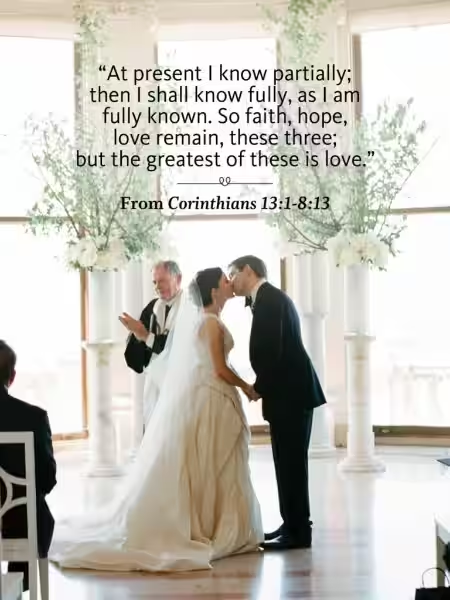
Moving into the New Testament, the Epistles offer practical, yet profound, guidance on how to live out Christian love within the context of marriage. The most famous and frequently chosen reading for Catholic weddings is undoubtedly 1 Corinthians 13:4-13, often referred to as the “Hymn to Love.” This passage eloquently describes love’s enduring qualities: “Love is patient, love is kind. It does not envy, it does not boast, it is not proud. It does not dishonor others, it is not self-seeking, it is not easily angered, it keeps no record of wrongs.” These verses are not just poetic; they are practical directives for building a strong and loving marriage, offering a blueprint for everyday interactions.
Another impactful Epistle is Ephesians 5:25-33, where St. Paul instructs husbands to “love your wives, just as Christ loved the church and gave himself up for her.” This passage draws a direct parallel between Christ’s sacrificial love for the Church and the love a husband is called to have for his wife. It elevates marital love to a sacramental level, urging both partners towards selflessness and devotion. These epistolary readings provide the couple with actionable wisdom and a divine model for nurturing their relationship, emphasizing that Christian love is active, giving, and transformative.
Gospel Readings: Christ’s Teachings and Blessings
The Gospel readings bring the teachings of Jesus Christ directly into the wedding liturgy, offering His divine perspective on marriage and His blessings upon the union. A powerful choice is John 2:1-11, the account of the Wedding at Cana. Here, Jesus’ first public miracle, turning water into wine, signifies abundance and joy, and also His sanctification of human celebrations, including marriage. It’s a beautiful reminder that Christ is present at our joys and that He desires to bring blessing and transformation into our lives and our unions. This reading instills a sense of hope and the assurance of divine intervention in the couple’s life together.
Another significant Gospel reading is Matthew 19:4-6: “Have you not read that he who created them from the beginning made them male and female, and said, ‘Therefore a man shall leave his father and his mother and hold fast to his wife, and the two shall become one flesh’? So they are no longer two but one flesh. What therefore God has joined together, let not man separate.” This passage directly from Jesus underscores the indissolubility and divine origin of marriage, emphasizing that it is a sacred union ordained by God. These Gospel selections provide the couple with Christ’s own teachings and blessings, grounding their marriage in His divine authority and love.
Choosing Your Readings: A Personal and Prayerful Process
Selecting the readings at a Catholic wedding is a deeply personal and prayerful experience. It’s an opportunity for the couple to reflect on their faith, their relationship, and their hopes for the future. Don’t feel rushed through this process. Take the time to read through the options provided in the Lectionary, perhaps with your officiant, and discuss which passages speak most directly to your hearts. Consider what themes you want to emphasize on your wedding day and what spiritual message you want to carry forward into your married life.
Here are some tips to guide your selection:
Pray together: Approach the selection with prayer, asking for guidance and clarity.
Discuss your values: What aspects of love and commitment are most important to you as a couple? Choose readings that reflect these.
Consider your journey: Are there specific passages that have been meaningful to your relationship or faith?
Listen to your officiant: Your priest or deacon can offer valuable insights into the theological meaning and suitability of different readings.
Read them aloud: Hear how the words sound and feel. Which passages resonate most powerfully when spoken?
Ultimately, the readings at a Catholic wedding are about more than just tradition; they are about inviting God’s word to bless and guide your union, creating a spiritual foundation that will sustain you throughout your married life. They are a divine prelude to the vows you will exchange and a sacred promise of God’s enduring presence in your marriage.
Frequently Asked Questions: Readings at a Catholic Wedding
What are the typical components of a Catholic wedding ceremony?
A typical Catholic wedding ceremony includes scripture readings, a homily (sermon), the exchange of vows, the blessing of the rings, the nuptial blessing, and the exchange of peace.
What are scripture readings in a Catholic wedding?
Scripture readings are passages from the Bible that are chosen to reflect the themes of love, commitment, and the sacrament of marriage. They are an integral part of the liturgy of the wedding Mass.
How many readings are usually included in a Catholic wedding Mass?
In a Catholic wedding Mass, there are usually three scripture readings: one from the Old Testament, one from the New Testament (usually a letter of Paul), and one from the Gospels. If the wedding is celebrated outside of Mass, usually two readings are chosen: one from the Old Testament and one from the Gospels, or one from the New Testament and one from the Gospels.
Who chooses the scripture readings for a Catholic wedding?
The couple, in consultation with their priest or deacon, typically chooses the scripture readings. There are approved lists of readings available from the Church for weddings.
Are there specific themes the readings should reflect?
Yes, the readings are chosen to reflect themes such as God’s love, faithfulness, the nature of marriage as a covenant, mutual love and support, and the indissolubility of marriage.
Can we choose readings from outside the approved lists?
Generally, it is best to select readings from the lists provided by the Church. If you have a very specific reason for wanting a different passage, you would need to discuss this with your priest or pastor, who may need to seek permission from the diocese.
What is the role of the homily in relation to the readings?
The homily is a brief sermon delivered by the priest or deacon. It explains the meaning of the scripture readings and how they apply to the couple’s marriage and their commitment to each other.
Who proclaims the readings?
The readings are typically proclaimed by members of the wedding party or by family and friends chosen by the couple. They should be people who can read clearly and with reverence.
Is there a specific order for the readings?
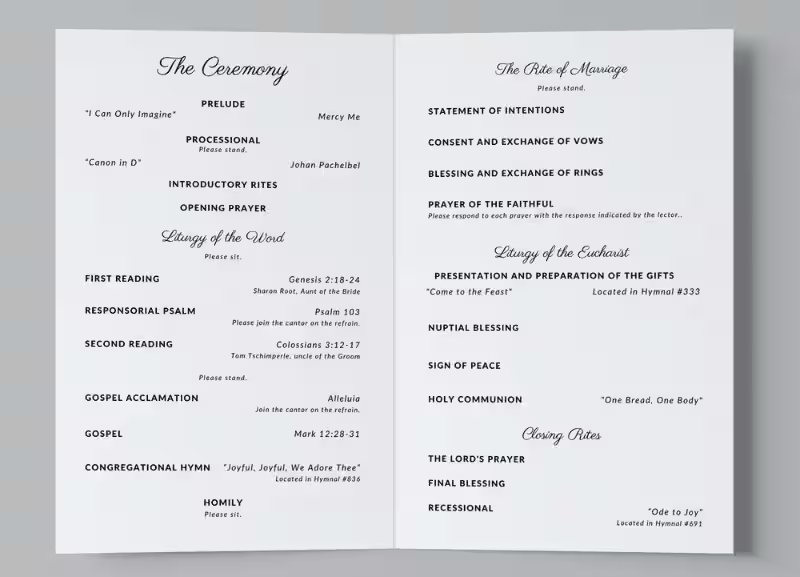
Yes, for a wedding Mass, the typical order is Old Testament reading, Psalm, New Testament reading, and then the Gospel reading.
What is the significance of the Psalm?
The Psalm is a sung or spoken prayer from the Book of Psalms, which often expresses themes of praise, trust, and dependence on God, fitting for the beginning of a married life.