The pectoral crucifix is more than just a piece of jewelry; for many, it is a profound and deeply personal expression of their faith, a tangible reminder of their spiritual journey, and a symbol of enduring hope. Worn over the chest, it rests close to the heart, a constant presence that can offer solace in times of doubt and strength in moments of weakness. This article will delve into the rich history, diverse meanings, and enduring significance of the pectoral crucifix within the context of religion, exploring how this ancient symbol continues to resonate with believers across generations.
The visual impact of a pectoral crucifix is undeniable. Whether crafted from simple wood, gleaming gold, or adorned with precious stones, its form – the cross with the body of Christ – speaks a universal language of sacrifice, redemption, and divine love. It’s a powerful statement of belief, worn openly or hidden beneath clothing, but always present, a quiet yet potent affirmation of one’s Christian identity.
A Glimpse into the History of the Pectoral Crucifix
The origins of the pectoral crucifix are deeply intertwined with the early days of Christianity. While the exact moment of its inception is difficult to pinpoint, the practice of wearing religious symbols, particularly the cross, dates back to the very first centuries of the faith. Early Christians, often facing persecution, found solace and solidarity in these outward signs of their allegiance to Christ.
One of the earliest forms of religious adornment was the simple cross, sometimes worn as a pendant. Over time, as Christian art and symbolism developed, the depiction of Christ’s crucifixion began to be incorporated. The pectoral crucifix, as we understand it today, truly began to take shape during the medieval period. Bishops and other high-ranking clergy were among the first to wear elaborate crucifixes suspended from chains or cords around their necks, signifying their authority and their deep connection to the Passion of Christ.
The Multifaceted Meanings of the Pectoral Crucifix
The beauty of the pectoral crucifix lies in its multifaceted nature; it carries a spectrum of meanings for each individual wearer. Beyond its religious significance, it can represent personal devotion, a connection to heritage, or even a protective amulet.
For a priest or bishop, the pectoral crucifix is often a specific liturgical vestment, a symbol of their office and their commitment to serving God and His people. It’s a visual representation of their pastoral care, reminding them of the shepherd who laid down his life for his flock. The weight of the crucifix around their neck can be a constant, grounding reminder of the immense responsibility they carry.
For a layperson, the pectoral crucifix can be just as significant. It might be a gift received at a special occasion, like a baptism or confirmation, a tangible link to a cherished memory or a loved one. It can serve as a private devotion, a silent prayer offered as the wearer’s fingers trace the familiar shape of the cross. The act of touching or kissing the crucifix can be a moment of profound connection, a way to bring the power of Christ’s sacrifice into the everyday.
A Symbol of Protection and Divine Presence
Many believers view the pectoral crucifix as a powerful symbol of protection. In the face of life’s challenges, the image of Christ’s suffering and ultimate triumph over death offers a profound sense of security and hope. It’s a reminder that even in the darkest moments, God’s love and presence are with them.
Consider the analogy of a soldier wearing their country’s flag on their uniform. It’s a visible declaration of loyalty and a reminder of what they are fighting for. Similarly, a pectoral crucifix can be a visual affirmation of one’s faith, a way of carrying the presence of Christ with them, offering a sense of courage and resilience. This belief in the crucifix as a protective charm is not new; it has roots in early Christian practices where the cross was believed to ward off evil.
A Personal Declaration of Faith
Wearing a pectoral crucifix is, in essence, a personal declaration of faith. It’s a way of outwardly expressing an inner commitment to Christian principles and values. This can be a source of encouragement for the wearer and an inspiration to others.
Think about how a sports team wears their team colors. It’s a visible sign of their unity and their shared passion. In a similar vein, the pectoral crucifix can be a way for individuals to outwardly express their belonging to the larger Christian community and their dedication to their spiritual path. It’s a choice to carry a symbol of love, forgiveness, and eternal life, a constant invitation to live a life guided by these principles.
The Pectoral Crucifix in Different Religious Traditions
While the most prominent association with the pectoral crucifix is within the Catholic tradition, its significance and variations can be observed in other Christian denominations as well. The core symbol, the cross, is foundational to all of Christianity, and its representation in a pectoral form holds meaning across these traditions.
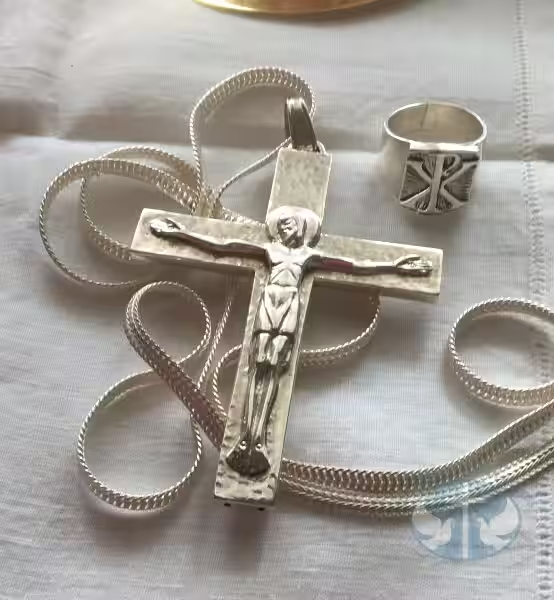
Within Catholicism, the pectoral crucifix is a particularly important vestment for bishops, cardinals, and the Pope. It is worn over the chasms, a symbol of their office and their spiritual authority. The design and materials used can often reflect the wearer’s rank and status within the Church hierarchy.
In some Protestant denominations, while not always a formal vestment, individuals may choose to wear a pectoral crucifix as a personal expression of their faith. The emphasis here might be more on the individual devotion and the personal meaning derived from the symbol, rather than on a prescribed liturgical use. The core message of Christ’s sacrifice remains central, regardless of denominational affiliation.
Variations in Design and Material
The pectoral crucifix comes in an astonishing array of designs and is crafted from a multitude of materials. This diversity reflects not only artistic trends throughout history but also the personal preferences and economic circumstances of the wearers.
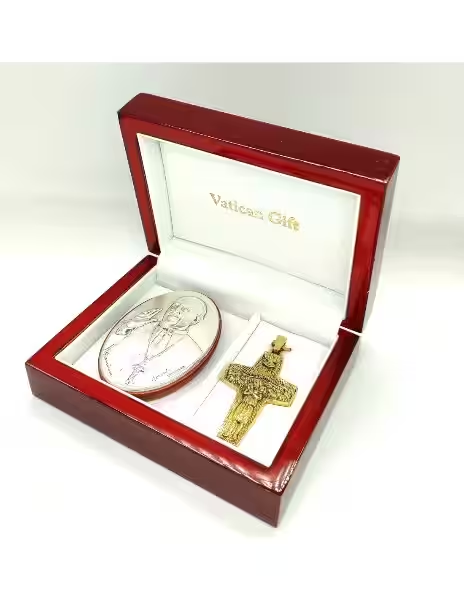
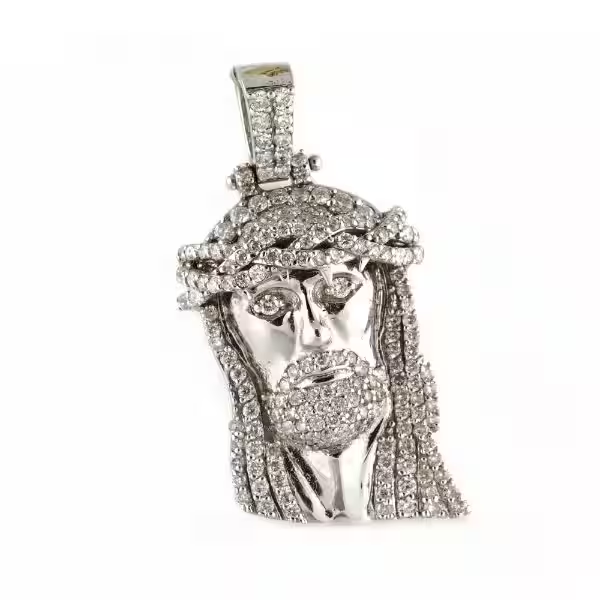
From simple, unadorned wooden crucifixes that evoke a sense of humility and austerity, to intricately carved metal pieces featuring detailed depictions of Christ’s Passion, the variety is immense. Precious metals like gold and silver are common, often set with gemstones such as diamonds, rubies, or sapphires, particularly for those in positions of prominence within the church. Even the chain or cord from which the crucifix is suspended can be a significant element, ranging from simple leather to ornate metal links.
The Pectoral Crucifix as a Heirloom and Legacy
Beyond its immediate spiritual significance, the pectoral crucifix often carries the weight of history and family legacy. Many are passed down through generations, becoming cherished heirlooms that connect contemporary believers to their ancestors and their faith heritage.
Imagine a young person receiving a pectoral crucifix from their grandparent. This isn’t just a gift; it’s a tangible link to their family’s spiritual journey, a vessel of shared memories and enduring faith. The act of wearing it can be a way of honoring those who came before them and continuing a tradition of devotion. These heirlooms serve as silent witnesses to countless prayers, moments of reflection, and the unbroken thread of faith that binds families together.
Conclusion: The Enduring Power of the Pectoral Crucifix
In a world that is constantly shifting and evolving, the pectoral crucifix remains a steadfast symbol of enduring faith, unwavering hope, and profound love. Its presence around the neck, close to the heart, serves as a constant reminder of the central tenets of Christianity – sacrifice, redemption, and the promise of eternal life. Whether worn by clergy as a symbol of their sacred office or by individuals as a personal expression of devotion, the pectoral crucifix continues to hold immense power and significance in the spiritual lives of countless believers.
The pectoral crucifix is more than just an object; it is a testament to a faith that has shaped civilizations and continues to inspire millions. Its simple yet powerful form resonates with a timeless message, offering comfort, guidance, and a tangible connection to the divine. As we continue to navigate the complexities of modern life, the humble yet profound pectoral crucifix stands as a beacon of faith, a personal sanctuary, and a beautiful reminder of the love that transcends all.
Frequently Asked Questions about Pectoral Crucifixes and Religion
What is a pectoral crucifix?
A pectoral crucifix is a large crucifix, typically worn on a chain around the neck, resting on the chest. The term “pectoral” refers to the chest area.
What is the religious significance of a pectoral crucifix?
The pectoral crucifix is a significant religious symbol, particularly within Christianity, most notably Catholicism, Orthodoxy, and some Anglican traditions. It represents the sacrifice of Jesus Christ and serves as a constant reminder of faith, devotion, and the central tenets of Christianity.
Who wears a pectoral crucifix?
While anyone can wear a pectoral crucifix as a personal emblem of faith, they are traditionally worn by clergy, especially bishops and abbots, as part of their official vestments. They are also sometimes worn by consecrated religious or as a devotional item by laypeople.
What does the crucifix symbolize in Christianity?
The crucifix symbolizes the crucifixion of Jesus Christ, which Christians believe was an act of divine redemption and atonement for the sins of humanity. It represents sacrifice, love, suffering, and the ultimate victory over death through resurrection.
Are pectoral crucifixes only for clergy?
No, while they are a significant part of clerical attire, pectoral crucifixes are not exclusively for clergy. Many individuals, including laypeople, choose to wear them as a personal expression of their Christian faith and devotion.
Are there specific rules or traditions regarding the wearing of a pectoral crucifix?
In some religious traditions, particularly within the Catholic Church, there are specific protocols for when and how clergy wear pectoral crucifixes as part of their liturgical vestments. For laypeople, the wearing is generally a matter of personal devotion.
What are the common materials used for pectoral crucifixes?
Pectoral crucifixes are made from a variety of materials, including precious metals like gold and silver, as well as less expensive metals, wood, or even enamel. The design and ornamentation can vary widely.
Does wearing a pectoral crucifix offer any spiritual protection?
Many believers feel that wearing a pectoral crucifix offers spiritual protection through the intercession of Christ and as a tangible reminder of God’s presence and love. This is a matter of personal faith and belief.