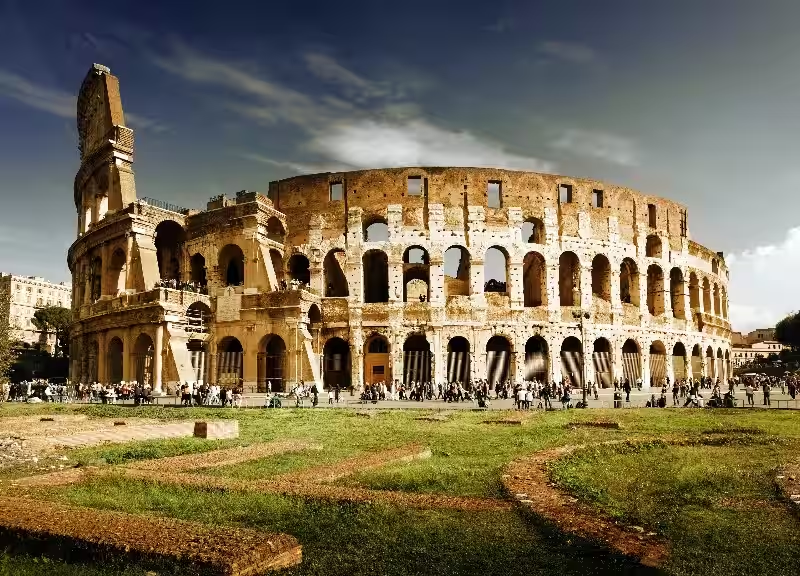
When we think of Rome, images of the Colosseum’s ancient grandeur or the Sistine Chapel’s breathtaking artistry often come to mind. Yet, nestled within this eternal city lies a cornerstone of Christian history, a place where faith has echoed for millennia: the Basilica di San Giovanni in Laterano. More than just an impressive edifice, this basilica stands as a profound testament to the enduring power of religion, serving as the cathedral of the Diocese of Rome and the official ecclesiastical seat of the Pope. Its story is interwoven with the very fabric of the Catholic Church, offering a unique window into centuries of spiritual devotion, historical upheaval, and the unwavering presence of faith.
Understanding the Basilica di San Giovanni in Laterano requires delving beyond its magnificent façade. It’s a journey into the heart of Roman Catholicism, a place where pilgrimage meets history, and where the sacred is palpable in every stone. Whether you’re a devout follower, a history enthusiast, or simply someone curious about the spiritual pulse of Rome, this basilica offers an experience that is both deeply informative and profoundly moving. Let’s explore the layers of meaning and significance that make San Giovanni in Laterano a truly unparalleled religious landmark.
The origins of the Basilica di San Giovanni in Laterano are deeply rooted in the tumultuous yet transformative era of the Roman Empire. It wasn’t initially conceived as a church, but rather as the palatial residence of the influential Laterani family. However, in the early 4th century, Emperor Constantine the Great, after his momentous conversion to Christianity and the Edict of Milan which granted religious tolerance, gifted the Laterani Palace and its grounds to the burgeoning Christian community. This act was revolutionary, marking a pivotal shift in the empire’s relationship with its Christian subjects and laying the groundwork for Rome to become the spiritual capital of the Western world.
This momentous handover transformed the opulent Roman villa into the first major Christian basilica in Rome, consecrated around 324 AD. Imagine the scene: the grandeur of a Roman palace, once a symbol of imperial power, being repurposed to house the sacred rites of a religion that had, for centuries, been persecuted. This very act symbolized the ascension of Christianity from a clandestine movement to a faith embraced by the highest echelons of power. The Basilica di San Giovanni in Laterano, therefore, stands not just as a church, but as a monument to a profound societal and religious transformation, a physical embodiment of faith’s triumph.
The title “Mother of all Churches” (Mater et Magistra Omnium Ecclesiarum) is not merely an honorific bestowed upon the Basilica di San Giovanni in Laterano; it is a fundamental declaration of its primacy within the Catholic Church hierarchy. As the cathedral of the Bishop of Rome – the Pope – it holds a unique and unparalleled position. This means that when the Pope presides, he does so not in St. Peter’s Basilica (which is a papal chapel), but within the hallowed walls of San Giovanni in Laterano. This distinction underscores its role as the seat of papal authority and the spiritual heart of Roman Catholicism.
This profound significance is further amplified by its historical role. For centuries, the Basilica di San Giovanni in Laterano served as the primary papal residence before the Popes moved to the Vatican. Its very architecture and layout reflect an ancient design intended for congregational worship and papal pronouncements. Visiting San Giovanni in Laterano is, therefore, akin to stepping into the very crucible of papal history. You are standing in a place where pivotal decisions were made, where the faithful gathered for centuries, and where the continuity of the papacy is tangibly felt. It’s a living testament to the enduring legacy of St. Peter and his successors.
Architectural Grandeur and Spiritual Resonance
The Basilica di San Giovanni in Laterano that we see today is a masterpiece of Baroque architecture, a testament to the artistic and spiritual fervor of post-Renaissance Rome. While its ancient foundations remain, the basilica has undergone numerous reconstructions and renovations throughout its long history, most notably after devastating fires and earthquakes. The current magnificent façade, with its imposing colonnade and statues of Christ and the Apostles, was largely a product of the late 18th-century redesign by Alessandro Galilei. This grand exterior is designed to inspire awe and draw worshippers into its sacred embrace.
Inside, the basilica is a breathtaking symphony of light, color, and art. The vast nave, flanked by colossal pillars adorned with intricate frescoes and statues, leads the eye towards the soaring apse. Numerous chapels, each with its own unique artistic treasures and devotional focus, offer moments of quiet contemplation and spiritual reflection. The sheer scale and opulence are designed to elevate the spirit and remind visitors of the glory of God and the profound mysteries of faith. The Basilica di San Giovanni in Laterano is not just a building; it is a carefully crafted environment designed to foster a deep connection with the divine.
Within the Basilica di San Giovanni in Laterano, several areas hold particular importance for both religious pilgrims and history buffs. The Sanctasanctorum Chapel, also known as the Scala Santa (Holy Stairs), is a deeply venerated site. Tradition holds that these are the very stairs Jesus ascended during his trial before Pontius Pilate. Pilgrims undertake the arduous task of ascending these 28 marble steps on their knees, a powerful act of penance and devotion. This practice, undertaken by countless individuals over centuries, highlights the personal and sacrificial aspect of faith.
Beyond the Scala Santa, the main altar boasts a ciborium that is believed to contain relics of the heads of Saints Peter and Paul, two of the most revered figures in Christianity. The Baptistery of San Giovanni in Fonte, one of the oldest Christian baptisteries in Rome, is another significant area. Its octagonal design and ancient mosaics speak to the early Christian rituals of baptism and the initiation into the faith. These sacred spaces within the Basilica di San Giovanni in Laterano are not mere historical artifacts; they are vibrant centers of ongoing religious practice and profound spiritual experience.
A Living Sanctuary for Today
Despite its ancient origins and historical weight, the Basilica di San Giovanni in Laterano remains a vibrant and active center of Catholic life. It serves not only as a tourist destination but as a functioning cathedral where daily Mass is celebrated, sacraments are administered, and the faithful gather to worship. The religious significance of this basilica is not confined to its past; it is a living, breathing sanctuary that continues to inspire and guide believers in the modern world.
For visitors, a pilgrimage to the Basilica di San Giovanni in Laterano offers a unique opportunity to connect with the deep roots of their faith or to gain a greater appreciation for the historical and cultural impact of Christianity. Attending a service, even as an observer, can be a profoundly moving experience, allowing one to feel the collective prayer and devotion of generations. It’s a place where the sacred is not just preserved but actively lived, making it an indispensable stop for anyone seeking to understand the enduring power of religion in Rome and beyond.
Frequently Asked Questions: Basilica San Giovanni in Laterano and Religion
What is the Basilica of San Giovanni in Laterano?
The Basilica of San Giovanni in Laterano, also known as the Archbasilica of Saint John Lateran, is the cathedral church of Rome and the official ecclesiastical seat of the Bishop of Rome, who is the Pope. It is the oldest public church in Rome and holds the title of “Mother of all Churches.”
What is its religious significance?
As the cathedral of the Pope, it is considered the most important church in the Catholic world. It is a major pilgrimage site and holds immense historical and spiritual importance for Catholics worldwide. The Pope himself presides over important liturgical celebrations here.
Is it a Catholic church?
Yes, the Basilica of San Giovanni in Laterano is a Roman Catholic church. It is the principal church of the Roman Catholic Diocese of Rome.
Can people of other faiths visit the Basilica?
Yes, the Basilica is generally open to visitors of all faiths and backgrounds. While it is a place of worship, it is also a significant historical and artistic monument that many people wish to experience. Visitors are expected to dress respectfully when entering.
Are there any specific religious ceremonies or events held there?
Throughout the year, numerous religious ceremonies and celebrations are held at the Basilica, often presided over by the Pope or other high-ranking clergy. These can include Mass, ordinations, and significant feast days in the Catholic calendar.
What is the “Lateran” in its name referring to?
“Lateran” refers to the Palatium Lateranorum, a palace and its grounds that were once owned by the wealthy Laterani family. Emperor Constantine I confiscated these properties in the early 4th century and granted them to the Bishop of Rome, Pope Miltiades, for the construction of the first basilica.
Is the Pope usually present at the Basilica?
While the Basilica is the Pope’s cathedral, he does not reside there. His primary residence is the Vatican. However, the Pope frequently presides over important liturgical events at the Basilica.