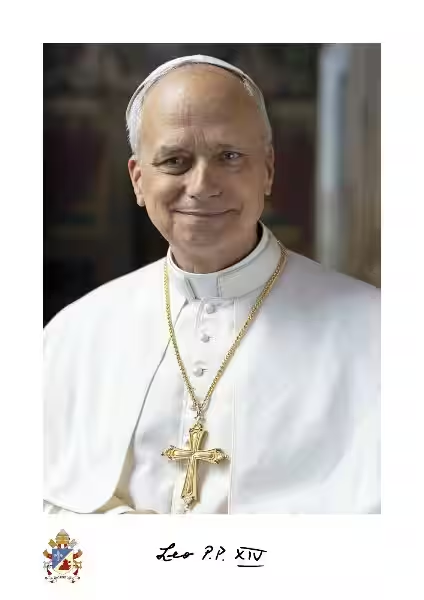
In the tapestry of religious practice, few gestures hold as much weight and symbolic resonance as a Pope’s blessing. It’s a moment steeped in centuries of tradition, a tangible link to the spiritual leadership of the Catholic Church, and for many, a profound source of comfort, hope, and divine favor. More than just a perfunctory utterance, the Pope’s blessing represents a bestowal of grace and a spiritual embrace that can resonate deeply with individuals navigating the complexities of life and faith.
This article will delve into the multifaceted nature of a Pope’s blessing, exploring its historical roots, theological significance, and the practical ways in which it impacts the lives of believers. We will uncover why this seemingly simple act continues to hold such profound importance in the modern world, offering solace in times of uncertainty and reinforcing the bonds of faith across continents and cultures.
Understanding the Pope’s Blessing: More Than Just Words
At its core, a Pope’s blessing is an invocation of God’s favor and protection upon individuals or groups. It is an act of intercession, where the Pope, as the successor of Saint Peter and the visible head of the Catholic Church, is believed to act as a conduit for God’s grace. This isn’t a magical incantation but rather a prayerful act, a formal request for divine assistance and spiritual well-being. Think of it like a parent offering a heartfelt prayer for their child’s safety and success – the love and intention are paramount, and the blessing carries that same spiritual weight.
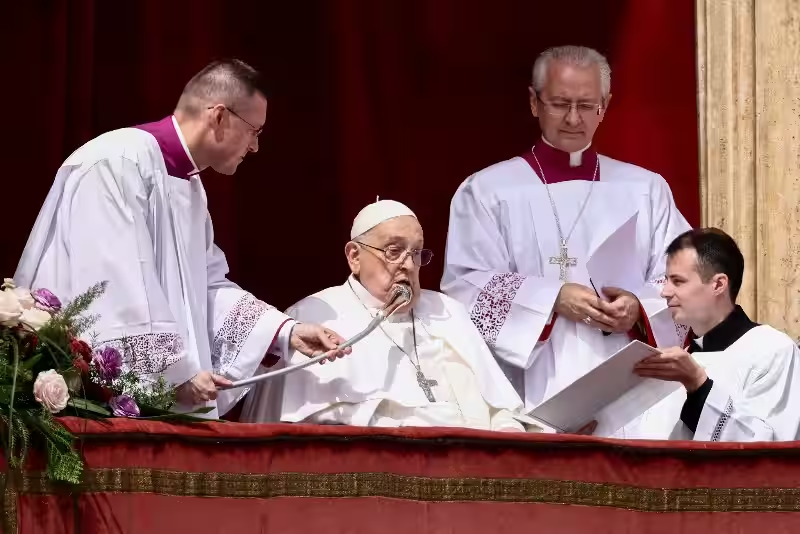
The Pope’s authority to bless stems from his unique position within the Church. This authority is not personal but rather derived from his office. When the Pope blesses, he is acting in his capacity as the Chief Shepherd, extending the Church’s spiritual care to the faithful. This can take many forms, from a general blessing imparted to the crowds at a public audience to a specific blessing for a religious artifact or even a personal intention. The intention behind the blessing is always to draw individuals closer to God and to strengthen their faith.
Historical Roots and Evolution of the Papal Blessing
The practice of seeking blessings from religious leaders is as old as religion itself. In the Old Testament, patriarchs like Abraham and Isaac would bestow blessings upon their descendants, signifying divine favor and a promise of future prosperity. This foundational understanding of blessing as a bestowal of divine power and good fortune carried over into the early Christian Church.
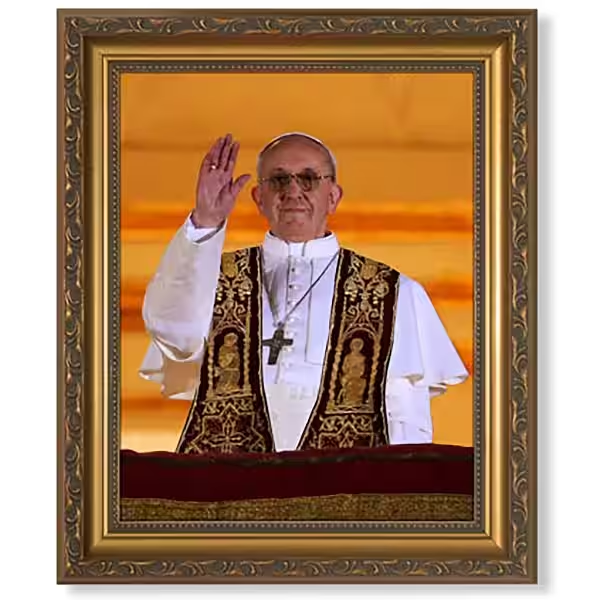
From the earliest days, bishops and apostles were seen as having the spiritual authority to bless the faithful. As the See of Rome grew in prominence, the Bishop of Rome – the Pope – increasingly became a central figure in this tradition. Over centuries, the formalization of the papal blessing evolved. What might have once been a more informal gesture became a structured rite, often accompanied by specific prayers and gestures, ensuring its clear spiritual significance. The iconic image of the Pope extending his hands in a gesture of blessing is a visual representation of this long-standing tradition, connecting contemporary believers to a lineage of spiritual leaders.
The Impact and Significance of a Pope’s Blessing Today
In our fast-paced, often secularized world, the Pope’s blessing continues to offer a powerful anchor for many. For Catholics, receiving a Pope’s blessing, whether in person or through a signed Vatican document, is a deeply meaningful experience. It can serve as a reminder of their connection to the universal Church, a tangible sign of God’s presence in their lives, and a source of strength during challenging times. Imagine a young person preparing for a difficult exam; a Pope’s blessing on their study materials could offer a profound sense of spiritual support and peace.
Beyond the immediate emotional impact, a Pope’s blessing can also have significant theological implications. It is often seen as a way to impart spiritual merit, to strengthen one’s faith, and to seek protection from spiritual harm. Many individuals request blessings for important life events, such as weddings, anniversaries, or the birth of a child, believing that this divine favor will accompany and enrich these precious moments. The act of receiving a Pope’s blessing can also encourage a renewed commitment to living a virtuous life, inspired by the spiritual leadership it represents.
Practical Ways to Receive a Pope’s Blessing
While an in-person encounter with the Pope is a rare and cherished opportunity for many, there are several avenues through which individuals can receive a Pope’s blessing. One of the most common is through apostolic blessings, which are formal blessings often bestowed upon special occasions or for specific intentions. These can be requested for events like weddings, baptisms, first communions, ordinations, or even for individuals facing illness or hardship.
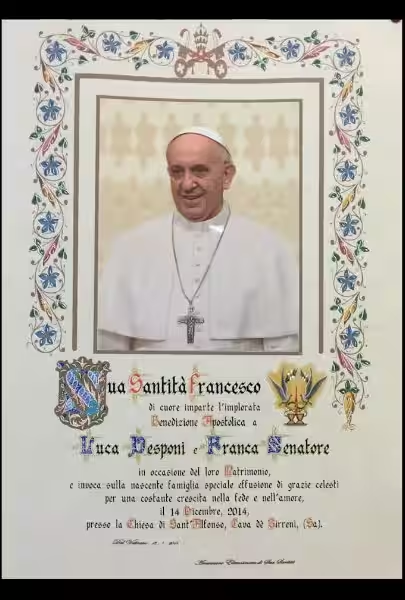
These apostolic blessings are typically issued by the Office of Papal Charities (Elemosineria Apostolica) in the Vatican. They can be obtained through various channels, often through local parishes or by directly contacting the Elemosineria. The process usually involves providing details about the recipient, the occasion, and the intended purpose of the blessing. The resulting document, often beautifully calligraphed and bearing the papal seal, serves as a cherished keepsake and a constant reminder of the Pope’s prayerful support. Many find solace in having these tangible reminders of divine favor adorning their homes or carried with them as a source of strength.
Receiving Blessings for Celebrations and Milestones
For life’s significant moments, a Pope’s blessing can add an extraordinary layer of spiritual depth. A couple planning their wedding might request a papal blessing to signify the Church’s spiritual endorsement of their union, believing it will imbue their marriage with divine grace from the outset. Similarly, parents celebrating the birth of a child can seek a Pope’s blessing to invoke God’s protection and guidance over their new family. These blessings are not meant to replace the sacraments or the prayers of their local community but rather to augment and honor these sacred occasions with a universal spiritual recognition.
The process of obtaining such blessings is generally straightforward. Most dioceses have established procedures for requesting papal blessings for significant life events. This often involves filling out a form, which is then forwarded to the Vatican. The resulting parchment, often beautifully designed, becomes a treasured memento, a testament to the spiritual connection felt with the Holy See. It’s a way of saying, “We are part of something bigger, a global family under God’s watchful eye.”
In times of suffering, illness, or personal crisis, the desire for spiritual support intensifies. A Pope’s blessing can offer a profound sense of comfort and hope during these challenging periods. It is an acknowledgement that even in our darkest hours, we are not alone, and that the spiritual leadership of the Church is extending its prayers and intercessions on our behalf. For someone facing a serious illness, the thought that the Pope himself is praying for their healing can be an immense source of strength and peace.
While a papal blessing does not guarantee miraculous cures, it can foster a spirit of resilience and faith. It is an act of entrusting oneself to God’s will, with the added assurance of the Pope’s spiritual endorsement. Many hospitals and religious orders facilitate the process of requesting papal blessings for patients, recognizing the immense solace it can bring. This gesture serves as a beacon of hope, reminding individuals that their struggles are seen and supported by the broader Christian community, with the Pope at its spiritual apex.
The Pope’s Blessing in a Global Context
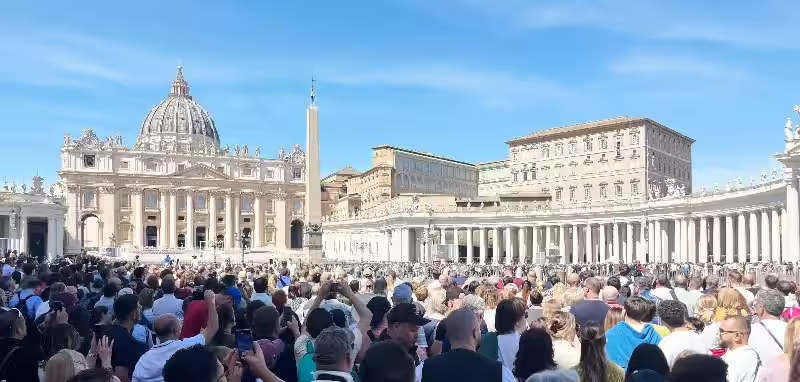
The reach of a Pope’s blessing extends far beyond the Vatican walls. In our interconnected world, the Pope’s words and gestures of blessing are broadcast globally, touching the hearts of millions. Whether through televised papal Masses, live-streamed audiences, or official Vatican communications, the spiritual embrace of the Pope can be felt across diverse cultures and geographical locations. This global reach underscores the universality of the Catholic faith and the unifying role of the papacy.
The Pope’s blessing serves as a powerful symbol of unity within the Catholic Church. It reminds believers worldwide that they are part of one body, united in faith and in communion with their spiritual shepherd. This sense of belonging can be incredibly comforting, especially for those who may feel isolated in their faith journey. It is a constant reaffirmation that no matter where they are in the world, they are connected to a rich spiritual heritage and a global community of believers.
Connecting with the Pope’s Blessing Digitally and Virtually
In the 21st century, technology has opened new avenues for experiencing a Pope’s blessing. Live-streamed papal events and official Vatican social media channels allow individuals to participate in Masses and receive blessings virtually. While not a substitute for in-person reception, these digital connections offer a way to feel closer to the Holy Father and to partake in the spiritual moments he shares with the faithful. Many find that participating in these online events, even from afar, still imbues them with a sense of peace and spiritual connection.
Furthermore, the Vatican has embraced digital platforms to disseminate apostolic blessings. Online portals and apps now allow for the request and delivery of these blessings, making them more accessible than ever before. This modernization ensures that the Pope’s blessing can continue to be a source of spiritual support for individuals around the globe, adapting to the changing ways in which people connect and engage with their faith. It’s a testament to the enduring relevance of this tradition in a digital age.
Conclusion: A Timeless Source of Spiritual Strength
The Pope’s blessing, in its various forms and expressions, remains a potent and cherished element of Catholic religious life. It is a tangible manifestation of divine favor, a symbol of spiritual authority, and a deeply personal source of comfort and hope for countless individuals. Whether received in person, through a formal apostolic blessing, or virtually, the impact of a Pope’s blessing transcends mere ritual; it is an affirmation of faith, a reminder of God’s enduring love, and a unifying force within the global Christian community.
As we navigate the complexities of life, the enduring power of a Pope’s blessing offers a steady beacon of spiritual strength. It encourages us to remain steadfast in our faith, to trust in divine providence, and to find solace in the knowledge that we are embraced by the prayers and spiritual care of Christ’s representative on Earth. The tradition of the Pope’s blessing is not a relic of the past but a living, breathing testament to the timeless power of faith and the enduring connection between the divine and the human.
Frequently Asked Questions About the Pope’s Blessing
What is a papal blessing?
A papal blessing is a special blessing imparted by the Pope or by his authority. It is often bestowed upon individuals, families, or upon objects of devotion.
How can I receive a papal blessing?
Papal blessings can be received in several ways:
In person, by being present at an event where the Pope is bestowing blessings.
Through a Papal Blessing parchment, which can be requested for specific occasions like baptisms, first communions, confirmations, weddings, ordinations, anniversaries, or ordinations.
By receiving a blessing from a priest or bishop who has been granted the faculty to impart certain papal blessings.
Is a papal blessing a sacrament?
No, a papal blessing is not a sacrament. Sacraments are outward signs instituted by Christ to give grace. A papal blessing is a devotional practice that conveys spiritual good will and a specific favor from the Holy Father.
What is the religious significance of a papal blessing?
The religious significance lies in the belief that it is a direct bestowal of God’s grace and favor through the successor of Saint Peter. It is seen as a tangible expression of the Church’s maternal care and a prayer for the recipient’s spiritual well-being.
Can anyone receive a papal blessing, regardless of their religion?
While a papal blessing is a practice within the Catholic Church, it is generally offered with love and good wishes to all, recognizing the universal desire for peace and well-being. However, its deepest spiritual efficacy is typically understood within the context of Catholic faith and practice.
What is the difference between a papal blessing and a regular blessing from a priest?
A regular blessing from a priest is a common liturgical practice. A papal blessing carries the specific authority and intention of the Pope himself, often associated with a formal request or bestowal, such as through a Papal Blessing parchment.