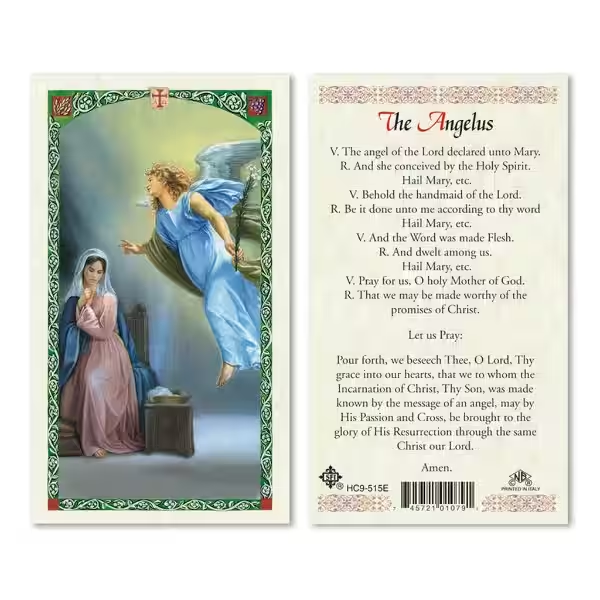
In the tapestry of Catholic devotion, few practices resonate with the quiet power and profound simplicity of the Angelus prayer. This ancient tradition, recited three times daily, offers a sacred pause in the rhythm of our busy lives, inviting us to contemplate a pivotal moment in salvation history: the Annunciation. More than just a series of words, the Catholic Angelus prayer is a doorway to a deeper understanding of God’s love, the mystery of the Incarnation, and our own participation in this divine plan.
For many, the familiar tolls of church bells marking the Angelus hours are a comforting reminder of faith. It’s a call to turn our hearts and minds towards God, even amidst worldly distractions. This article will explore the origins, meaning, and enduring relevance of the Angelus prayer, offering insights into how this beautiful devotion can enrich your spiritual journey. We will delve into the significance of each verse, explore its historical context, and discover practical ways to integrate this prayer into your daily life for renewed faith and peace.
The roots of the Angelus prayer stretch back to the medieval period, a time when monastic life heavily influenced lay devotion. The practice of ringing bells to mark specific prayer times was common in monasteries, and gradually, this custom extended to the laity. Initially, the prayer was recited in the evening, perhaps as a way to conclude the working day with a focus on spiritual matters.
Over time, the Angelus evolved. By the 14th and 15th centuries, the Catholic Angelus prayer as we know it today, with its three distinct parts and accompanying verses and prayers, began to take shape. Pope Callixtus III in the 15th century is often credited with formally recommending its daily recitation, solidifying its place as a cornerstone of Catholic prayer life. This period also saw the development of the iconic three-bell toll sequence, a powerful auditory cue that has echoed through centuries, calling believers to prayer.
The Significance of the Angelus Hours
The Angelus is traditionally recited at three specific times each day: morning (around 6 am), noon (around 12 pm), and evening (around 6 pm). Each of these times carries its own symbolic weight, further enhancing the prayer’s devotional power. The morning Angelus can be seen as an offering of the day’s work and intentions to God, like a fresh dawn bringing new hope and opportunities.
The midday Angelus offers a midday respite, a moment to pause and reorient ourselves towards divine grace before the afternoon’s activities. Finally, the evening Angelus serves as a graceful conclusion to the day, allowing for reflection on God’s blessings and a plea for protection through the night. This consistent rhythm of prayer throughout the day reinforces the idea that our faith is not confined to a single moment but is an integral part of our entire existence.
Unpacking the Beauty of the Catholic Angelus Prayer
At its heart, the Catholic Angelus prayer is a meditation on the Incarnation – the moment God became man. It’s a profound mystery, and the prayer beautifully guides us through it with its simple yet powerful verses. The prayer consists of three verses, each followed by an “Hail Mary,” and concludes with a collect.
Let’s break down each section to appreciate its spiritual depth:
The Angelic Greeting and the Mystery of the Incarnation
The prayer begins with the angel Gabriel’s greeting to Mary: “The angel of the Lord declared unto Mary.” This immediately transports us back to that extraordinary moment when heaven touched earth. It’s a reminder of God’s divine initiative – He chose to send His Son into the world, and He chose a humble young woman, Mary, to be His mother.
This first verse is followed by “And she conceived of the Holy Spirit.” This highlights the supernatural nature of Jesus’ conception, emphasizing that He is both fully God and fully human, a unique event in history. The repetition of “Hail Mary, full of grace, the Lord is with thee; blessed art thou amongst women and blessed is the fruit of thy womb, Jesus” after each verse reinforces our devotion to Mary, acknowledging her crucial role in salvation history and asking for her intercession.
Mary’s Humble Acceptance and Our Own “Fiat”
The second verse shifts focus to Mary’s response: “Behold the handmaid of the Lord.” This is Mary’s courageous and obedient acceptance of God’s will, her “fiat.” It signifies her complete surrender to God’s plan, even though she could not have fully understood the implications of her consent. This profound humility and trust provide an inspiring example for us.
The third verse reflects on the consequence of Mary’s acceptance: “And the Word was made Flesh.” This is the glorious culmination of the Annunciation – the Incarnation of Jesus Christ. It signifies that God, in His infinite love, bridged the gap between heaven and earth, becoming one of us to redeem humanity. Reciting the Angelus prayer, we are invited to contemplate this central tenet of our faith and to reflect on our own “fiat” – our willingness to embrace God’s will in our lives.
The Catholic Angelus prayer culminates with a collect, a brief prayer that summarizes the devotion’s intention. The most common collect is: “Pour forth, we beseech Thee, O Lord, Thy grace into our hearts, that we to whom the Incarnation of Christ Thy Son was made known by the message of an angel, may by His Passion and Cross be brought to the glory of His Resurrection, through the same Christ our Lord. Amen.“
This powerful prayer is a plea for grace, asking God to help us internalize the mystery of the Incarnation. We pray to be led by Christ’s passion and resurrection, seeking the ultimate hope of eternal life. It’s a beautiful way to connect the beginning of Jesus’ earthly life with His ultimate sacrifice and victory over death, reinforcing the holistic nature of our salvation.
Integrating the Angelus into Your Daily Life
The beauty of the Catholic Angelus prayer lies in its accessibility. It can be prayed individually or communally, in churches, at home, or even on the go. The key is to approach the prayer with a sincere heart and a desire for spiritual connection.
Here are some ways to make the Angelus a meaningful part of your day:
Set Reminders: Use your phone or a simple clock to remind you of the Angelus hours. This simple act can help you establish a consistent prayer routine.
Gather with Family: If possible, make reciting the Angelus a family affair. This fosters a shared spiritual practice and creates a devotional atmosphere within the home.
Find a Quiet Space: Even a few minutes of quiet reflection before or after the prayer can deepen its impact. Look for a peaceful corner where you can minimize distractions.
Meditate on the Verses: Don’t just recite the words; ponder their meaning. Imagine yourself present at the Annunciation, reflecting on Mary’s courage and the immensity of God’s love.
Use a Physical Prayer Aid: Some find it helpful to use a small card with the Angelus text or a rosary to guide their prayers. The tactile element can enhance focus.
Connect it to Your Day: Consider how the Angelus can inform your actions. The morning Angelus might inspire you to approach your tasks with a spirit of service; the midday Angelus can be a moment to offer any struggles you are facing.
The Catholic Angelus prayer is more than a ritual; it’s an invitation to encounter God in a profound and personal way. By embracing this ancient devotion, we can cultivate a deeper spiritual life, find peace amidst chaos, and strengthen our connection to the divine narrative of salvation. Let the tolls of the Angelus bells be a consistent reminder of God’s enduring love and His boundless grace, available to us in every moment.
Frequently Asked Questions about the Angelus Prayer
What is the Angelus prayer?
The Angelus is a Catholic devotion commemorating the Incarnation, that is, the announcement to the Virgin Mary by the Angel Gabriel that she would conceive the Son of God. It is traditionally recited at three specific times of the day: morning, noon, and evening.
When is the Angelus prayer recited?
The Angelus is traditionally recited three times a day: in the morning (around 6:00 AM), at noon (around noon), and in the evening (around 6:00 PM). The specific times can vary slightly depending on the season and local custom.
What are the prayers in the Angelus?
The Angelus consists of a series of short prayers which include specific versicles and responses, a “Hail Mary” recited three times, and a concluding prayer. It also often includes a short reading from scripture and a concluding prayer for the intercession of Mary.
What is the significance of the Angelus?
The Angelus is a reminder of the mystery of the Incarnation and Mary’s role in salvation history. It encourages prayer, meditation on God’s love, and devotion to the Blessed Virgin Mary. It is also a way to unite oneself with the prayers of the Church throughout the day.
Can anyone pray the Angelus?
Yes, the Angelus is a devotion that can be prayed by any Catholic, and indeed by anyone who wishes to meditate on the Incarnation and honor the Virgin Mary. It is a simple yet profound prayer suitable for all ages.
Is the Angelus prayer only for religious people?
While it is a Catholic devotion, the themes of the Angelus – God’s love, the mystery of the Incarnation, and honoring Mary – can resonate with people of other faiths or those seeking spiritual reflection. However, its origins and primary practice are rooted in Catholic tradition.