In the heart of Africa, where vibrant cultures pulse with ancient rhythms and modern realities intertwine, the Congo church stands as a cornerstone of community, faith, and resilience. It’s more than just a place of worship; it’s a living, breathing entity that profoundly shapes the lives of millions in the Democratic Republic of Congo and the Republic of Congo. For many, the religion practiced within the walls of the Congo church is not a Sunday-only affair, but an ever-present force guiding their decisions, offering solace in hardship, and celebrating triumphs. This article delves into the multifaceted significance of the Congo church, exploring its historical roots, its diverse expressions of faith, and the indispensable role it plays in fostering social cohesion and personal well-being.
Understanding the Congo church requires an appreciation for the deep-seated spirituality that permeates Congolese society. From bustling urban centers like Kinshasa and Brazzaville to remote rural villages, the local religion is woven into the fabric of everyday existence. The Congo church, in its myriad forms, provides a framework for understanding the world, a source of moral guidance, and a powerful network of support. It’s a place where hope is nurtured, where communities come together to overcome challenges, and where the spiritual journey of individuals is nurtured and celebrated.
A Tapestry of Faith: Denominations and Diversity within the Congo Church
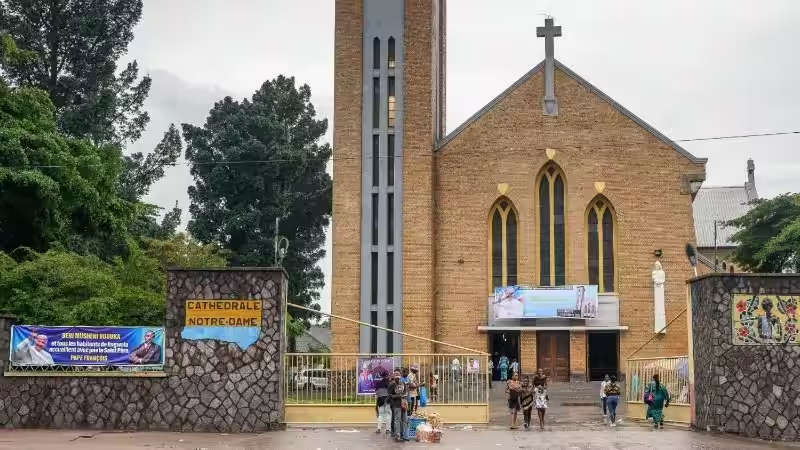
The religious landscape of the Congo is remarkably diverse, a dynamic blend of indigenous beliefs, historical Christian traditions, and newer evangelical movements. While the Congo church is often associated with Christianity, it’s crucial to recognize the spectrum of denominations that contribute to this vibrant religious tapestry. Major historical churches, such as the Congo Protestant Council (CPC) and the Catholic Church, have a long-standing presence and continue to be influential. These institutions often maintain extensive networks of schools, hospitals, and social welfare programs, demonstrating the tangible impact of their faith in action.
Alongside these established bodies, a proliferation of Pentecostal and charismatic churches has emerged, particularly in recent decades. These newer expressions of faith within the Congo church are characterized by enthusiastic worship, a strong emphasis on divine healing and prosperity, and a direct, personal relationship with God. This dynamism means that when we speak of the Congo church, we are not referring to a monolithic entity, but rather a rich mosaic of beliefs and practices. For instance, a rural village might have a vibrant Catholic parish alongside a lively Kimbanguist church and several burgeoning Pentecostal congregations, each serving distinct spiritual needs and offering unique avenues for community engagement. This diversity is a testament to the adaptability and enduring appeal of religion in the Congo.
The foundations of the Congo church as a significant societal force were laid during the colonial era, with the arrival of various missionary groups. These early missionaries brought not only their religious doctrines but also established educational and healthcare systems, inadvertently shaping the socio-economic development of the region. Even as colonial powers receded, the seeds of faith they planted continued to grow, adapting and evolving into the distinct forms of religion we see today. The Congo church inherited this legacy, often becoming a crucial institution for national identity and a platform for post-independence aspirations.
One of the most prominent and uniquely Congolese religious movements is Kimbanguism. Founded by Simon Kimbangu, this indigenous prophetic movement, recognized as the Church of Jesus Christ on Earth by the Prophet Simon Kimbangu (EJCSK), has a profound spiritual and social impact. Kimbanguism, a significant branch of the Congo church, emphasizes spiritual purity, social justice, and self-reliance. Its followers are known for their strong community bonds and their dedication to education and ethical living, showcasing how religion can foster a sense of collective purpose and empowerment. The enduring strength of these historical roots continues to underscore the significance of the Congo church in shaping the nation’s spiritual and cultural landscape.
The Congo Church as a Pillar of Community and Social Support
Beyond its spiritual dimensions, the Congo church serves as an indispensable pillar of community and a vital source of social support. In societies where formal social safety nets may be limited, churches often step in to fill the gaps, providing tangible assistance and a robust network of care. Whether it’s offering food to those in need, providing shelter for the displaced, or organizing support groups for vulnerable individuals, the Congo church demonstrates its commitment to practical humanitarian aid. This involvement is deeply rooted in their understanding of religion as a call to love and serve one’s neighbor.
Consider the common scenario of a congregant facing a financial crisis or a health emergency. The immediate instinct for many in the Congo is to turn to their church community. Through organized collections, personal donations, and the collective prayer and encouragement of fellow believers, individuals often find the support they need to navigate difficult times. This communal spirit, nurtured within the Congo church, extends to celebrating life’s milestones as well. Weddings, baptisms, and even funerals are significant community events, bringing people together under the spiritual umbrella of their shared religion and reinforcing the bonds of fellowship. The Congo church truly embodies the idea that faith is lived out, not just preached.
Empowerment and Education through Faith
The Congo church has consistently been at the forefront of empowerment and education in the region. Historically, missionary churches established schools that provided access to literacy and formal education for generations of Congolese. This legacy continues today, with many churches running their own educational institutions, from primary schools to universities. These institutions are not only centers of learning but also places where young people are instilled with moral values and a sense of civic responsibility, guided by the principles of their religion.
Furthermore, the Congo church empowers individuals through various programs and initiatives. Women’s groups, youth ministries, and vocational training centers are common, offering opportunities for personal growth, skill development, and economic empowerment. For example, a women’s group within a local Congo church might organize a cooperative for sewing or handicraft production, providing members with an income and a sense of agency. This practical application of faith, where religion directly contributes to improving livelihoods, is a hallmark of its impact. The Congo church is not merely a spiritual haven; it is a catalyst for positive social change and individual upliftment.
Navigating Challenges and Shaping the Future
The journey of the Congo church has not been without its challenges. Political instability, economic hardship, and at times, conflict, have significantly impacted the lives of its members and the operations of religious institutions. Yet, in the face of adversity, the Congo church has repeatedly demonstrated remarkable resilience and adaptability. Its members have found strength and hope in their faith, and religious leaders have often played crucial roles in advocating for peace and reconciliation.
Looking ahead, the Congo church continues to evolve, responding to the changing needs of Congolese society. While maintaining its core spiritual mission, it is increasingly engaged in addressing contemporary issues such as environmental stewardship, human rights, and good governance. The influence of religion in the Congo is not static; it is a dynamic force that adapts and innovates. The Congo church, with its deep roots and diverse expressions, remains a vital heartbeat, a source of enduring hope and a powerful engine for positive transformation in the lives of the Congolese people.
Frequently Asked Questions about Congo Church and Religion
What is the primary religion in the Democratic Republic of Congo?
The Democratic Republic of Congo is predominantly Christian, with a significant portion of the population adhering to various denominations within Christianity. Islam is the second-largest religion.
What are some of the major Christian denominations present in the Congo?
The most prominent Christian denominations include Catholicism, Protestantism (including various Reformed churches, Baptists, and Pentecostals), and Kimbanguism, which is an indigenous African religion with Christian roots.
What role do churches play in Congolese society?
Churches play a multifaceted role in Congolese society. They are central to spiritual life, but also actively involved in education, healthcare, social welfare, community development, and often serve as a voice for the people, providing guidance and advocacy.
Is Kimbanguism a widely practiced religion in the Congo?
Yes, Kimbanguism is a significant and influential religious movement originating in the Congo, with a substantial number of followers. It is considered one of the largest indigenous African churches.
Are there other religious groups in the Congo besides Christianity and Islam?
While Christianity and Islam are the dominant religions, there are also smaller communities practicing traditional African religions and other faiths.
How has religion influenced Congolese culture and daily life?
Religion is deeply intertwined with Congolese culture and daily life. It influences social customs, moral values, artistic expressions, and plays a significant role in major life events such as births, marriages, and deaths. Many public holidays are also religious in nature.