Introduction: More Than Just a Concept, a Present Reality
The concept of the Holy Spirit often feels distant, a theological construct reserved for sermons and ancient texts. Yet, for countless individuals across diverse faith traditions, the Holy Spirit is not merely a historical footnote or an abstract idea; it is a living, breathing presence, an active force that shapes experiences, guides decisions, and imbues life with profound meaning. This article aims to explore the rich tapestry of the Holy Spirit story, not as a purely academic exercise, but as a journey into the personal and transformative power that this Divine aspect offers. We will delve into how this presence has been understood and experienced throughout religious history and, more importantly, how its story continues to unfold in the lives of ordinary people today.
Many people associate religious stories with grand narratives of prophets and miracles, often overlooking the subtle but persistent influence of the Divine in the everyday. The Holy Spirit story is precisely this: a narrative of immanence, of God dwelling within us and the world, offering comfort, wisdom, and empowerment. It’s the quiet nudge that leads you to help a stranger, the sudden insight that solves a nagging problem, or the deep sense of peace that settles over you in times of turmoil. Understanding this story is about recognizing the divine whispers that constantly surround us, waiting to be heard and acted upon.
The Genesis of the Holy Spirit Story: From Ancient Roots to Prophetic Promise
The roots of the Holy Spirit story stretch back to the earliest expressions of faith. In the Hebrew Bible, the concept of God’s “breath” or “spirit” (ruach in Hebrew) was often depicted as a creative and animating force. It was the spirit that moved over the waters at creation, the spirit that inspired prophets, and the spirit that empowered leaders. This ancient understanding laid the groundwork for a later, more developed revelation within the Christian tradition.
Consider the story of creation in Genesis. The text states, “Now the earth was formless and empty, darkness was over the surface of the deep, and the Spirit of God was hovering over the waters.” This wasn’t just poetic language; it conveyed the idea of a divine energy, a creative power that brought order and life into existence. Similarly, when figures like Moses were chosen for leadership, the spirit of God was said to rest upon them, equipping them with the necessary gifts and wisdom to guide their people. These early narratives are foundational to the ongoing Holy Spirit story, highlighting its role as a source of power and divine enablement.
The New Testament Unveiling: Jesus and the Promise of the Advocate
The Holy Spirit story takes a pivotal turn in the New Testament, particularly in the teachings and actions of Jesus. While the Old Testament speaks of the spirit being upon certain individuals, Jesus introduces the concept of the spirit being within believers. He repeatedly promised his disciples that after his departure, he would send the “Advocate,” the “Spirit of Truth,” who would guide them, comfort them, and empower them to carry on his mission. This promise marked a significant expansion of the Holy Spirit’s role, shifting from a localized presence to a universal and indwelling reality.
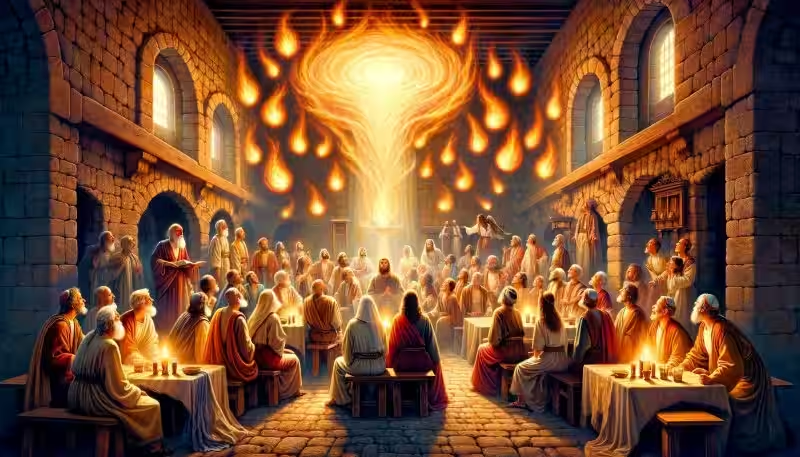
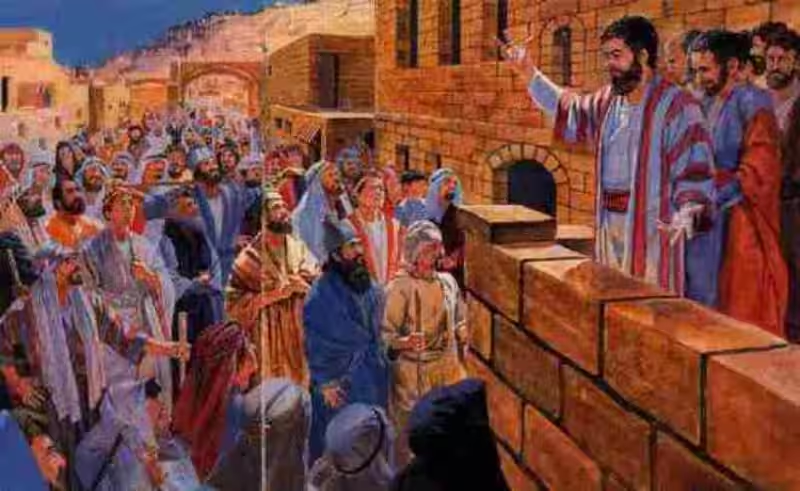
The most dramatic manifestation of this promise, according to Christian scripture, occurred at Pentecost. The disciples, gathered together, were suddenly filled with the Holy Spirit, described as “tongues of fire” that rested on each of them, enabling them to speak in different languages and proclaim the gospel with boldness. This event is a cornerstone of the Holy Spirit story, illustrating its power to unite, empower, and equip believers for witness and service. It wasn’t just a historical event; it was a divine endowment, a tangible experience of God’s presence that revolutionized the early church.
Experiencing the Holy Spirit Today: Practical Manifestations in Daily Life
The Holy Spirit story is not confined to ancient history; it is a vibrant and ongoing narrative that plays out in the lives of believers today. This Divine presence manifests in myriad ways, often in the seemingly ordinary moments that shape our journey. For many, the Holy Spirit is the source of inner peace amidst chaos, the gentle whisper of conviction that guides them away from harmful choices, or the sudden surge of courage to speak truth in difficult situations. It’s the divine intuition that prompts a specific action, like calling a friend who is struggling, or the unexpected clarity that illuminates a complex problem.
Think about a time when you felt an overwhelming sense of calm during a personal crisis, or when an idea just “clicked” in your mind, providing a perfect solution. These are often interpreted as manifestations of the Holy Spirit’s work. The spirit can also foster spiritual gifts in individuals, such as discernment, wisdom, or compassion, enabling them to contribute positively to their communities. Moreover, the Holy Spirit is often seen as the force that draws people closer to God, fostering a deeper relationship and a greater understanding of divine love. The Holy Spirit story, therefore, is one of active participation and personal encounter.
The Holy Spirit and Personal Growth: Nurturing the Divine Within
The Holy Spirit plays a crucial role in the personal and spiritual growth of individuals. It acts as a divine gardener, tending to the seeds of goodness within us, nurturing virtues like love, joy, peace, patience, kindness, goodness, faithfulness, gentleness, and self-control. This process isn’t always instantaneous or dramatic; it’s often a gradual unfolding, a continuous refinement of character through the Spirit’s gentle guidance. The Holy Spirit story, in this context, is about transformation, about becoming more like the Divine ideal.
Imagine a sculptor working on a block of marble. The sculptor chips away at the rough edges, revealing the beautiful form hidden within. Similarly, the Holy Spirit works within us, gently chiseling away at our imperfections, revealing the inherent beauty and potential that God has placed within us. This process involves listening to the Spirit’s promptings, being open to correction, and actively seeking to live a life that aligns with divine principles. The Holy Spirit story is therefore a personal journey of sanctification, a continuous pursuit of becoming a better, more Christ-like person.
The Holy Spirit and Community: Unity and Shared Purpose
Beyond individual experience, the Holy Spirit story is also deeply interwoven with the concept of community. In many religious traditions, the Holy Spirit is understood as the force that unites believers, fostering a sense of fellowship, mutual support, and shared purpose. This divine bond transcends cultural, social, and personal differences, creating a harmonious tapestry of individuals working together for a common good. The Holy Spirit story, when viewed through the lens of community, is about divine connection and collective mission.
Consider the early Christian church. Despite their diverse backgrounds, the disciples were united by the Holy Spirit, empowering them to speak the same message and to support one another in spreading their faith. This same unifying power is at work in faith communities today. The Holy Spirit fosters empathy and understanding, enabling individuals to truly hear and value one another, even when they disagree. It also inspires a shared vision and collective action, motivating groups to address societal injustices, serve the needy, and build a more compassionate world. The Holy Spirit story, in its communal dimension, highlights God’s desire for unity and collaborative impact.
Conclusion: Embracing the Ongoing Holy Spirit Story in Your Life
The Holy Spirit story is an invitation, a constant offering of divine presence, guidance, and empowerment. It’s a narrative that is not static but dynamic and unfolding, woven into the fabric of our daily lives. Whether you identify with a specific religious tradition or are simply seeking a deeper connection to something greater than yourself, understanding the Holy Spirit story can illuminate your path and enrich your experience of existence. By actively listening for its whispers, embracing its transformative power, and participating in its communal work, you become an integral part of this eternal and ever-evolving divine narrative.
To truly embrace the Holy Spirit story is to cultivate a posture of receptivity. It involves pausing amidst the busyness of life to notice the subtle promptings, the moments of clarity, and the surges of compassion. It means being willing to be led, even when the path is unclear, and trusting in the divine wisdom that guides us. The Holy Spirit is not a distant deity; it is a present companion, an ever-available source of strength and love, waiting for us to acknowledge its presence and engage with its profound story. The most compelling chapters of the Holy Spirit story are ultimately written in the ordinary lives of those who choose to believe and to act upon its divine inspiration.
Frequently Asked Questions About the Holy Spirit
What is the Holy Spirit?
The Holy Spirit is the third person of the Trinity, understood as God Himself, distinct from God the Father and God the Son (Jesus Christ). Christians believe the Holy Spirit is fully God, with divine attributes and power.
What is the role of the Holy Spirit in the Bible?
The Bible describes the Holy Spirit as a divine agent involved in creation, inspiring prophets, empowering individuals, guiding believers, and comforting them. The Holy Spirit is also seen as the one who regenerates believers and seals them for salvation.
How is the Holy Spirit depicted in different religious traditions?
In Christianity, the Holy Spirit is understood as a distinct person of the Trinity. In Judaism, the concept of God’s spirit (ruach Elohim) is present, often associated with power, breath, or divine presence, but not typically as a distinct person. Islam refers to the Holy Spirit (Ruh al-Qudus), often identified with the Angel Gabriel, who delivered God’s message to prophets.
What are some common stories or accounts involving the Holy Spirit in religious texts?
Key biblical accounts include the Holy Spirit descending like a dove at Jesus’ baptism, the outpouring of the Holy Spirit at Pentecost, and Jesus’ promise to send the Comforter. In Islamic tradition, the most prominent account is the Angel Gabriel revealing the Quran to the Prophet Muhammad.
How do people experience the Holy Spirit?
Believers describe experiencing the Holy Spirit through various means, including a sense of peace, conviction of sin, guidance in decision-making, empowerment for service, spiritual gifts (like speaking in tongues or prophecy), and a deepening of their relationship with God.