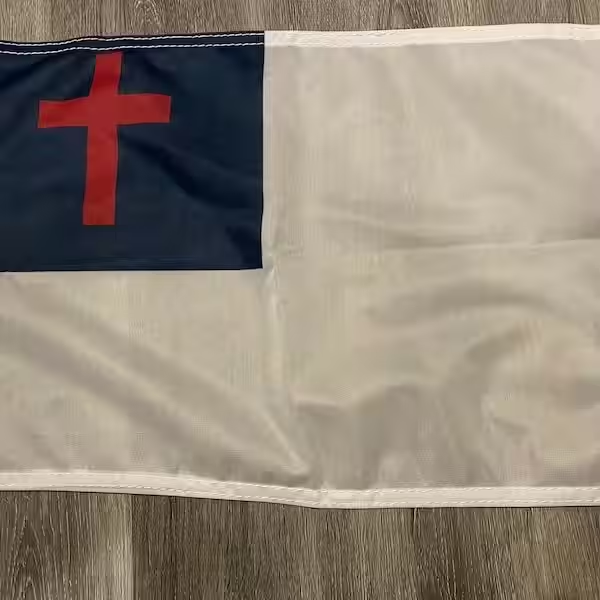
In the vast and diverse tapestry of human faith, symbols play a crucial role in unifying communities and expressing devotion. Among these potent emblems, the saint flag stands out as a particularly vibrant and meaningful representation within many religious traditions. Far more than a mere piece of cloth, a saint flag is a visual testament to spiritual belief, an invocation of divine protection, and a rallying point for the faithful. Its presence in processions, chapels, and homes signifies a deep connection to the sacred and an acknowledgment of the intercessory power attributed to specific saints.
The history of religious banners and flags is as old as organized religion itself. From ancient military standards bearing divine symbols to the intricate banners carried in modern religious festivals, these sacred textiles have always served to identify, inspire, and protect. The saint flag, in particular, often features an image or emblem of a beloved saint, accompanied by prayers, scriptural verses, or specific colors associated with that saint or their patronage. This deliberate design imbues the flag with layers of meaning, making it a focal point for prayer, a source of comfort, and a tangible link between the earthly and the divine.
The Role of Saints in Religious Practice
Saints, in many religions, are seen as exemplars of virtue and instruments of God’s grace. They are individuals who lived lives of exceptional piety, often facing persecution or making great sacrifices for their faith. Their stories serve as inspirational narratives, guiding believers on their spiritual journeys and offering hope in times of hardship. The veneration of saints is not about worshipping them as deities, but rather about recognizing their closeness to God and their ability to intercede on behalf of humanity. This belief in intercession is a cornerstone for understanding the significance of the saint flag.
The concept of intercession is vital. Imagine a child asking a parent to speak to a teacher on their behalf; in a similar way, believers turn to saints, whom they believe have a direct line to the divine, to carry their prayers and petitions. This is where the saint flag becomes a powerful tool. When a flag bearing the image of Saint Christopher, the patron saint of travelers, is carried, it’s a public declaration of trust in his protection for those journeying. Likewise, a flag dedicated to Saint Jude, the patron of lost causes, can be a beacon of hope for those facing seemingly insurmountable challenges. The saint flag becomes a prayer made visible, a collective plea amplified by shared faith.
Throughout history and across different cultures, the saint flag has been a constant presence in religious life. Consider the vibrant processions during the Feast of San Gennaro in Naples, Italy, where elaborate banners depicting the saint are paraded through the streets, accompanied by hymns and fervent prayers. This is a powerful visual example of the saint flag acting as a centerpiece for community celebration and devotion. The sheer visual impact of these banners, often adorned with rich fabrics and intricate embroidery, draws the attention of both believers and onlookers alike, sparking curiosity and sometimes, a shared sense of wonder.
Another relatable example can be found in smaller, more personal settings. Many individuals or families might hang a saint flag in their home, perhaps near an altar or a cherished icon. This personal shrine, marked by the saint flag, serves as a constant reminder of their patron saint’s presence and protection. It’s a quiet, intimate act of faith, a daily invocation for guidance and strength. The saint flag here is not for public spectacle, but for private solace and consistent spiritual connection, symbolizing a personal covenant with the divine through the intercession of their chosen saint.
The Craftsmanship and Meaning Behind the Design
The creation of a saint flag is often a labor of love and devotion. Artisans meticulously select fabrics, colors, and iconography to imbue the flag with profound spiritual significance. The image of the saint is paramount, often rendered with great care to convey their characteristic attributes or their most famous miracles. For instance, the saint flag of Saint Michael the Archangel might depict him with a sword and shield, symbolizing his role as a protector against evil, while a saint flag of Saint Francis of Assisi could feature birds or animals, reflecting his deep love and connection with all of creation.
The choice of colors on a saint flag is also deeply symbolic and can vary depending on the saint and the tradition. Red might signify martyrdom or divine love, blue often represents heaven, purity, or the Virgin Mary, and gold can denote divinity or royalty. Even the materials used, such as silk or linen, can carry their own spiritual resonance. The stitching, the embroidery, and the overall design of the saint flag are not merely decorative; they are integral to its sacred function, transforming a piece of cloth into a vessel of spiritual energy and a conduit for prayer.
Personalizing Your Connection with a Saint Flag
For individuals seeking to deepen their faith, acquiring or creating a saint flag can be a profoundly personal and rewarding experience. It’s an opportunity to actively engage with the spiritual lineage of a particular saint and to invite their patronage into one’s life. This could involve commissioning a local artist to create a unique saint flag, or even taking on a personal project to embroider or paint a chosen image, infusing it with personal prayers and intentions. The act of creation itself becomes a form of prayer, a tangible expression of devotion.
Ultimately, a saint flag serves as a powerful reminder of the unseen realms and the spiritual support available to believers. It is a symbol of hope, protection, and unwavering faith, carried aloft in times of celebration and held close in times of need. Whether found in grand cathedrals, local churches, or humble homes, the saint flag continues to unfurl its message of spiritual connection, reminding us that we are never alone on our faith journeys. It is a banner of fellowship, uniting those who share a devotion to the same heavenly intercessors.
Frequently Asked Questions about Saint Flag and Religion
What is a saint flag?
A saint flag, also known as a relic flag or devotional flag, is a piece of cloth or fabric that has been imbued with spiritual significance, often through contact with the relics of a saint, prayer, or a blessing. These flags are used for veneration, protection, or as a tangible connection to the divine.
How are saint flags used in religious practices?
Saint flags are used in various ways depending on the religious tradition. They can be displayed in homes, churches, or carried in processions. Some believers touch them to their bodies for healing or protection, while others pray in front of them. They serve as a focal point for devotion and a reminder of the saint’s intercession.
Which religions use saint flags?
While most commonly associated with Roman Catholicism and Orthodox Christianity, similar devotional items that hold spiritual significance through relics or blessings can be found in other religious and spiritual traditions.
Are saint flags considered idols?
In most Christian traditions, saint flags are not considered idols. They are viewed as devotional aids that point to God and honor the saints as examples of faith. The veneration is directed towards God and the saint’s role in the heavenly realm, not the flag itself.
Where can I obtain a saint flag?
Saint flags can often be purchased from religious supply stores, online retailers specializing in religious items, or directly from monasteries and shrines associated with specific saints. Some may also be blessed by clergy upon request.