In a world often characterized by fleeting connections and shifting priorities, the concept of sacramental marriage stands as a beacon of enduring commitment and profound spiritual significance. It’s more than just a legal contract or a social ceremony; for many, it represents a sacred union, a covenant entered into before God, designed to foster growth, love, and mutual sanctification. This article will explore the deep meaning and practical implications of sacramental marriage within the context of religion, offering insights that are both informative and relatable for anyone considering or already navigating this holy path.
The journey of sacramental marriage is not always easy, but its rewards are immeasurable. It’s a commitment to walk alongside another soul, sharing life’s joys and sorrows, and striving to grow not just as individuals, but as a couple united by faith. Understanding the theological underpinnings and the practical lived experience of this sacred bond can illuminate its transformative potential and offer a roadmap for a fulfilling, faith-centered partnership.
What is Sacramental Marriage? Exploring the Religious Foundation
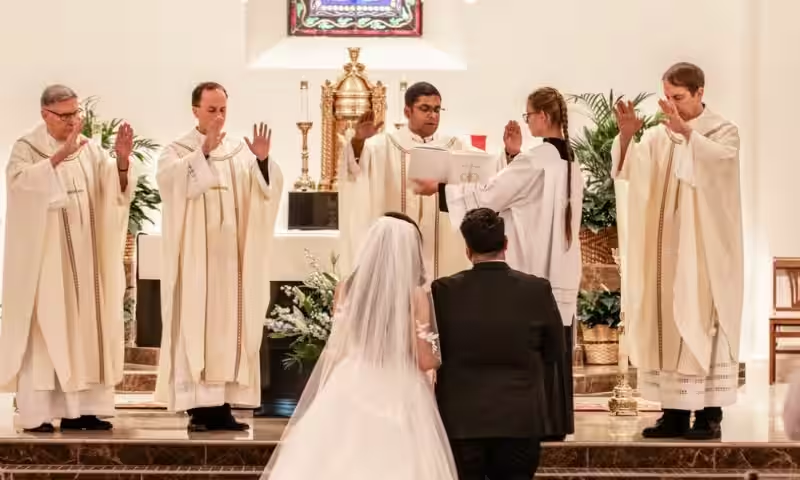
At its core, sacramental marriage is understood within many religious traditions, most prominently Catholicism and Eastern Orthodoxy, as a sacrament. This means it is not merely a human institution but a divine means of grace, a visible sign instituted by Christ that confers God’s blessing and enables the couple to live out their marital vows. It signifies the profound love between Christ and His Church, a metaphor that elevates the marital union to a spiritual plane, demanding a commitment that mirrors Christ’s selfless love.
This sacred dimension imbues sacramental marriage with a unique weight and purpose. It’s a commitment not just to each other, but to God as well. The vows exchanged are not simply promises for the future, but a prayer and an invocation of God’s presence and strength to sustain the union. This understanding requires a deep reliance on faith, recognizing that human effort alone is insufficient to uphold the promises made. It’s about building a life together on the foundation of God’s love, allowing His grace to permeate every aspect of their shared existence.
The Indissoluble Bond: A Commitment for Life
A cornerstone of sacramental marriage is the belief in its indissolubility. This means that a valid sacramental marriage, once entered into, is intended to last for the entirety of the couple’s lives. This isn’t a pessimistic view of commitment, but rather a profound affirmation of its strength and resilience. It acknowledges that challenges will arise, as they do in any human relationship, but it also provides a powerful incentive to work through those difficulties with faith and perseverance.
Think of it like building a house on rock versus sand. A marriage built on a foundation of sacramental marriage is designed to withstand the storms of life. When doubts or conflicts emerge, the understanding that the union is divinely instituted encourages couples to seek reconciliation and spiritual guidance, rather than opting for an easy dissolution. This commitment to permanence fosters a deeper level of trust and security, knowing that they are in this together, with God’s unwavering support.
Preparation for the Sacred Union: Laying the Groundwork for a Lifelong Journey
The seriousness and sacredness of sacramental marriage necessitate thorough preparation. This is not a rushed affair but a period of intentional formation designed to equip couples with the understanding, skills, and spiritual maturity needed to embrace their lifelong commitment. This preparation often involves pre-marital counseling, religious education, and spiritual direction to explore the theological aspects of marriage, communication skills, conflict resolution, and the responsibilities inherent in a faith-centered union.
This preparatory phase is crucial for a number of reasons. It allows couples to discuss their expectations, values, and spiritual beliefs openly and honestly. For example, a couple might discuss their understanding of shared finances, parenting styles, and how their faith will influence their daily lives. It also provides an opportunity to address potential challenges before they arise, fostering a proactive approach to building a strong marital foundation. This investment in preparation is an investment in the future health and happiness of the sacramental marriage itself.
Key Elements of Marriage Preparation: Building a Strong Foundation
Effective preparation typically involves several key components, each contributing to a robust understanding of sacramental marriage. These elements are designed to move beyond romantic notions and delve into the practical and spiritual realities of married life. They include:
Understanding the Theology of Marriage: This involves exploring the religious teachings on marriage as a sacrament, its purpose, and its significance in God’s plan. It’s about grasping that this union is more than a personal choice; it’s a divine calling.
Developing Communication and Conflict Resolution Skills: Learning to communicate effectively, to listen actively, and to resolve disagreements constructively is vital. This includes understanding how to approach conflict with charity and respect, even when emotions run high.
Exploring Shared Values and Goals: Couples should discuss their individual and shared aspirations, their views on family, career, and how they envision their lives unfolding together within their faith tradition.
Spiritual Growth and Prayer: Encouraging a shared spiritual life, including regular prayer, Mass attendance (if applicable), and engagement with religious community, strengthens the couple’s bond with God and with each other.
Financial Planning and Stewardship: Open discussions about finances, budgeting, and responsible stewardship of resources are essential for a stable and harmonious household.
These elements are not just checkboxes to be ticked; they are active practices that build the muscles of commitment and understanding necessary for a thriving sacramental marriage. For instance, a session on conflict resolution might involve role-playing different scenarios, teaching couples specific phrases and strategies to de-escalate tensions and find common ground, rather than resorting to hurtful words or withdrawal.
Living the Sacrament: Nurturing a Faith-Centered Partnership
The celebration of sacramental marriage is a profound moment, but the true essence of the sacrament is lived out in the everyday. It’s in the daily choices, the acts of love, and the shared journey of faith that the sacrament truly flourishes. This involves a conscious effort to integrate God’s presence into the marital relationship, seeking His guidance in decisions, offering forgiveness readily, and celebrating life’s blessings with gratitude.
Living out sacramental marriage means embracing the spiritual discipline of love. It’s about seeing your spouse not just as a partner in life, but as a fellow traveler on the path to salvation. This perspective encourages patience, understanding, and a deep well of compassion, especially during difficult times. It’s recognizing that their spiritual well-being is intertwined with yours, and that supporting each other’s faith journey strengthens the marital bond immeasurably.
The Role of Prayer and Religious Practice in Sustaining the Union
Prayer serves as the lifeblood of sacramental marriage. When couples pray together, they are actively inviting God into their relationship, creating a shared space for divine intervention and grace. This could be as simple as a brief prayer before meals, a shared rosary, or more formal times of prayer and reflection. This practice fosters intimacy not only between the couple but also with God, reinforcing the sacred covenant they have made.
Beyond individual and shared prayer, active participation in religious community is also vital. Attending religious services together, engaging in acts of service, and seeking counsel from spiritual advisors all contribute to a well-nourished sacramental marriage. For example, attending a marriage enrichment retreat within their religious tradition can provide couples with renewed insights and practical tools for navigating the complexities of married life, reinforcing the spiritual dimension of their union and offering a supportive community of fellow believers.
In conclusion, sacramental marriage offers a beautiful and profound model for lifelong commitment rooted in faith and divine love. By understanding its theological significance, dedicating oneself to thorough preparation, and actively living out its principles through prayer and religious practice, couples can build a marriage that is not only enduring but also deeply fulfilling and spiritually enriching. It is a testament to the power of faith to transform relationships and to create a sacred space where love, grace, and commitment can flourish for a lifetime and beyond.
Frequently Asked Questions: Sacramental Marriage
What is sacramental marriage?
Sacramental marriage, in the context of Christianity, is a covenant between a man and a woman, recognized by the Church as a symbol of Christ’s love for His Church. It is seen as an indissoluble union, blessed by God, and intended to be a lifelong commitment.
What are the religious requirements for a sacramental marriage?
The specific requirements can vary slightly between denominations, but generally include:
Both individuals must be baptized Christians.
There must be a mutual and free consent to marry.
The marriage must be recognized by the Church as valid, meaning it adheres to canonical laws and disciplines.
Often, pre-marital counseling or preparation is required.
The marriage ceremony is typically celebrated within a religious service, presided over by a clergy member.
Is sacramental marriage only recognized within the Church?
While sacramental marriage is a theological concept within religious traditions, it is also often legally recognized by civil authorities. However, the religious significance and the specific sacramental nature are distinct from civil marriage.
What does it mean for a marriage to be “indissoluble”?
In the theological understanding of sacramental marriage within many Christian traditions, it is considered an unbreakable bond. This means that, when validly entered into, it cannot be dissolved by divorce. While separation may occur, remarriage without an annulment is generally not permitted.
What is an annulment?
An annulment is a declaration by the Church that a marriage was never sacramentally valid from its inception due to a significant impediment or defect present at the time of the vows. It is not a divorce, which dissolves a valid marriage. An annulment essentially states that a true sacramental marriage never existed.
Can people of different faiths get married sacramentally?
This depends on the specific denomination. Some denominations allow for interfaith marriages under certain conditions, often requiring a dispensation and specific agreements regarding the religious upbringing of children. Others may not permit a sacramental marriage between individuals of different faiths.
What is the role of God in sacramental marriage?
In sacramental marriage, God is seen as the author and witness of the union. He is believed to bestow His grace upon the couple to help them live out their covenant, to love each other faithfully, and to be open to procreation. The couple’s union is a tangible sign of God’s love and commitment.
What is the difference between a sacramental marriage and a civil marriage?
A civil marriage is a legal contract recognized by the state. A sacramental marriage is a religious covenant, undertaken within a faith tradition, with specific theological meanings and requirements. While they can often occur simultaneously, sacramental marriage carries spiritual significance and divine endorsement.