In the tapestry of Catholic devotion, the Rosary shines as a radiant thread, weaving together prayer, meditation, and a profound connection to the life of Jesus Christ. Among the many beautiful expressions of this prayer, the Dominican Rosary holds a special place, offering a structured yet deeply personal approach to encountering the mysteries of our faith. More than just a string of beads, it’s a spiritual journey, a powerful tool for intercession, and a source of immense grace accessible to all who embrace it. This article will delve into the heart of the Dominican Rosary, exploring its origins, its unique structure, and the transformative power it holds for individuals seeking to deepen their relationship with God.
For many, the Rosary can seem like a daunting or repetitive prayer. However, understanding the Dominican approach unlocks its richness. It’s not merely reciting words; it’s a form of contemplative prayer that invites us to walk alongside Mary as she reflects on the pivotal moments in the lives of Jesus and herself. The Dominican Rosary provides a framework that guides this reflection, transforming a simple act of prayer into a deeply meaningful encounter with the divine.
Understanding the Dominican Rosary: Origins and Significance
The Rosary, as we know it today, has deep roots in the Dominican Order. While the practice of praying with beads predates the Order, it was Saint Dominic de Guzman in the 13th century who is widely credited with receiving the Rosary from the Blessed Virgin Mary herself. Legend has it that Mary appeared to him, urging him to preach the Rosary as a remedy against heresy and sin. This divine mandate solidified the Rosary’s importance within Dominican spirituality, making it a cornerstone of their evangelization and devotional life. The emphasis was not just on the prayer itself, but on the meditation of the Mysteries, drawing strength and wisdom from the Gospel narratives.
The Dominican Rosary, therefore, is intrinsically linked to the Order’s mission to preach the truth of the Gospels. Through the repetitive yet meditative prayers, coupled with contemplation of the life of Christ, believers are encouraged to internalize the teachings and example of Jesus. This practice serves as a powerful tool for combating spiritual sloth and fostering a deeper understanding of God’s love and plan for salvation. It’s a method that has been passed down through generations, adapting to different eras yet retaining its core devotional power, a testament to its enduring efficacy.
The Structure of the Dominican Rosary: A Guided Meditation
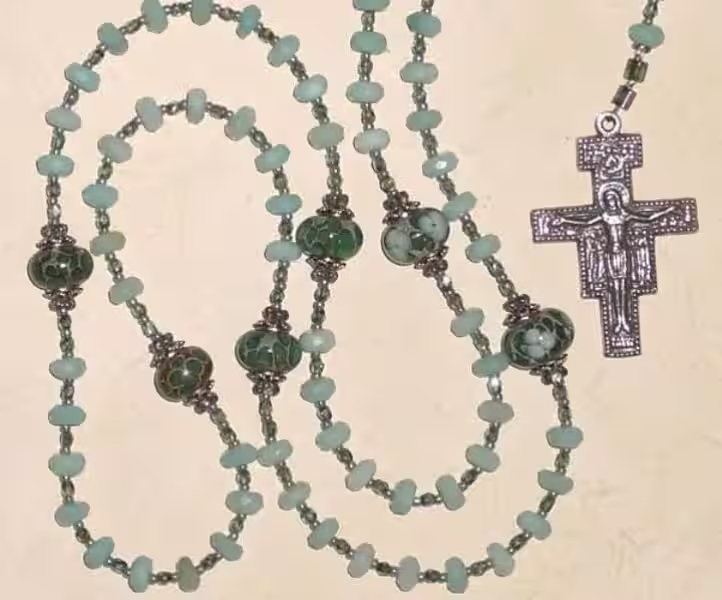
The physical structure of the Rosary, with its beads, is more than just a counting mechanism; it’s a roadmap for meditation. A standard Dominican Rosary consists of 150 small beads, representing the 150 Psalms, divided into decades (groups of ten Hail Marys). These decades are further grouped into three sets of five decades, each set dedicated to a specific set of Mysteries: the Joyful, the Sorrowful, and the Glorious. The addition of the Luminous Mysteries by Pope John Paul II in 2002 expanded this contemplative journey. The specific rhythm of the Rosary, with its alternating Our Fathers, Hail Marys, and Glory Bes, creates a meditative cadence, allowing the mind to focus on the Mysteries being contemplated.
The beauty of the Dominican Rosary lies in its deliberate pace and prescribed structure. Before beginning each decade, a specific Mystery is announced. For instance, during the Joyful Mysteries, one might meditate on the Annunciation. As you pray the Hail Marys, you are encouraged to visualize Mary’s humble acceptance of God’s will, her faith, and her journey of obedience. This intentional focus transforms the repetition into a profound reflection. The prayers serve as anchors, grounding your thoughts as you delve into the spiritual significance of each event in salvation history. This methodical approach ensures that the prayer doesn’t become rote, but rather a vibrant, living engagement with scripture.
The Mysteries of the Rosary: Unfolding Salvation History
The heart of the Dominican Rosary lies in its contemplation of the Mysteries. These are not arbitrary events but pivotal moments in the life of Jesus and Mary that reveal God’s salvific plan for humanity. The Joyful Mysteries, traditionally prayed on Mondays and Saturdays, focus on the early life of Jesus and Mary: the Annunciation, the Visitation, the Nativity, the Presentation in the Temple, and the Finding of Jesus in the Temple. These events offer insights into humility, love, poverty, obedience, and joy.
The Sorrowful Mysteries, prayed on Tuesdays and Fridays, delve into the Passion and death of Christ: the Agony in the Garden, the Scourging at the Pillar, the Crowning with Thorns, the Carrying of the Cross, and the Crucifixion. These Mysteries call us to repentance, solidarity with Christ’s suffering, and profound gratitude for His sacrifice. The Glorious Mysteries, prayed on Wednesdays and Sundays, celebrate the Resurrection and the events that followed: the Resurrection, the Ascension, the Descent of the Holy Spirit, the Assumption of Mary, and the Coronation of Mary. These offer us hope, faith, and the promise of eternal life. The Luminous Mysteries, introduced by Pope John Paul II and prayed on Thursdays, illuminate the public ministry of Jesus, highlighting His Baptism, the Wedding at Cana, the Proclamation of the Kingdom, the Transfiguration, and the Institution of the Eucharist, showcasing Jesus’ divine mission and love.
Praying the Dominican Rosary: A Practical Guide for a Deeper Connection
Embarking on the journey of the Dominican Rosary is simpler than it might seem. Begin with the Sign of the Cross and the Apostles’ Creed. Then, pray the Our Father, followed by three Hail Marys (for an increase in faith, hope, and charity), and a Glory Be. Announce the first Mystery of the chosen set. As you pray the ten Hail Marys for that Mystery, allow your mind to engage with its spiritual meaning. Picture the scene, feel the emotions, and reflect on how it applies to your own life. After the decade, pray another Glory Be and the Fatima Prayer (“O my Jesus, forgive us our sins…”). Proceed through each decade, announcing and meditating on the subsequent Mysteries.
It’s important to remember that perfection is not the goal; sincere intention and a willing heart are. If your mind wanders, gently bring it back to the Mystery. Don’t be discouraged by distractions; they are a normal part of prayer. Consider making the Rosary a communal prayer. Praying with family or friends can add another layer of grace and support. Many find it helpful to use a Rosary guide or app, especially when starting. The key is to approach the Dominican Rosary with a spirit of openness and a desire to encounter Jesus and Mary more deeply. It’s a journey of faith that unfolds one bead, one Mystery, at a time, drawing youcloser to the heart of God with each prayer.
Finding Peace and Strength Through the Dominican Rosary
In a world often filled with noise and anxiety, the Dominican Rosary offers a sanctuary of peace. The repetitive prayers, when approached with a contemplative heart, can quiet the mind and bring solace. It’s a powerful form of intercessory prayer, allowing us to bring our petitions, our worries, and our thanks to God through the intercession of Mary. Many have testified to experiencing profound peace, clarity, and even miraculous interventions through this devotion. The consistent rhythm can be incredibly calming, like a gentle tide washing away inner turmoil.
Beyond personal peace, the Dominican Rosary fosters a stronger connection to the universal Church. By praying the Rosary, we join a vast community of believers across time and space, all united in their love for Christ and His Mother. It’s a tangible reminder that we are not alone in our struggles or our joys. It equips us with spiritual armor, fortifying us against the temptations of the world and drawing us into a deeper, more intimate relationship with the divine. The Dominican Rosary is not just a prayer; it’s a way of life, a spiritual discipline that promises profound transformation for those who embrace its gentle power.
Frequently Asked Questions about the Dominican Rosary
What is the Dominican Rosary?
The Dominican Rosary is a specific form of the Rosary prayer that emphasizes the role of Saint Dominic and the Dominican Order in its promotion and tradition. It is characterized by a particular way of praying the Rosary, often involving a sermon or reflection on the mysteries of Christ’s life.
How is the Dominican Rosary different from other forms of the Rosary?
While the core prayers (Our Father, Hail Mary, Glory Be) and the structure of meditating on the mysteries are the same, the Dominican Rosary traditionally includes a brief reflection or sermon on each mystery. It also strongly emphasizes the intercession of the Blessed Virgin Mary and the power of praying the Rosary for the salvation of souls and the Church. The Dominican Rosary is often prayed in community, with a leader guiding the prayers and reflections.
The mysteries are events from the lives of Jesus and Mary that are meditated upon while praying the Rosary. They are divided into four sets: the Joyful Mysteries, the Luminous Mysteries, the Sorrowful Mysteries, and the Glorious Mysteries. Each set focuses on a specific period and theme in salvation history.
What is the purpose of praying the Rosary?
The Rosary is a contemplative prayer that helps Catholics meditate on the life of Jesus Christ through the eyes of His mother, Mary. It is a powerful tool for spiritual growth, a means of asking for God’s grace and intercession through Mary, and an act of devotion to the Blessed Mother.
Is the Rosary a form of prayer unique to the Catholic Church?
Yes, the Rosary is a distinct prayer practice within the Catholic Church. While other Christian denominations may pray using beads or meditate on the life of Christ, the specific structure, prayers, and theological underpinnings of the Rosary are central to Catholic tradition and devotion.
What is the religious significance of the Rosary?
The Rosary holds profound religious significance in Catholicism. It is seen as a powerful intercessory prayer, a way to deepen one’s relationship with Jesus through Mary, and a spiritual weapon against evil. The repetition of prayers is not considered rote but a means of entering into a deeper meditative state and allowing the words to sink into the heart.
Can non-Catholics pray the Rosary?
While the Rosary is a Catholic prayer, anyone can pray it. However, understanding its context within Catholic theology and belief is important for a full appreciation of its meaning.
What is the role of Mary in the Rosary?
In the Rosary, Mary is honored as the Mother of God and the Mother of the Church. Praying the Hail Mary is a way of asking her to intercede for us with her Son, Jesus. Catholics believe that Mary, through her closeness to Jesus, can powerfully advocate for those who pray the Rosary.