In the tapestry of human devotion, there are places that resonate with a palpable sense of the sacred, spaces where the veil between the earthly and the divine feels thinner. These are the sanctuaries, the temples, the churches – and in many cultures, the vibrant and deeply meaningful Casa de los Santos. More than just buildings, these sacred homes are living embodiments of faith, community, and the enduring human quest for connection with something greater than ourselves. They are places where stories are told, where prayers are whispered, and where the collective spirit of a people finds its most profound expression.
The concept of a Casa de los Santos transcends a single denomination or tradition. It speaks to the universal human need to dedicate a space to the holy, to honor the divine, and to foster a sense of belonging. Whether it’s a grand cathedral with soaring arches, a humble village chapel adorned with local artistry, or a personal altar meticulously arranged in a home, the essence remains the same: a dedicated space for religious practice and spiritual reflection. Understanding the significance of a Casa de los Santos offers a window into the heart of religious life and the ways in which faith shapes communities and individual lives.
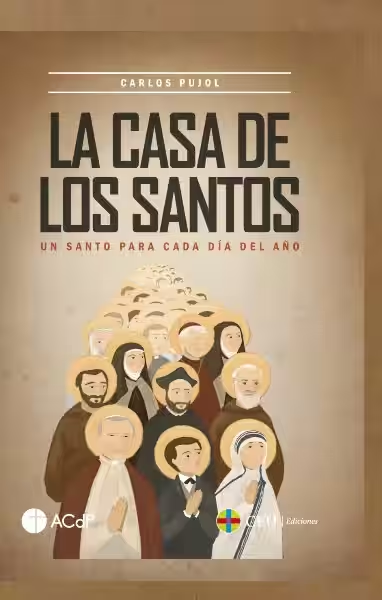
The term “Casa de los Santos” literally translates to “House of Saints.” This appellation is particularly resonant in cultures where the veneration of saints plays a significant role in religious practice. These individuals, recognized for their exemplary lives of faith, virtue, and often miraculous intercession, are seen as powerful intermediaries between humanity and the divine. A Casa de los Santos, therefore, is not just a house for God, but also a house that honors and celebrates the lives and spiritual legacies of these revered figures.
In practice, a Casa de los Santos can manifest in a multitude of ways. It might be a dedicated church or basilica where relics of saints are housed, drawing pilgrims seeking blessings and solace. It could also refer to a shrine within a larger religious complex, or even a devoted home where a family maintains a special space for prayer and devotion to specific patron saints. Regardless of its scale, the underlying principle is the same: to create an environment conducive to spiritual connection and to honor the saints who serve as exemplars of faith. This focus on saints provides a relatable human element to the vastness of the divine, making faith more accessible and personal for many.
The Role of Saints in Religious Life
The veneration of saints is a cornerstone of many religious traditions, particularly within Catholicism and Orthodox Christianity, but echoes can be found in other faiths as well through the reverence of prophets, spiritual masters, or enlightened beings. Saints are not worshipped in the same way as God, but rather honored as individuals who lived lives of extraordinary holiness and have a special connection to the divine. They are seen as intercessors, capable of bringing prayers and petitions before God on behalf of believers.
For many, Saints offer a tangible link to the spiritual realm. Consider the patron saint of a profession, a city, or even a personal need. A carpenter might pray to Saint Joseph, a traveler to Saint Christopher, or someone seeking comfort to a specific Marian devotion. The stories of their lives – their struggles, their triumphs, their unwavering faith – provide inspiration and a sense of solidarity. A Casa de los Santos often serves as a focal point for these devotions, housing images, statues, and even relics that serve as physical reminders of these holy individuals and their enduring spiritual presence.
Building a Sacred Atmosphere in the Casa de los Santos
Creating the right atmosphere is crucial for any Casa de los Santos, whether it’s a public place of worship or a private devotional space. This involves more than just architectural design; it encompasses sensory elements, symbolic representations, and a palpable sense of reverence. The goal is to foster an environment that encourages introspection, prayer, and a deep connection with the divine and the saints being honored.
The visual elements within a Casa de los Santos are often rich with symbolism. Iconography, the use of religious images and statues, plays a vital role. These depictions are not merely decorative; they are mnemonic devices, reminders of the saints’ lives, virtues, and their celestial role. The presence of candles, representing the light of faith and the prayers offered, is also a common and powerful feature. Incense, with its aromatic and purifying qualities, further enhances the sensory experience, often associated with the ascent of prayers to heaven.
Elements of Devotion and Ritual
Within the Casa de los Santos, rituals and devotional practices are the lifeblood that animates the sacred space. These acts of worship and remembrance are what transform a physical structure into a vibrant center of religious life. They provide structure to prayer, facilitate communal worship, and deepen individual faith.
Common practices found in a Casa de los Santos might include:
Prayer and Meditation: Dedicated times for personal and communal prayer, often focusing on the intercession of specific saints.
Liturgical Celebrations: Worship services, masses, or other religious ceremonies that honor God and commemorate the lives of saints.
Veneration of Relics and Images: Showing respect and devotion to objects associated with saints, such as their bones, clothing, or personal belongings.
Pilgrimages: Journeys undertaken to a Casa de los Santos, often to a shrine of a particular saint, seeking spiritual graces or fulfilling vows.
Feast Day Celebrations: Special observances and festivities held on the feast days of various saints, often involving processions and community gatherings.
These rituals, performed consistently, imbue the Casa de los Santos with a sense of continuity and sacred history, connecting present-day believers to generations who have worshipped in the same hallowed ground.
The Casa de los Santos as a Community Hub
Beyond its spiritual significance, a Casa de los Santos often serves as a vital community hub, a place where people gather not only for worship but also for social connection, mutual support, and shared purpose. In many cultures, these sacred spaces are woven into the very fabric of daily life, acting as anchors for local identity and cohesion.
Think about the local church in a small town. It’s where baptisms, weddings, and funerals are celebrated, marking the significant milestones of life. It’s where neighbors come together for Lenten suppers, bake sales, or volunteer efforts. This sense of shared experience and responsibility strengthens the bonds between individuals and fosters a collective ownership of the Casa de los Santos. It becomes more than just a building; it becomes a home for the entire community, a place where faith is lived out in tangible, everyday ways.
Faith in Action: Community Impact
The influence of a Casa de los Santos extends far beyond its walls, inspiring acts of charity, social justice, and spiritual guidance. The teachings and examples of the saints often motivate believers to engage with the world in meaningful ways, striving to embody the virtues they represent.
For instance, a Casa de los Santos dedicated to a saint known for their compassion might inspire the establishment of a soup kitchen or a charity organization. The spirit of service, rooted in religious conviction, can lead to tangible improvements in the lives of the less fortunate. Furthermore, these sacred spaces provide a moral compass and a source of strength for individuals navigating life’s challenges. The shared faith nurtured within a Casa de los Santos empowers people to face adversity with hope and resilience, knowing they are part of a supportive spiritual family.
Finding Your Own Casa de los Santos
Whether you are deeply religious or simply curious about the profound impact of sacred spaces, understanding the concept of a Casa de los Santos can enrich your perspective. It’s a reminder that faith is often expressed through dedicated spaces, communal rituals, and the enduring inspiration of those who have walked the path of holiness before us.
Your own Casa de los Santos might not be a grand cathedral or a revered shrine. It could be the quiet corner of your home where you light a candle and offer a prayer, a local church you visit for solace, or even a moment of deep reflection during a quiet walk in nature where you feel a connection to something divine. The essential element is the dedication of a space, however small or grand, for spiritual connection and the cultivation of faith. By recognizing and honoring these sacred spaces, we can better appreciate the rich tapestry of religious life and the universal human longing for the sacred.
Frequently Asked Questions: Casa de los Santos and Religion
What is Casa de los Santos?
Casa de los Santos is a spiritual community and center dedicated to the exploration and practice of various religious and spiritual traditions. It serves as a place for learning, fellowship, and personal growth within a framework of diverse beliefs.
What religions or spiritual paths are practiced at Casa de los Santos?
Casa de los Santos embraces a wide spectrum of religious and spiritual paths. This includes, but is not limited to, indigenous spiritual traditions, esoteric Christianity, Eastern mysticism, and contemporary spiritual philosophies. The focus is on shared values of love, compassion, and the pursuit of spiritual understanding.
Is Casa de los Santos affiliated with a specific denomination?
No, Casa de los Santos is not affiliated with any single religious denomination. It is an interfaith and transdenominational center that welcomes individuals from all religious backgrounds and those who are spiritual but not religious.
What kind of religious services or events are held at Casa de los Santos?
Casa de los Santos hosts a variety of events, including meditation sessions, prayer circles, workshops on spiritual topics, lectures by guest speakers, and ceremonies that honor different traditions. The specific offerings vary and are typically announced in advance.
How can I learn more about the religious or spiritual practices at Casa de los Santos?
The best way to learn more is to visit the Casa de los Santos center, attend an introductory event, or explore their official website and social media platforms. They often provide detailed information about their philosophy, upcoming events, and ways to get involved.
Can people of all faiths attend events at Casa de los Santos?
Yes, absolutely. Casa de los Santos is a welcoming space for people of all faiths, beliefs, and backgrounds. The emphasis is on inclusivity and fostering an environment of mutual respect and understanding.
What is the core philosophy or belief system of Casa de los Santos?
While diverse in expression, the core philosophy of Casa de los Santos generally revolves around the inherent divinity within all beings, the interconnectedness of all life, and the importance of living a life guided by love, wisdom, and service.