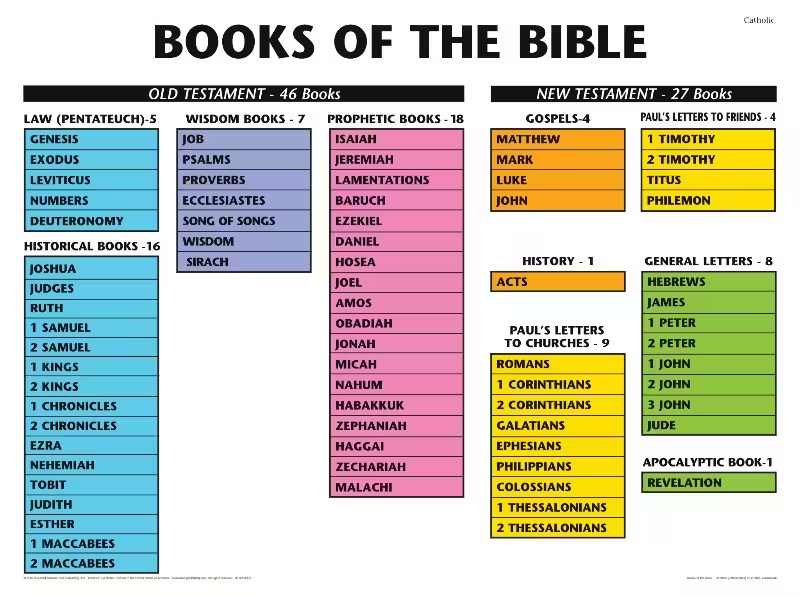
Religion, in its myriad forms, often centers around specific acts of devotion and the presentation of offerings as a tangible expression of faith. Among these, the concept of a “canon offering” holds a place of profound significance for many traditions. It’s not merely about giving; it’s about understanding what constitutes a sacred gift, a proper tribute, and how this act connects the individual to the divine. To truly grasp the depth of religious practice, delving into the meaning and application of the canon offering is essential.
This article will explore the multifaceted nature of the canon offering, examining its historical roots, its varied manifestations across different faiths, and its enduring relevance in contemporary religious life. We’ll uncover how this practice shapes communal identity, reinforces spiritual discipline, and ultimately, deepens the believer’s relationship with their chosen deity or spiritual principle. This isn’t just about dusty rituals; it’s about living faith in a meaningful and impactful way.
Defining the Canon Offering: More Than Just a Gift
At its core, the term “canon offering” refers to gifts or sacrifices that adhere to a prescribed standard or established rule within a religious system. It signifies an offering that is acceptable, legitimate, and in accordance with divine or ecclesiastical law. Think of it as the “official” or “right” way to give, a standard set by tradition, scripture, or religious authority. This isn’t about arbitrary generosity; it’s about intentionality and adherence to a sacred framework.
The concept of a canon offering implies a set of guidelines, often detailed and specific, dictating what can be offered, how it should be prepared, and when it should be presented. This might involve specific types of animals, grains, precious metals, or even acts of service. For instance, in ancient Israelite traditions, the burnt offering had very precise specifications regarding the animal’s purity – it had to be without blemish. Similarly, in many pagan traditions, the quality and perfection of the sacrifice were paramount to ensure its efficacy. This adherence to a canon isn’t about legalism for its own sake, but rather a profound recognition that certain offerings are inherently more pleasing or appropriate to the divine.
Historical Roots and Scriptural Basis
The idea of a canon offering is deeply embedded in the historical development of religious practices. Ancient civilizations, from Mesopotamia to Egypt, had elaborate systems for presenting offerings to their gods, often governed by priestly castes and sacred texts. These early forms laid the groundwork for later, more codified religious systems. The Judaic tradition, for example, offers a rich tapestry of examples where the Temple offerings were meticulously defined in the Torah. These were not spontaneous acts but divinely ordained rituals with specific requirements for both the offerer and the offering itself.
The scriptures of various religions often serve as the primary source for defining what constitutes a canon offering. These texts provide the divine mandate, outlining the acceptable forms of worship and sacrifice. In Christianity, while the emphasis shifts from animal sacrifice to spiritual offerings and acts of charity, the concept of a worthy or acceptable offering remains. The Apostle Paul, in his letter to the Romans, urges believers to present their bodies as a living sacrifice, holy and acceptable to God, which is a spiritual interpretation of the canon offering. This highlights how the underlying principle of a valuable and appropriate tribute transcends the literal.
Distinguishing the Canon Offering from Other Forms of Giving
It’s crucial to understand that a canon offering is distinct from general acts of generosity or personal devotion. While all forms of giving can be spiritually significant, the canon offering carries a specific weight of ordinance and acceptability. A spontaneous act of kindness, while commendable, might not fit the specific requirements of a canon offering. For example, offering a bruised or imperfect animal to a deity would likely be rejected within a canon system, even if the giver had good intentions. The divine standard is paramount.
Furthermore, the canon offering often involves a degree of sacrifice and intentionality that goes beyond mere distribution of surplus. It requires a deliberate selection of what is valuable and appropriate, often involving a cost or relinquishment on the part of the giver. This could be the best produce from one’s harvest, the firstborn of an animal, or a significant portion of one’s wealth. The element of chosenness and dedication is a hallmark of the canon offering, setting it apart from casual donations.
Manifestations of the Canon Offering Across Religions
The concept of a canon offering, though universal in its underlying sentiment of reverence and tribute, manifests in diverse ways across the world’s religious traditions. These variations reflect the unique theological understandings, cultural contexts, and historical trajectories of each faith. Understanding these differences enriches our appreciation for the breadth of human spiritual expression.
The specific items and actions deemed acceptable within a canon offering are deeply intertwined with the religious cosmology and values of a given tradition. What is considered a precious gift in one faith might be irrelevant in another. This exploration will highlight some prominent examples, illustrating the adaptability and enduring power of this sacred practice. The diversity of expression is a testament to the human need to connect with the divine through tangible means.
Judaism: The Temple and Beyond
In ancient Judaism, the Temple in Jerusalem was the central locus for canon offerings. The Torah provides intricate details about various sacrifices, each with a specific purpose and prescribed method. These included burnt offerings (olah) for atonement and devotion, grain offerings (minchah) for thanksgiving, and peace offerings (shelamim) for fellowship. The purity of the animal, the precise measurements of grain, and the correct rituals performed by the priests were all part of the canon.
Even after the destruction of the Second Temple, the spirit of the canon offering continued in modified forms. The practice of tzedakah (charity), often interpreted as a form of spiritual offering, became central. Furthermore, prayers are considered by many to be a spiritual sacrifice, a worthy offering to God in the absence of the physical Temple. The concept of giving one’s best in all aspects of life, including study and ethical conduct, can be seen as an evolution of the canon offering, emphasizing inner transformation as a form of acceptable tribute.
Christianity: Spiritual Sacrifices and Acts of Love
While Christianity moved away from literal animal sacrifices, the concept of a canon offering persists in a more spiritualized form. The New Testament emphasizes that believers are to offer themselves as “living sacrifices, holy and acceptable to God,” which is their “reasonable service” (Romans 12:1). This means dedicating one’s life, actions, and resources to God’s will. This spiritual offering is considered the ultimate acceptable gift.
Furthermore, acts of charity and generosity towards the poor and needy are often viewed as a direct expression of Christ’s teachings and a form of canon offering in contemporary Christianity. The tithe, a traditional practice of giving a tenth of one’s income, is still observed by many denominations as a way to support the church and its ministries, representing a structured and acceptable offering for the upkeep of the religious community. The quality of intention and the spirit of sacrifice are paramount in these offerings.
Islam: Zakat and Sadaqah
In Islam, the “canon offering” finds its most prominent expression in Zakat, one of the Five Pillars of Islam. Zakat is a compulsory charity, a defined portion (typically 2.5%) of a Muslim’s wealth that is distributed to specific categories of needy people. It is not merely an act of generosity but a divinely mandated obligation, ensuring that wealth circulates within the community and alleviates poverty. This makes it a quintessential canon offering.
Beyond Zakat, Islam also encourages Sadaqah, which are voluntary acts of charity. While Sadaqah is not compulsory, the intention behind it is highly valued, and it is considered a means of drawing closer to Allah. Even a kind word or a smile can be considered Sadaqah. The emphasis in both Zakat and Sadaqah is on giving from what one loves and making a positive impact, fulfilling the spirit of a worthy and acceptable offering.
The Enduring Significance of the Canon Offering
In our modern world, the concept of a canon offering might seem archaic to some. However, its underlying principles of devotion, discipline, and communal responsibility remain profoundly relevant. Whether it’s a monetary contribution to a religious institution, a dedicated act of service, or a commitment to living according to spiritual principles, the canon offering continues to be a powerful way for individuals to express their faith and deepen their connection to the divine.
The canon offering, in its various forms, serves as a vital mechanism for reinforcing religious identity and fostering communal cohesion. When individuals participate in a shared practice of giving, they are not only fulfilling a religious duty but also strengthening their bonds with fellow believers who share the same spiritual aspirations. This sense of collective devotion is a cornerstone of many religious communities.
Personal Transformation and Spiritual Growth
Beyond its communal implications, the act of making a canon offering often leads to significant personal transformation and spiritual growth. The discipline required to set aside resources or dedicate time for such offerings cultivates virtues like generosity, selflessness, and gratitude. It prompts individuals to reflect on their priorities and to acknowledge their dependence on a higher power or spiritual principle. This intentional relinquishment can be a profound catalyst for inner change.
For example, a person who consistently tithes a portion of their income, even when facing financial challenges, is actively practicing faith over fear and developing a deeper trust in divine providence. This act, while appearing as a financial transaction, is a powerful statement of their spiritual commitment. The challenge of giving often leads to the greatest rewards in terms of spiritual maturity.
The canon offering plays a crucial role in the sustainability and functioning of religious communities. Whether it’s funding essential services, supporting clergy, or maintaining sacred spaces, these offerings provide the material basis for the community’s existence and its ability to carry out its mission. This tangible support ensures that the religious tradition can continue to thrive and serve its adherents.
Moreover, the act of giving collectively for a common purpose can foster a strong sense of shared purpose and mutual responsibility among members. It creates an environment where individuals feel invested in the well-being of the community and are motivated to contribute to its collective flourishing. This synergy of giving strengthens the fabric of religious life for everyone involved.
In conclusion, the canon offering, in its diverse interpretations and applications, remains a cornerstone of religious practice across the globe. It is a testament to the enduring human desire to connect with the sacred through acts of devotion and sacrifice, shaping both individual lives and the collective spiritual landscape. Understanding this practice offers a profound insight into the heart of religious devotion.
Frequently Asked Questions about Canon Offerings and Religion
What is a canon offering?
A canon offering, in a religious context, typically refers to a tithe or a portion of one’s income or possessions given to a religious institution as an act of devotion, support, or obedience to religious law. The specific nature, percentage, and purpose of canon offerings can vary significantly between different religions and denominations.
How is religion defined?
Religion is a complex and multifaceted phenomenon that can be defined in various ways. Generally, it involves a set of beliefs, practices, and rituals relating to the sacred or divine, moral codes, and a worldview that provides meaning and purpose to life. Religions often involve organized systems of worship, communal practices, and a moral framework that guides behavior.
What are some common elements found in religious practices?
Common elements in religious practices include prayer, meditation, scripture reading, rituals, ceremonies, pilgrimage, fasting, almsgiving, and communal worship. These practices often serve to connect individuals with the divine, foster a sense of community, and reinforce religious teachings and values.
How do religions address the concept of sin or wrongdoing?
Most religions have concepts that address actions or thoughts considered contrary to divine will or moral law, often referred to as sin, transgression, or wrongdoing. Religions typically offer frameworks for understanding the nature of these acts, their consequences, and pathways to atonement, forgiveness, or spiritual purification, which can involve repentance, confession, penance, or seeking divine mercy.
What is the role of sacred texts in religion?
Sacred texts, such as the Bible, the Quran, the Torah, the Vedas, or Buddhist sutras, are central to many religions. They are often considered divinely inspired or authoritative sources of knowledge, doctrine, history, and guidance. These texts are studied, interpreted, and applied to shape beliefs, practices, and ethical systems within a religious tradition.