In the intricate tapestry of human existence, two fundamental forces often intertwine: our spiritual beliefs and our financial realities. For many, the concept of an “economy bible” isn’t a literal book, but rather a guiding set of principles, often rooted in religious teachings, that informs how we approach wealth, work, and generosity. These principles, whether explicit or implicit, shape our economic decisions, impacting not just our personal well-being but also the broader societal landscape. Understanding the “economy bible” within the context of religion offers a profound lens through which to examine our stewardship of resources and our pursuit of a meaningful life.
This exploration delves into how various faith traditions have historically and continue to offer frameworks for economic understanding. We’ll uncover the timeless wisdom embedded in these teachings, revealing how they can help us navigate the complexities of modern finance, foster ethical business practices, and cultivate a sense of abundance that extends beyond mere monetary wealth. The “economy bible” is not about dogma; it’s about practical wisdom for living a life of purpose and prosperity.
Ancient Roots: Religious Foundations of Economic Thought
From the earliest civilizations, religious narratives and sacred texts have provided moral and practical guidance on matters of commerce, labor, and wealth distribution. These foundational texts often served as the original “economy bible” for communities, establishing norms and values that shaped economic interactions for generations. The emphasis was rarely on individual accumulation for its own sake, but rather on communal well-being, social justice, and responsible stewardship of God-given resources.
Consider the emphasis on charity and care for the poor found in many religious traditions. This wasn’t just a suggestion; it was often a divine mandate, woven into the very fabric of societal expectation. For example, the concept of tithing in Judeo-Christian traditions, giving a tenth of one’s income, served as a built-in mechanism for supporting the vulnerable and maintaining religious institutions. Similarly, Islamic principles of Zakat, a mandatory charitable contribution, underscore the idea that wealth is a trust from God, to be shared with those less fortunate. These practices provided an early, albeit religiously framed, form of social safety net and wealth redistribution, demonstrating a deep-seated understanding of the interconnectedness of economic health and spiritual integrity.
The Ten Commandments of Financial Stewardship
While not explicitly a financial document, the foundational ethical codes found in religious texts offer powerful insights into responsible economic behavior. These are the unwritten, or sometimes written, tenets that guide our financial lives, acting as a sort of “economy bible” for the conscientious individual. These commandments often address issues of honesty, fairness, and the avoidance of destructive economic practices.
Think about the commandment against thievery. This extends beyond outright theft to encompass deceptive business practices, exploitative labor, and the misrepresentation of goods or services. Upholding this principle in our economic dealings means striving for transparency and integrity in all transactions. Similarly, the prohibition against coveting speaks to the dangers of unchecked desire and the potential for greed to drive unethical financial decisions. The “economy bible” within this context encourages contentment and a focus on what is truly valuable, rather than an incessant pursuit of more.
Many religious traditions employ parables – simple stories with profound moral or spiritual lessons – to illustrate complex economic principles. These narratives often highlight the virtues of hard work, prudence, and generosity, while cautioning against the pitfalls of laziness, extravagance, and indifference to suffering. Jesus’ Parable of the Talents, for instance, emphasizes the importance of using one’s gifts and resources wisely, rewarding those who invest and multiply what they’ve been given, while penalizing the one who buries his talent out of fear. This story serves as a powerful illustration from the “economy bible” of the value of proactive stewardship.
Another example can be found in the concept of the Sabbath year in ancient Israel, a period of rest and debt forgiveness. This practice, embedded in religious law, recognized the need for periodic economic reset, preventing perpetual indebtedness and fostering a more equitable society. It was a radical concept for its time, demonstrating a nuanced understanding of economic cycles and the importance of social safety nets woven into the very fabric of religious observance. These parables and practices offer practical wisdom that transcends their historical context, providing enduring lessons for managing our own financial lives.
Modern Interpretations: The “Economy Bible” in Contemporary Faith
In today’s rapidly evolving global economy, the principles embedded in the “economy bible” of various religions continue to offer relevant guidance. While the specific practices may adapt, the core values of ethical conduct, social responsibility, and compassionate stewardship remain central to how many individuals and communities interpret their faith’s economic teachings. The challenge lies in translating ancient wisdom into actionable strategies for navigating the complexities of modern finance and commerce.
Many faith-based organizations and denominations actively engage with contemporary economic issues, offering resources and guidance that can be considered extensions of their “economy bible.” This includes promoting ethical investing, supporting fair trade practices, advocating for poverty reduction, and encouraging responsible consumerism. These initiatives demonstrate a commitment to living out their faith in the marketplace, recognizing that economic activity is not separate from spiritual life, but an integral part of it.
Faith-Driven Investing and Ethical Consumption
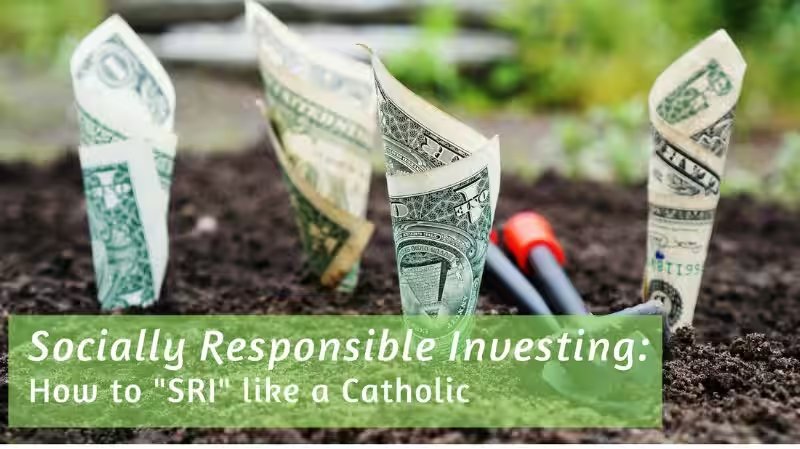
The modern “economy bible” often includes a mandate for conscious capitalism and faith-driven investing. This means aligning financial decisions with one’s ethical and spiritual values. Instead of simply chasing the highest returns, individuals and institutions are increasingly seeking investments that support companies with strong environmental, social, and governance (ESG) practices. This approach recognizes that our money can be a force for good, contributing to a more just and sustainable world.
Consider the principles of avoiding usury found in some religious traditions. While the interpretation of usury has evolved, the underlying concern about exploitative lending practices remains highly relevant. Today, this translates into supporting microfinance initiatives, advocating for reasonable interest rates, and being wary of predatory financial products. The “economy bible” in this context encourages us to be discerning consumers and investors, ensuring our financial activities reflect our moral compass.
Generosity as a Cornerstone of Economic Well-being
A recurring theme in the “economy bible” of virtually every major religion is the virtue of generosity. This goes beyond simple charity; it’s about cultivating a mindset of abundance and recognizing that true wealth lies not just in what we possess, but in what we are willing to share. This principle fosters a sense of interdependence and community, reminding us that our economic well-being is inextricably linked to the well-being of others.
Think about the concept of sowing and reaping. Many religious texts suggest that acts of generosity are not merely altruistic, but often lead to spiritual and even material blessings. This isn’t a transactional theology, but rather an understanding that a generous spirit cultivates an environment of mutual support and flourishing. The “economy bible” encourages us to view our resources as tools that can be used to uplift others, thereby enriching our own lives and the communities we inhabit.
Practical Application: Living the “Economy Bible” Today
The wisdom contained within the “economy bible” of religious traditions is not meant to be confined to theological discussions or ancient texts. It offers a practical roadmap for navigating the challenges and opportunities of our financial lives today. By embracing these principles, we can cultivate a more balanced, ethical, and fulfilling relationship with money and work.
The journey of living out the “economy bible” is a continuous process of learning, reflection, and action. It requires us to critically examine our own financial habits, to be open to the teachings of our faith, and to actively seek ways to integrate our spiritual values into our economic decisions.
Budgeting with Biblical Principles
Applying the “economy bible” to personal finance starts with intentional budgeting. This involves more than just tracking expenses; it means approaching our finances with a sense of stewardship and gratitude. Many religious traditions emphasize living within our means, avoiding excessive debt, and prioritizing needs over wants. Creating a budget that reflects these values can be a powerful act of faith, demonstrating our commitment to responsible management of the resources entrusted to us.
For example, dedicating a portion of your income to generosity should be a line item, treated with the same importance as essential expenses. The “economy bible” encourages us to be proactive in our giving, rather than reactive, making it a consistent and integral part of our financial plan. This intentionality transforms budgeting from a restrictive chore into an empowering practice of faith-driven resource allocation.
Building a Business with Integrity
For those involved in business, the “economy bible” offers a compelling framework for ethical entrepreneurship. This means prioritizing fair treatment of employees, engaging in honest advertising, and conducting business with integrity and transparency. The pursuit of profit should never come at the expense of human dignity or environmental well-being.
Consider the principle of fair wages. Many religious teachings advocate for workers to be compensated justly for their labor. This extends to creating safe working conditions and fostering a respectful workplace culture. Businesses that operate with these principles at their core not only contribute to a more just economy but often find that long-term success and customer loyalty are the natural outcomes of their ethical approach, proving that the “economy bible” offers a path to sustainable prosperity.
Cultivating a Generous Heart and Mindset
Ultimately, living the “economy bible” is about cultivating a generous heart and an abundant mindset. It’s about recognizing that true wealth is multifaceted, encompassing not only financial security but also strong relationships, personal fulfillment, and the ability to contribute positively to the world. This perspective shifts the focus from scarcity to abundance, from hoarding to sharing, and from self-interest to collective flourishing.
Embracing this mindset requires a conscious effort to practice gratitude for what we have, to share our resources willingly, and to trust in a power greater than ourselves to provide for our needs. When we live by the principles of the “economy bible,” we discover that generosity is not a sacrifice, but an investment that yields immeasurable returns, enriching our lives and the lives of those around us.
Frequently Asked Questions
What is the “economy Bible”?
The term “economy Bible” is not a recognized or official religious text. It is likely a colloquialism or a misunderstanding. If you are referring to a specific book or concept, please provide more details.
Does the Bible discuss economic principles?
Yes, the Bible contains numerous passages that address economic principles, such as fairness in business, stewardship of resources, the dangers of greed, generosity, and the importance of honest work. These passages offer moral and ethical guidance rather than a systematic economic theory.
Are there specific religious teachings about wealth and poverty?
Many religions, including Christianity, Judaism, and Islam, have teachings concerning wealth and poverty. These often emphasize compassion for the poor, the responsibility of the wealthy to share, and the potential spiritual dangers of excessive materialism. They also often promote principles of justice and equitable distribution of resources.
How does religion influence economic decisions?
Religious beliefs can significantly influence economic decisions by shaping an individual’s or a community’s values, ethics, and priorities. This can manifest in charitable giving, ethical business practices, attitudes towards work, and perspectives on wealth accumulation and distribution.
Can religious texts be used as a guide for modern economic policy?
While religious texts offer moral and ethical frameworks that can inform economic policy, they are generally not intended as literal blueprints for modern economic systems. Their principles can inspire policies focused on social welfare, justice, and ethical conduct, but they often require interpretation and adaptation to contemporary contexts.