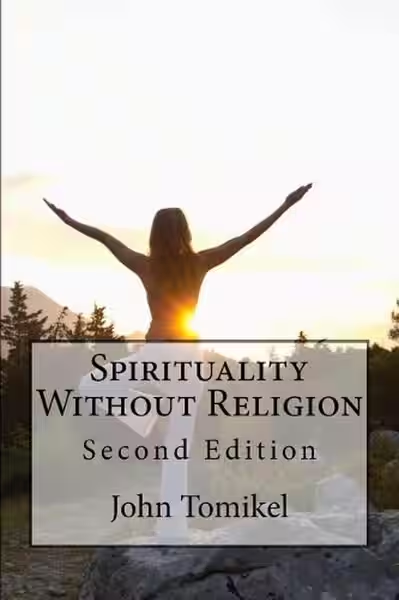
In a world often defined by its structures and doctrines, the whisper of spirituality can feel like a forgotten language. We’re bombarded with images of organized religion, with its rituals, scriptures, and established hierarchies. Yet, for many, a profound sense of connection to something larger than themselves exists, a deep inner knowing that doesn’t necessarily adhere to any formal creed. This is the realm of spirituality without religion, a vibrant and expansive landscape waiting to be explored. It’s a journey inward, a quest for meaning, purpose, and a connection to the sacred, all available without the need for a passport stamped by any particular faith.
This exploration isn’t about rejecting faith or dismissing the wisdom found in religious traditions. Instead, it’s about recognizing that the human yearning for the transcendent can be met through a multitude of pathways. Think of it like a vast, star-studded night sky. Religion offers one well-lit path, with guides and a clear destination. Spirituality without religion is like stepping out onto the open plain, with the entire celestial expanse at your disposal, allowing you to chart your own course, guided by the constellations of your own intuition and experiences.
The Essence of Spirituality: A Universal Resonance
At its core, spirituality is about our innate human drive to seek meaning and connection. It’s that quiet hum in the background of our lives, the feeling that there’s more to existence than just the mundane. This can manifest as a sense of awe when witnessing a breathtaking sunset, a deep empathy for another’s suffering, or an inexplicable contentment found in simple moments of being. It’s the recognition of a sacredness that permeates all of life, a fundamental interconnectedness that binds us to each other, to nature, and to the universe itself.
Unlike religion, which often provides pre-packaged answers and prescribed practices, spirituality without religion is a personal and evolving discovery. It’s less about believing in specific tenets and more about experiencing. You might find yourself drawn to the quiet contemplation of nature, the creative expression of art, the compassionate service to others, or the deep introspection offered by practices like mindfulness and meditation. The key is an open heart and a curious mind, willing to engage with the mysteries of existence on your own terms.
Cultivating Your Inner Landscape: Practical Paths to Spiritual Growth
Embarking on a spiritual path without religious affiliation doesn’t mean you’re adrift. In fact, it offers a unique freedom to tailor your practices to your individual needs and inclinations. The goal is to nurture your inner world, to cultivate a deeper understanding of yourself and your place in the grand scheme of things. This can involve a conscious effort to integrate moments of reflection and mindfulness into your daily life, transforming ordinary activities into opportunities for spiritual connection.
There are countless avenues to explore, and the beauty lies in their accessibility. Consider these starting points:
Mindfulness and Meditation: This is perhaps one of the most widely accessible practices. Simply focusing on your breath for a few minutes each day can bring a profound sense of calm and presence, allowing you to tune into the subtle energies of your being. Apps like Headspace and Calm offer guided meditations, but even sitting quietly with your eyes closed can be a potent start.
Connecting with Nature: The natural world is a powerful spiritual pharmacy. A walk in a forest, sitting by the ocean, or simply observing the intricate details of a flower can evoke a sense of wonder and belonging. Notice the patterns, the interconnectedness, the sheer resilience of life.
Creative Expression: Whether it’s painting, writing, playing music, or dancing, engaging your creativity is a direct line to your soul. It allows you to tap into a wellspring of intuition and emotion, translating the intangible into tangible forms.
Acts of Kindness and Compassion: Extending your empathy and offering help to others is a deeply spiritual act. It dissolves the illusion of separation and reinforces the inherent goodness within you and others. Volunteering, offering a listening ear, or simply offering a genuine smile can be profoundly impactful.
Journaling and Self-Reflection: Taking time to explore your thoughts, feelings, and insights is crucial. A journal can become a safe space to process experiences, identify patterns, and gain clarity on your spiritual journey.
The Role of Books in Spiritual Exploration (Without Religion)
While spirituality without religion is deeply personal, the wisdom of others can be an invaluable guide. Many authors have dedicated their lives to articulating the universal truths of spiritual experience, offering insights that resonate regardless of religious background. These books can serve as compasses, offering different perspectives and encouraging deeper introspection. They provide a rich tapestry of ideas to draw from, helping you to articulate and deepen your own spiritual understanding. Think of them as experienced travelers sharing their maps, not dictating your route, but enriching your journey.
When seeking out these resources, look for authors who emphasize inner experience, universal ethics, and the interconnectedness of all things. Books that explore themes of mindfulness, presence, compassion, and the search for meaning are often excellent starting points. For instance, works on secular mindfulness can offer practical techniques for cultivating peace and awareness. Similarly, philosophical texts that delve into the nature of consciousness or the principles of stoicism can provide frameworks for living a more meaningful life. Even fiction can be a profound source of spiritual insight, offering narratives that explore the human condition with depth and nuance.
Navigating the Nuances: Finding Your Authentic Spiritual Path
It’s important to remember that spirituality without religion is not a static destination, but a dynamic process. There will be moments of profound clarity and periods of questioning. The key is to remain curious, open, and gentle with yourself. Avoid the temptation to create a new dogma, even in your personal practice. Instead, embrace the fluidity and allow your understanding to evolve as you do.
Your spiritual journey might involve dipping into various traditions for insights, borrowing from their wisdom without adopting their doctrines. You might find solace in the poetry of Rumi, inspiration in the teachings of the Buddha (without adhering to Buddhism as a religion), or resonance with the philosophical explorations of thinkers like Alan Watts. The richness of human experience is a vast library, and you have the freedom to borrow from any section that speaks to your soul. Ultimately, spirituality without religion is about cultivating an authentic connection to yourself and the universe, a journey of continuous discovery and profound personal growth.
Frequently Asked Questions: Spirituality Without Religion
What is spirituality without religion?
Spirituality without religion refers to a personal and often inward journey of seeking meaning, purpose, and connection beyond the material world, without adhering to the doctrines, rituals, or organizational structures of a specific religious institution. It emphasizes individual experience, personal growth, and a sense of wonder or transcendence.
How is spirituality different from religion?
While often overlapping, spirituality is typically seen as broader and more individualistic, focusing on personal experience and inner exploration. Religion, on the other hand, is usually more structured, communal, and defined by a set of beliefs, practices, and often an established tradition or dogma. One can be spiritual without being religious, and some people find their religion to be a primary source of their spirituality.
Can I be spiritual without believing in God or a higher power?
Yes. Spirituality is not solely defined by belief in a deity. For some, it involves a deep connection to nature, humanity, art, music, or the pursuit of knowledge. It can be about finding meaning and awe in the universe and within oneself, regardless of a specific theological framework.
What are common practices in spirituality without religion?
Common practices include meditation, mindfulness, journaling, spending time in nature, engaging in creative expression (art, music, writing), practicing gratitude, acts of kindness and compassion, and seeking knowledge and understanding through reading or dialogue. The focus is often on cultivating inner peace, self-awareness, and a sense of interconnectedness.
How do I find my own spiritual path?
Finding your spiritual path is a personal exploration. It often involves introspection, experimentation with different practices, reading diverse perspectives, engaging with nature, and paying attention to what resonates with you on a deep level. Be open to curiosity and allow your path to unfold organically.
Is spirituality without religion selfish?
Not necessarily. While it’s a personal journey, spirituality often fosters a greater sense of empathy, compassion, and connection to others and the world. Many spiritual individuals are motivated to contribute positively to society and alleviate suffering, seeing these as integral parts of their spiritual growth.
Can spirituality without religion provide comfort or a sense of community?
Yes. While it may not involve formal religious communities, individuals can find comfort and connection through shared interests, like-minded groups, online forums, spiritual retreats, or by forming deep personal relationships. The comfort often comes from a sense of inner peace, purpose, and understanding.
What are the benefits of exploring spirituality without religion?
Exploration can lead to increased self-awareness, reduced stress and anxiety, a greater sense of purpose and meaning in life, enhanced emotional well-being, improved relationships, and a deeper appreciation for life and the world around you. It can also foster resilience in the face of challenges.
Are there any potential downsides to spirituality without religion?
One potential challenge can be the lack of a pre-defined structure or community, which some individuals find helpful. Without established guidelines, some may struggle with finding direction or feeling isolated. However, these challenges can often be navigated through self-discipline, seeking out supportive resources, and continuing personal exploration.
How do books on spirituality without religion help?
Books can offer diverse perspectives, introduce new concepts and practices, share personal stories of exploration, and provide guidance for introspection. They can act as catalysts for self-discovery, offering frameworks and insights that individuals can adapt to their own unique spiritual journey.