Rome, a city steeped in millennia of history and layered with the echoes of empires past, also holds within its ancient embrace a vibrant and enduring Jewish story. For centuries, the Jewish community has woven its rich tapestry into the fabric of the Eternal City, and at its heart stands the magnificent Jewish Synagogue in Rome. This isn’t just a building; it’s a living testament to resilience, faith, and a deep connection to a religion that has navigated triumph and tribulation. Understanding the Jewish synagogue in Rome offers a profound glimpse into the continuity of Jewish life and the enduring power of its religion in one of the world’s most iconic metropolises.
Walking through the historic Jewish Quarter, or Ghetto, of Rome, one can feel the palpable sense of history. This area, once a place of confinement, is now a thriving neighborhood, and the imposing presence of the Great Synagogue, as it’s often called, draws the eye. More than just a place of worship, the Jewish synagogue in Rome serves as a central hub for community life, a place for education, celebration, and the quiet contemplation of a religion that has shaped so much of human history. Its architecture, its rituals, and the stories whispered within its walls all speak to a profound and unbroken chain of Jewish tradition.
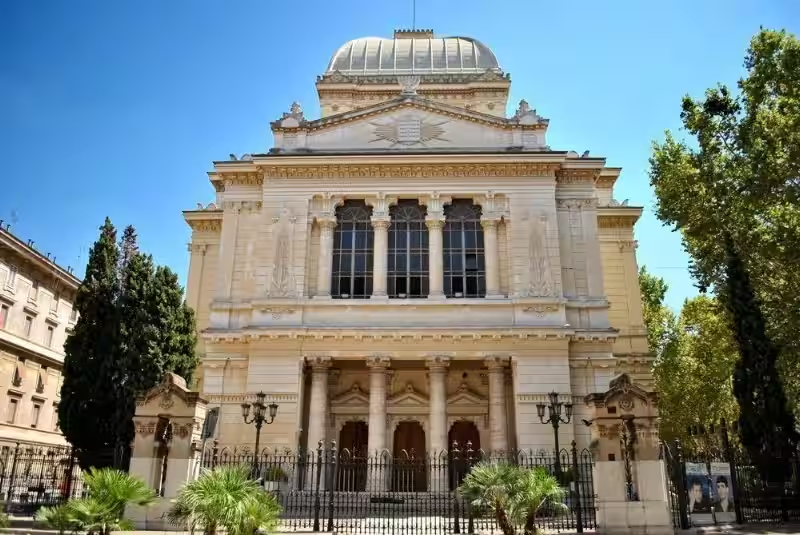
The Great Synagogue of Rome, officially known as the Tempio Maggiore, is a relatively modern structure by Roman standards, inaugurated in 1904. However, its significance transcends its age. It stands as a symbol of Jewish emancipation and integration into Roman society after centuries of segregation. Before its construction, Jewish life was centered in smaller, more intimate synagogues, each with its own unique history and character. The decision to build a grand, unified synagogue reflected a newfound sense of pride and visibility for the Jewish community in Rome.
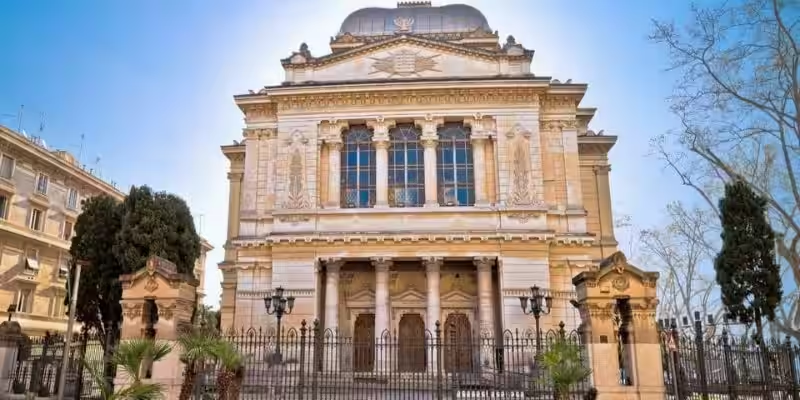
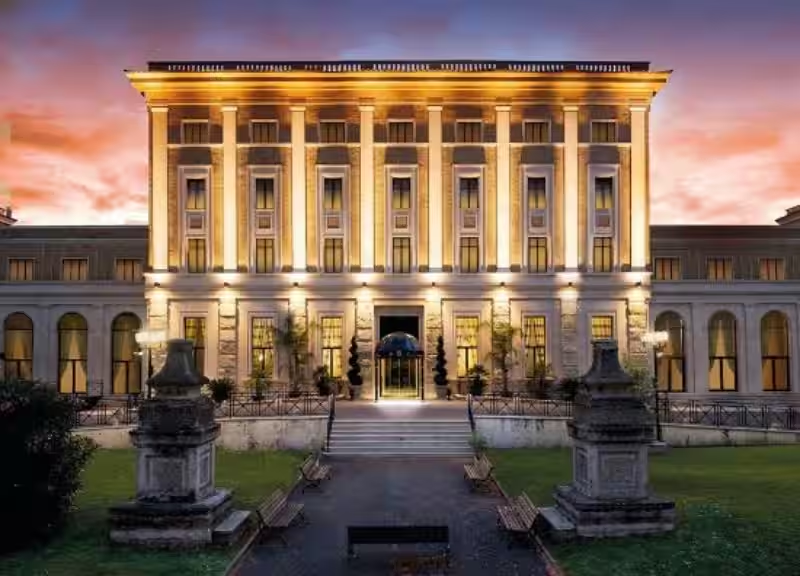
The architectural style of the Great Synagogue is a fascinating blend, incorporating elements of Neo-Classical and Art Nouveau, a reflection of the era in which it was built. Its prominent dome and imposing facade make it a landmark, visible across parts of the city. Inside, the sanctuary is breathtaking, with intricate detailing, stained-glass windows, and a deeply spiritual atmosphere. Imagine the countless prayers that have ascended from this space, the Bar Mitzvahs celebrated, the weddings solemnized, and the moments of collective grief and joy that have unfolded here. This Jewish synagogue in Rome is a vessel carrying generations of religious devotion.
The Heartbeat of Jewish Life: Rituals and Community at the Synagogue
At its core, a Jewish synagogue in Rome, like any synagogue, is a house of prayer, study, and assembly. The religious services conducted here follow ancient traditions, guided by the Torah and Jewish law. The weekly Shabbat (Sabbath) observance is a cornerstone, a time for families and the community to gather, to rest, and to reconnect with their faith. The rhythm of the Jewish calendar also dictates the synagogue’s activities, with major holidays like Rosh Hashanah (New Year), Yom Kippur (Day of Atonement), Passover, and Sukkot being observed with special services and gatherings.
Beyond the formal religious services, the Jewish synagogue in Rome buzzes with life. It’s a place where children attend Hebrew school, where adults participate in Torah study groups, and where social events foster a strong sense of belonging. The ancient religion of Judaism is not static; it’s a dynamic force that adapts and thrives. For instance, the synagogue might host lectures on Jewish history, art exhibitions, or interfaith dialogues, demonstrating how the core tenets of their religion are explored and lived out in contemporary society. The communal aspect is paramount; the strength of the Jewish community in Rome is intrinsically linked to the vitality of its synagogue.
A Legacy of Resilience: The Jewish Religion Through Roman History
The history of the Jewish people in Rome is one of remarkable endurance. Jewish presence in Rome dates back to antiquity, with evidence suggesting Jewish communities existed in the city long before the rise of Christianity. Over the centuries, this community faced periods of both tolerance and severe persecution. The establishment of the Ghetto in 1555, for example, confined Jewish residents to a specific, walled-off area, restricting their movement and their livelihoods. Yet, even within these constraints, the Jewish synagogue in Rome and its smaller predecessors continued to be centers of spiritual and communal life.
The religion of Judaism provided a powerful framework for maintaining identity and cohesion during these challenging times. The observance of mitzvot (commandments), the study of sacred texts, and the strong communal bonds forged within the synagogue offered a sense of continuity and purpose. Even during the darkest hours, such as the Nazi occupation of Rome during World War II, when many Jews were deported to concentration camps, the spirit of the community, and the hope for a return to normalcy, remained. The Jewish synagogue in Rome became a silent witness to these historical currents, a place where the memory of those lost is honored and where the lessons of history are passed down to future generations.
Navigating Modernity: The Enduring Principles of Judaism in Rome
In the 21st century, the Jewish community in Rome, centered around its magnificent Jewish synagogue, continues to navigate the complexities of modern life while staying deeply rooted in its religious heritage. The principles of Jewish ethics, such as tikkun olam (repairing the world) and gemilut chasadim (acts of loving-kindness), remain central to their practice. These ancient ideals translate into contemporary actions, be it through charitable work within the Roman community or advocating for social justice.
The Jewish synagogue in Rome is not an isolated relic of the past. It is a vibrant institution that engages with the contemporary world in meaningful ways. This includes embracing new technologies for communication and education, fostering intergenerational dialogue, and actively participating in the broader Roman cultural landscape. The religion continues to provide a moral compass and a spiritual anchor for its adherents, ensuring that the rich legacy of Jewish life in Rome will endure for centuries to come. The stories held within the walls of the Jewish synagogue in Rome are not just historical footnotes; they are living narratives that continue to unfold.
Frequently Asked Questions about Jewish Synagogues in Rome
What is the main synagogue in Rome?
The main synagogue in Rome is the Great Synagogue of Rome (Tempio Maggiore).
What is the history of Jewish life in Rome and its synagogues?
Rome has one of the oldest Jewish communities in the world, with a history stretching back over two millennia. The current Great Synagogue was built after the unification of Italy in the late 19th century, replacing smaller, older synagogues that were demolished to create the new Jewish Ghetto.
Can I visit the Great Synagogue of Rome?
Yes, the Great Synagogue is open for visits and tours. It’s advisable to check their official website for current opening hours, tour schedules, and any specific visitor guidelines.
What denominations of Judaism are represented by synagogues in Rome?
The Jewish community in Rome is primarily unified under the Rabbinate of Rome, which follows Traditional (Orthodox) Judaism. However, there are also other smaller congregations and prayer groups that may adhere to different streams of Jewish practice.
Are there other Jewish synagogues in Rome besides the Great Synagogue?
While the Great Synagogue is the largest and most prominent, there are other smaller synagogues and prayer spaces within the Jewish community of Rome, often associated with specific groups or traditions.
What is the religious significance of the Great Synagogue of Rome?
The Great Synagogue is the spiritual and communal center for the Jewish community in Rome. It is a place of worship, learning, and community gatherings, embodying the continuity of Jewish life in the city.
Is there a Jewish museum in Rome?
Yes, the Jewish Museum of Rome is located adjacent to the Great Synagogue and offers a comprehensive look at the history and culture of the Roman Jewish community.
For millions around the globe, the figure of the Pope is a beacon of faith, guidance, and unwavering spiritual leadership. The Vatican City, a sovereign state within Rome, serves as the spiritual and administrative center of the Catholic Church, and its most prominent resident, the Pope, is an individual of immense global significance. Many who…
The concept of a Sacred Door, or Porta Santa, holds a profound significance within the Catholic faith. These are not just doorways; they are potent symbols of divine grace, a gateway to spiritual transformation, and a tangible representation of Jesus Christ himself, who declared, “I am the door; whoever enters through me will be saved.”…
The concept of giving, of sharing one’s blessings with others, is a cornerstone of nearly every spiritual tradition. Across diverse faiths, the act of offering a portion of one’s wealth, time, or talent is not merely a charitable act, but a profound expression of devotion, gratitude, and a recognition of interconnectedness. Within this rich tapestry…
In the tapestry of religious tradition, certain objects hold a profound resonance, acting as tangible links to the spiritual realm. Among these, the chime of angel bells whispers a story of devotion, protection, and the ethereal presence of divine messengers. These delicate instruments, often crafted from gleaming metals and imbued with symbolic meaning, have graced…
In the relentless rhythm of modern life, the yearning for a calm mind and body is a universal whisper. We often find ourselves adrift in a sea of anxieties, deadlines, and digital distractions, feeling disconnected from ourselves and the world around us. Yet, the path to tranquility, a state of calm mind and body nature…
The vibrant energy of youth is a powerful force, capable of transforming societies and challenging established norms. When this energy intersects with faith, a dynamic and often profound evolution can occur within religious communities. This is precisely the ground where Arise Youth is making its mark, a movement and ethos dedicated to empowering young people…