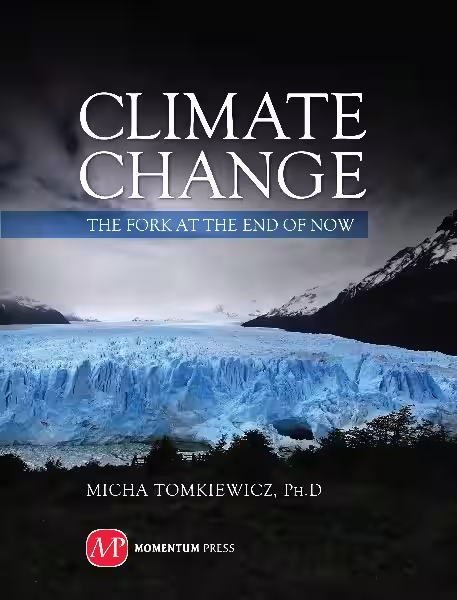
The hum of modern life often drowns out the whispers of the planet. We are bombarded with news, statistics, and urgent calls to action regarding climate change, a crisis of unprecedented scale. Yet, for many, the true weight of this challenge can feel abstract, a distant problem for future generations. This is where the power of a climate change book can truly ignite a spark, especially when it delves into the often-overlooked intersection of environmental stewardship and deeply held religious beliefs. These books are not just repositories of scientific data; they are becoming catalysts for profound spiritual awakening and a re-evaluation of our place within the intricate web of creation.
The Earth, for countless millennia, has been viewed through a spiritual lens by diverse cultures and faiths. Our planet is not merely a collection of resources to be exploited but a sacred gift, a testament to a divine power or a force of nature deserving of reverence. This understanding, while ancient, is finding renewed relevance in the face of contemporary environmental degradation. A well-crafted climate change book can bridge the gap between scientific understanding and this inherent spiritual connection, offering a framework for individuals to grapple with the moral and ethical dimensions of our impact on the planet.
Many religious traditions offer rich narratives and theological frameworks that, when re-examined through the lens of climate change, reveal a profound call to environmental responsibility. These narratives often speak of creation, stewardship, and the interconnectedness of all living things. A climate change book that explores these connections can help believers see their faith not as a passive observer of environmental decline but as an active force for healing and preservation. Imagine a passage in a climate change book that draws parallels between the biblical concept of dominion over creation and a more nuanced understanding of responsible guardianship, emphasizing care and preservation rather than unchecked exploitation.
The concept of interconnectedness is a cornerstone of many faiths. Whether it’s the Buddhist understanding of dependent origination or the Indigenous belief in the Great Spirit permeating all of nature, the idea that all beings are linked is powerful. When we damage one part of the ecosystem, we inevitably affect ourselves and others. A compelling climate change book can illustrate this through relatable examples, such as how deforestation in one region can lead to altered rainfall patterns impacting agricultural communities thousands of miles away. This understanding fosters empathy and a sense of shared destiny, prompting individuals to act not just for their own well-being but for the well-being of the entire cosmic family.
Scripture and Stewardship: A Modern Interpretation
For centuries, religious texts have been interpreted through various lenses, and the current environmental crisis demands a fresh look. Many scholars and faith leaders are now highlighting passages that speak to the sacredness of creation and the human duty to care for it. A climate change book can serve as an invaluable guide for this re-interpretation, providing historical context and contemporary ecological data to illuminate these ancient wisdoms. For instance, a climate change book might explore how the concept of Jubilee in the Old Testament, a time of debt cancellation and land rest, can be re-imagined as a call for economic practices that allow the Earth to recover.
The idea of stewardship is particularly potent. It suggests that we are not owners of the Earth but temporary caretakers, entrusted with its well-being for future generations. This perspective shifts the focus from individual gain to collective responsibility. A poignant climate change book might feature stories of faith communities actively engaged in sustainable practices, such as installing solar panels on their places of worship or organizing local food drives that support regenerative agriculture. These real-world examples demonstrate that faith and environmental action are not mutually exclusive but deeply synergistic.
The Call to Action from Diverse Faiths
It’s not just a single religious perspective that is being awakened by the climate crisis; it’s a global phenomenon. A comprehensive climate change book would likely showcase the diverse ways in which various faiths are responding. From Christian denominations supporting eco-justice ministries to Islamic scholars promoting green mosques and Hindu communities advocating for the protection of sacred rivers, the movement is gaining momentum. The common thread is a recognition that our spiritual well-being is intrinsically linked to the health of the planet.
Consider the profound respect for nature found in many Indigenous traditions, often intertwined with their spiritual practices. A climate change book that includes these perspectives can offer invaluable insights into living in balance with the Earth. These traditions often emphasize reciprocity, the idea that we must give back to nature what we take. This can translate into tangible actions like planting trees, reducing waste, and supporting organizations that work to conserve biodiversity. The urgency of the climate crisis compels us to listen to these ancient voices and integrate their wisdom into our modern lives.
Beyond the Pulpit: Practical Applications and Community Engagement
The conversations sparked by a climate change book should not remain confined within the walls of places of worship or academic discussions. The ultimate goal is to translate understanding into tangible action and foster a sense of collective responsibility. Many religious communities are already at the forefront of this movement, demonstrating that faith can be a powerful engine for environmental solutions. A well-researched climate change book can highlight these initiatives, inspiring others to replicate their success.
This engagement can take many forms. It could involve organizing community clean-up drives, advocating for climate-friendly policies at local and national levels, or investing in renewable energy projects. A climate change book might feature a chapter dedicated to practical steps individuals and communities can take, offering concrete resources and guidance. The power of collective action, fueled by shared values and a common purpose, is immense. When people of faith come together, united by a love for creation and a commitment to justice, they can become a formidable force for positive change.
Faith-Based Environmental Organizations: A Growing Force
The proliferation of faith-based environmental organizations is a testament to the growing awareness and commitment within religious communities. These groups are dedicated to translating religious teachings into practical environmental action. A climate change book could dedicate a section to profiling some of these impactful organizations, providing readers with opportunities to connect and contribute. These organizations often work on a variety of issues, from climate advocacy and disaster relief to sustainable development and environmental education.
These organizations understand that the climate crisis is not just an environmental issue but also a matter of social justice, disproportionately affecting vulnerable populations. By integrating faith principles with environmental advocacy, they amplify their message and mobilize a wider range of support. The insights gleaned from a climate change book can empower individuals to join these efforts, whether by volunteering their time, donating resources, or simply spreading awareness within their own faith circles.
The Future of Faith and Planet: A Hopeful Outlook
While the challenges of climate change are daunting, there is a growing sense of hope inspired by the deepening connection between religious beliefs and environmental action. The insights found within a climate change book can empower individuals to see themselves as agents of change, capable of contributing to a more sustainable and just future. This is a journey of spiritual growth as much as it is an environmental imperative.
As more people engage with the vital discussions presented in a climate change book, we can anticipate a future where our faith traditions are not only repositories of ancient wisdom but also vibrant catalysts for ecological healing. The interconnectedness of all life, a fundamental tenet of many religions, is becoming increasingly apparent. By embracing this understanding, and by acting on the knowledge gained from insightful climate change books, we can work towards a future where both humanity and the planet can thrive, a future rooted in reverence, responsibility, and resilience.
Frequently Asked Questions: Climate Change and Religion
Is there a religious perspective on climate change?
Yes, many major religions have engaged with the issue of climate change. Various faith traditions offer ethical frameworks, theological interpretations, and calls to action that address environmental stewardship, the interconnectedness of creation, and the moral imperative to protect vulnerable communities disproportionately affected by climate impacts.
Do religious texts mention climate change?
While specific mentions of “climate change” as a scientific phenomenon are absent in ancient religious texts, many texts contain passages that speak to themes of creation, the human responsibility to care for the earth, the consequences of environmental degradation, and the importance of justice. These passages are often interpreted by religious scholars and communities as relevant to contemporary climate concerns.
How do different religions view human responsibility for climate change?
Views vary, but a common thread across many religions is the concept of stewardship or vicegerency – that humans are tasked by a divine creator with caring for the earth. This implies a responsibility to manage natural resources wisely and to avoid actions that harm creation. Some traditions also emphasize the interconnectedness of all living things, suggesting that harming the environment is harmful to ourselves and others.
Are there religious organizations working on climate change?
Absolutely. Numerous religious organizations, denominations, congregations, and interfaith alliances are actively engaged in climate change advocacy, education, and practical action. These efforts range from advocating for policy changes and divesting from fossil fuels to implementing sustainable practices within their institutions and communities, and providing aid to those affected by climate disasters.
Can faith motivate climate action?
For many people, faith provides a powerful motivation for climate action. The belief in a sacred creation, a moral obligation to justice, and a hope for a sustainable future can inspire individuals and communities to make personal changes, engage in activism, and advocate for systemic solutions to climate change.
What are the ethical considerations of climate change from a religious standpoint?
Religious ethics often highlight issues of intergenerational justice (our responsibility to future generations), climate justice (the disproportionate impact of climate change on the poor and marginalized, who have contributed the least to it), and the intrinsic value of creation, which deserves protection regardless of its utility to humans.